David Gower & his favourite wines

Buyer Rewind: David Gower on his perfect “over” of wines

logo-new.png

As we prepare for the last week of the ICC Cricket World Cup and England’s first semi-final appearance since 1992, we get you in the mood with this trip down our very own cricketing memory lane when legendary English cricketer, turned Sky TV commentator, David Gower, shared his love for wine with The Buyer. With the launch of ‘My Perfect 6’ through Perfect Cellar in 2016 where he looked to put his name to wines that try to break new boundaries.

Gower on commentary duty

Gower on commentary duty

By Geoffrey DeanJuly 5, 2019

Geoffrey Dean, cricket reporter for The Times and regular contributor to The Buyer, caught up with David Gower to talk not just about his life in cricket but his love for wine and his then tie-up with Perfect Cellar in 2016.

Wine and cricketers have long been compatible bedfellows, and David Gower’s reputation as a connoisseur is long established.

When Gower, Ian Botham and Bob Willis were mainstays of the England side in the late ‘70s and early ‘80s, wine was a regular topic of conversation in the dressing room. The latter two had a brand named after them – Geoff Merrill’s BMW (Botham-Merrill-Willis) red blend from the McLaren Vale – and now Gower has teamed up with Perfect Cellar in an ambassadorial role. [Botham has since gone on to launch his own range of wines with Paul Schaafsma’s Benchmark Drinks company]

The online retailer, that is expanding its 0n-trade operations, has just launched Gower’s ‘My Perfect 6’ – a half-case of good mid-market wines retailing for just under what the former England captain scored aplenty: a century (or £100).

Gower has been an avid wine collector since early in his playing days (having just sold off some 1983 first growths from his cellar), but he drinks all sorts of wines.

“One reason this Perfect Cellar concept fits,” he told The Buyer, “is that, rather than go upmarket which none of us can afford to do, we find wines we can enjoy and are happy drinking… something that puts a smile on our face and doesn’t cost £80 a bottle.”

Gower and Moez Seraly

Gower and Moez Seraly

Having performed a similar ambassadorial role for Laithwaites for a couple of years, Gower was approached by Moez Seraly, the French mastermind behind Perfect Cellar.

“Moez got in touch with me originally to do a dinner,” Gower revealed. “He sees a synergy between the wine trade and sport, and wanted an ambassador with sporting kudos. I don’t claim to be an expert on wine, but I’m a keen amateur. I have mates in the wine trade, and have lots of affordable claret, with Lynch-Bages a real favourite of mine. I also have plenty of Italian as well as New World wines from Australia, South Africa, New Zealand and South America.”

It was early in his playing days that Gower’s interest in wine really began.

Gower holds the Ashes urn aloft after captaining England to a 3-1 series win in 1985

Gower holds the Ashes urn aloft after captaining England to a 3-1 series win in 1985

“My wine ‘career’ took off when my cricket started,” he continued. “Moving away from pints of Everards at The Cricketers pub at Grace Road [his first county, Leicestershire’s ground] onto something less bulky was a very good idea. I soon found other players to share the gaining of knowledge.”

Willis introduced him to Merrill, the extroverted, cricket-loving South Australian winemaker, and thanks to him “wine became a proper interest.”

Some of the free time I had on tours to Australia and New Zealand, which I was covering as a cricket correspondent for The Times, was invariably spent at wineries with Botham and Willis. On the last Ashes tour in 2013-14 I remember turning up at Penfolds in the Barossa Valley to see the winemaker only to discover Gower leading the entire Sky production team through a tasting of the full range of wines at the cellar door.

Gower is hoping that the partnership with Perfect Cellar is a long-term one.

“This is very much the start of things,” he said. “With a bit of luck, we can build it into something substantial. It’s an eclectic selection of wines, but I enjoy drinking them all.”

So what are Gower’s ‘Perfect 6’ tasting like?

Tendil & Lombardi Champagne NV

Tendil & Lombardi Champagne NV

Tendil & Lombardi Champagne NV. 12% abv. While mousse lacked persistence, and autolytic notes were limited, the base wine had some complexity and length.

Quinta-da-Calcada-Terroir-2015-HR-DF-683x1024.jpg

Adela do Salvador Quinta da Calcada Terroir Edition 2013. 12% abv. Excellent Vinho Verde (blend of Alvarinho, Loureiro and Arinto) from Minho in northern Portugal. Seductive fruit (more stone than citrus with some tropical notes); notable intensity of flavour with some minerality and complexity; very good length.Teso La

Monja Romanico 2013 (DO Toro, Spain).  14.5% abv. 100% Tempranillo. Appealing red fuit with some spicy notes; silky, neatly-integrated tannins; well-balanced despite highish alcohol. Made from 15-20 year old vines. Very drinkable.

Monja Romanico

Monja Romanico

NOT TASTED:

4)  Domaine Charly Nicolle, Chablis 2014

5)  Chateau Matheron, Cotes de Provence Rose 2015

6)  Domaine Les Terriens Ainsi Soit-Il, Cotes du Rhone 2013

A waltz through Austria's wine regions

Screen Shot 2019-11-20 at 11.48.35.png

In his latest post, our galavanting gadabout Geoffrey Dean heads to Austria, to sip on sprightly Grüner Veltliners and blackberry-scented Blaufrankisch in Mittleburgenland and Styria, the country’s southernmost wine region.

fog-34-640x427-1.jpg

Fog rolls over the vines in Leutschach in Styria

It was fitting that the Austrian Wine Marketing Board announced earlier this month that Chris Yorke would succeed Willi Klinger as its managing director at the beginning of next year.

For, Yorke, who has been global marketing director of New Zealand Winegrowers for the past 15 years, is coming from a market which the Austrians have long admired, Indeed, Klinger freely admits the NZ template is one on which he modelled his vision for Austrian wine exports.

Put simply, that is the production of predominantly premium, or mid-market, wines that give winemakers the best chance of a decent margin and enhance Austria’s reputation as a producer of quality wines.

Klinger’s assertion at the Austrian Wine Summit in late May that his country’s wine industry is entering “a golden period” is backed up both by the latest export figures, and by the outstanding range and quality of wines that journalists and importers tasted during the biennial summit. First the stats: a record high of €170m of Austrian wine was exported in 2018, which is expected to rise by over 6% to €180m this year.

Klinger predicts this figure will climb to €227m by 2024. Where Austrian wine in 2003 sold for an average price of 83 cents per litre, that had increased to €3.24 by last year.

Austria and New Zealand have much in common, being cool climate regions with plenty of higher altitude vineyards.

The cool air from the north is the most important factor in Austrian viticulture, according to Klinger, particularly as the average daily temperature in the growing season, which is 2°C than in the 1980s, is predicted to rise by another 1.4°C by 2050.

That could affect acid retention in grapes, but for the moment, vibrantly high levels of acidity are a feature of Austrian wines and their principal grapes, 67% of which are white.

Grüner Veltliner is the most planted, making up 31% of the country’s vines, followed by Zweigelt (14%), Welschriesling (7%) and Blaufrankisch (6.5%).

Some excellent examples of international varieties like Chardonnay, Pinot Noir, Sauvignon Blanc and, of course, Riesling were also enjoyed during our voyage around Austria.

It began in Poysdorf, on the same latitude as Champagne and where Austrian sparkling wine production first started in 1980. While the Charmat tank method is employed for Sekt Klassik, most Austrian Sekt is made by the traditional method.

A minimum of 18 months on the lees is required for Sekt Reserve, and 30 months for Sekt Grosse Reserve. Two of the latter really stood out: Malat’s 2012 Blanc de Blancs (Chardonnay) which spent 62 months on its lees, and Steininger’s 2013 Riesling.

Steininger was the first to label a single vineyard site (or ‘Ried’), with this Heiligenstein offering being fermented in acacia and spending 45 months on its lees. Complex with great length, it was a fine advert for Austrian Sekt.

Poysdorf is situated in Weinviertel, Austria’s largest specified wine-producing region with 13,858 hectares under vine. Grüner Veltliner, well-known for its white pepper expression, is Weinviertel’s signature grape, and it was the first Austrian wine to be granted DAC status, in 2003.

Wachau

Wachau

The Weinviertel DAC Reserve designation brings with it real power, with Taubenschuss’ Gruner Veltliner Ried Tenn 2016 bristling with full-bodied concentration, together with impressive complexity and length.

Just to the south of Weinviertel lies Carnuntum, a wine region that has become highly regarded in a short space of time. Loam, loess and sandy gravels, together with a continental microclimate, make this an ideal location for red wines, with some of Austria’s best Zweigelt coming from here.

Lukas Markowitsch’s ‘Rubin Carnuntum’ 2017 stood out thanks to its approachable tannins, freshness, concentration and length. Another Markowitsch, Gerhard, makes a bigger Zweigelt with a lot more structure from his Ried Kirchweingarten site, it being the coolest in the area.

Blaufränkisch grapes on the vine

Blaufränkisch grapes on the vine

His 2015 Carnuntum Reserve, at 13.4% ABV, showed really good balance. Meanwhile, Robert Payr’s Cuvee Ried Hofleiner Buhl, 2015 Carnuntum Reserve, underlined how well a blend works of a third each of Zweigelt, Blaufrankisch and Merlot. Complex with good concentration, it had chalky tannins and plenty of structure.

The real epicentre of Blaufrankisch production, however, is south of Vienna in Mittelburgenland, very close to the Hungarian border. The warm, water-retentive loamy soils there are perfect for the variety, which has a black forest berry character and fine spice nuances.

Mittelburgenland is a popular destination for wine tourists, notably the Schaflerhof near Deutschkreutz, where our tasting of 16 leading examples of Blaufrankisch was a highlight of the visit.

These were split mainly into into Mittelburgenland DAC or DAC Reserve wines (with vineyard designation), with a few from elsewhere forming a nice contrast.

The overall quality was exceptional, but several merit a mention. The cold loamy soil of the Ried Durrau site, offering low pH and freshness, demonstrated how well Blaufrankisch can age. Franz Weninger’s 2009 DAC Reserve from there was superb, with firm but fine tannins, and notable concentration and length.

Juliana Wieder’s 2015 DAC Reserve from Ried Bodigraben had very silky tannins and a long finish. Examples from outside Mittelburgenland that impressed were an elegant 2015 from the higher and cooler Lutzmannsburg site, made by Roland Velich from ‘Alte Reben’ (very old vines of 80-plus years); and a fabulous Eisenberg DAC Reserve 2015 with much intensity, produced by Schiefer & Domaines Kilger.

Weninger found time to pop across the border in 2016 into Sopron, Hungary’s top region for Kekfrankos (as Blaufrankisch is known there) to produce a brilliant Ried Spern Steiner from vines planted in 1964.

Very attractive red fruit, beautifully integrated tannins, intensity of flavour and a long finish all combined beautifully in this wine, which was fermented in concrete and aged in old 500-litre casks.

Our final port of call – in Austria’s southernmost wine-producing region – was Steiermark (Styria), where the principal grape varieties are Welschriesling, Pinot Gris, Sauvignon Blanc and Traminer.

The owners of Schloss Kapfenstein, built on a dormant volcanic cone, laid on a tasting of 38 wines that was as splendid as the views all around. Several Sauvignon Blancs showed very well, notably the Schloss’s own Vulkanland Steiermark DAC 2018, as well as a Sudsteiermark DAC from the same year, the Lackner-Tinnacher family’s Gamlitz site.

Minerality, a long finish and tropical fruit were a feature of both. Sabathi Erwin’s Leutschach 2017 from Sudsteirmark 2017 was more restrained and elegant, with a creaminess on the palate.

A fine 2018 Gewürztraminer from Vulkanland Steiermark, made by the Winkler-Hermaden family, was a reminder of the quality and great diversity of Austria’s wines, and the enormous progress made by the industry since entry into the EU in 1995.

At that time, according to Christian Zechmeister of Wein Burgenland, Austrian oenology schools laughably taught would-be winemakers that malolactic fermentation was a fault in red wines. Now, those same schools are very much in unison with the rest of the winemaking world.


The 'Viking Boss' and Ch Saint-Cernin in Bergerac

Why on-trade is best course for ‘Viking Boss’ at Saint-Cernin

Robert Wessman was once dubbed the Viking Boss for how he transformed the pharmaceutical business in Iceland. Now he has his sights set on the premium end of the wine business, buying Bergerac estate Château Saint-Cernin, and employing global wine consultant Michel Rolland and his team to oversee the cellar and winemaking. He is already making waves with the red Château Saint-Cernin already outscoring Cheval Blanc and Harlan Estate in a critics’ blind tasting. Geoffrey Dean was whisked to Bergerac in a private jet, tasted the wines and quizzed Wessman about his best route to market in the UK.

By Geoffrey Dean May 19, 2019

All three labels of Chateau Saint-Cernin are served on board the private airline VistaJet’s 74 planes, while the medium-term strategy is to achieve high-end distribution in 20 cities worldwide.

Robert Wessman acquired Château Saint-Cernin in the early 2000s

Robert Wessman acquired Château Saint-Cernin in the early 2000s

Robert Wessman, the billionaire Icelandic pharmaceutical entrepreneur, is aiming to gain market share in the UK with his No 1 Château Saint-Cernin label from the Bergerac appellation. The 2016 vintage, a blend of 60% Merlot and 40% Cabernet Sauvignon, showed very well in blind tastings at the 12th century chateau, in the Perigord region, when a combined group of journalists and buyers from Britain, France and other countries visited in early May. For the record, the Saint-Cernin outscored the Cheval Blanc 2014 as well as the Harlan Estate 2012.

Wessman and his Russian wife, Ksenia Shakhmanova, both passionate wine-lovers, have spared no expense in assembling an impressive stable of three wines: the red Bergerac, a Chardonnay from Limoux (also labelled No 1 Saint-Cernin) and a Rose Champagne, named Wessman One. Michel Rolland has been hired as a consultant, with renowned oenologist, Julien Viaud, who works in partnership with Rolland, making the red wine. Wessman has invested in a new state-of-the-art cellar at Château Saint-Cernin, which will be completed next year.

Hosting the press reception (l-r) Michel Rolland, Robert Wessman, Ksenia Shakhmanova and Julien Viaud

Hosting the press reception (l-r) Michel Rolland, Robert Wessman, Ksenia Shakhmanova and Julien Viaud

At present, Hedonism are the only retailers in the UK that are stocking the Bergerac Rouge, with an RRP of £49. Julien Le Doare, the Mayfair store’s shop manager, says that his head buyer is considering taking on the Chardonnay. Whether drinkers can be convinced that a Bergerac is worth such an outlay is a moot point, but the wine’s strong performance in the blind tastings was encouraging. The Chardonnay also did well in them, but its elevage in as much as 80% new oak will not endear it to every palate.

Once dubbed ‘the Viking Boss’ by The Economist magazine, the charismatic Wessman is intent on making a commercial success out of his venture into the world of wine, being keen to scotch any notion it is a rich man’s indulgence.“I have changed the pharmaceutical industry a lot despite the fact I knew little about it at first, and I have very high ambition for my wines,” Wessman told The Buyer. “We have a great team making them, and an amazing new cellar that will be ready in 12 months.”

Current production of the three wines is currently 20,000 bottles per annum, although Wessman says his long-term target is 50,000. His acquisition of 2.4 hectares of prime vineyard sites in La Serpent village in Limoux in south-west France will enable him to produce more Chardonnay. All three labels are served on board the private airline VistaJet’s 74 planes, while the medium-term strategy is to achieve high-end distribution in 20 cities worldwide. Current listings include Paris, New York, Miami, Hong Long, Macau, Taipei and Auckland.

2016 has been an excellent vintage for the Bergerac region as a whole

2016 has been an excellent vintage for the Bergerac region as a whole

The red Bergerac’s oak treatment was judicious, with the wine seeing a third new oak, a third second fill and a third stainless steel. Both the 2016 and 2017 have been bottled, with the former’s concentration being especially marked. The fruit is bought in from local growers, but the plan is to plant a couple of hectares of one or two unusual varietals at the chateau to make special cuvées. These will be selected from micro-vinifications of 18 varietals that are being grown as part of a technical joint venture with Bernard Magrez at Chateau Pape Clement in Graves. The rarer varietals include Alicante Bouschet, Amaron, Caladoc, Chenanson, Duras, Niellucio and Vinhao.

As for the non-vintage Wessman One Champagne, a Rose that comprises 55% Pinot Noir and 45% Chardonnay, it is dark pink with a full body. Aged on the lees for three years, it has a dosage of 6g/l. Like the Chardonnay, it has an RRP in France of €40. Both are high quality wines, but the key for success in the UK will be their price point. How well the wines sell at Hedonism is difficult to predict, and on-trade sales may represent the best way into the UK market.

Alto Piemonte: no longer a forgotten gem

Why Alto Piemonte’s days as a forgotten gem could well be over

logo-new.png

When Roberto Conterno parted with many millions to buy Nervi in Alto Piemonte a year ago, it confirmed what many in the trade had known for some time – that this ‘lesser’ Italian region was producing outstanding wines and a great region to explore ‘off the radar’ wines and winemakers. Its days as a forgotten gem are indeed over, as more and more people wise up to the region, says Geoffrey Dean, who travels to Alto Piemonte and picks out the best regions and winemakers that should indeed be on your radar, if they are not already. At Taste Alto Piemonte all 10 appellations were represented by 50 producers, all mainly making Nebbiolo in a variety of fascinating ways.

By Geoffrey Dean

April 18, 2019

When Roberto Conterno, owner of the iconic Barolo estate, Giacomo Conterno, invested last year in another winery in the much lesser-known area of Alto Piemonte, eyebrows were raised not just in Italy but around the world. The amount he paid for a 90% stake in Nervi, in the Gattinara DOCG, was undisclosed but the word was that it was in excess of €5m for 27 hectares. A substantial outlay, in other words, and not one made on a whim but due to strong evidence that the hill district of Alto Piemonte, 150km north-east of Langhe, is a region with all the credentials to produce high quality Nebbiolo.

Vineyards in Gattinara, considered to be the best appellation

Vineyards in Gattinara, considered to be the best appellation

Historically, Alto Piemonte has long been associated with viticulture, with the Romans planting vines there in the second century BC. It had as many as 40,000 hectares under vine until phylloxera struck in the late 19th century. Later came further loss of vineyards with the industrialisation of the valley floors, with the area becoming and still remaining a key centre for the Italian textile industry and its world-famous brands. Now, only 800 hectares are under vine in its two DOCGs (Gattinara and Ghemme) and its eight DOCs (Boca, Bramaterra, Colline Novaresi, Coste della Sesia, Fara, Lessona, Sizzano and Valli Ossolane).

It says much for Alto Piemonte that Conterno wanted to buy vineyards there. Nervi may be the oldest winery to be founded in the region, back in 1906, and Gattinara, along with Ghemme, is the most prestigious appellation, but all ten appellations, while diverse, have much in common, including an ideal microclimate and complex, mineral-rich soils. They are all shielded from cold northern winds by Monte Rosa, the second highest mountain in Europe, while during the growing season, fresh winds from the Alpine glaciers bring down high afternoon temperatures and increase the diurnal range. Indeed, it is significantly wider than in Langhe.

Volcanic soils, especially in Gattinara and Boca, bring minerality to the wines. Gattinara’s rocky vineyards are located mostly on very steep hillsides, aiding drainage. Finally, the soils of Alto Piemonte are very acidic which, as the AWRI has shown results in lower yields, and in theory, higher concentration.

Taste Alto Piemonte weekend festival is official opened at the end of March, 2019

Taste Alto Piemonte weekend festival is official opened at the end of March, 2019

Eager to promote the region, the Consorzio di Tutela Nebbioli Alto Piemonte laid on a Taste Alto Piemonte weekend festival in the historic old town of Novara at the end of March. All ten appellations were represented with over 50 producers showing their wines. The little white wine they make is from Erbaluce, a varietal with fresh acidity and citrus-like fruit, while the majority of black grapes grown are Nebbiolo.

Many producers like to blend it with small percentages of Vespolina, Uva Rara (aka Bonarda) and/or Croatina. Most of the top Gattinara producers make wines from 100% Nebbiolo, while a number of Ghemme wineries like to add up to 15% Vespolina to soften Nebbiolo’s notoriously powerful tannins. A 100% 2017 Vespolina from Cascina Preziosa (Coste della Sesia DOC) was very appealing – spicy red fruit with unobtrusive tannins.

The best examples of Nebbiolo came from Gattinara and Ghemme, although some excellent wines from Boca, Lessona, Fara and Colline Novaresi were also tasted (more on them later).

Starting with Gattinara, the Antoniolo ‘Osso San Grato’ 2014 was complex with clear mineral notes. The Nervi ‘Vigna Molsino’ 2014 was another upper premium quality single vineyard Nebbiolo with silky tannins. Long, concentrated and complex, this was well worth its €45 RRP. The Vegis Stefano ‘Vegis’ 2014 and the Caligaris Luca ‘Gattinara’ 2012 each possessed very attractive fruit, being long and complex, while the Cantina Delsignore ‘Borgofranco’ 2012 and the Il Chiosso ‘Galizja’ 2012 were similarly excellent. All these wines were 13-13.5% with fine tannins that were very well integrated.

Giada Codecasa, co-owner of Ca’ Nova winery in Ghemme

Giada Codecasa, co-owner of Ca’ Nova winery in Ghemme

From Ghemme, a number of wines stood out. The Ca’ Nova Riserva 2009 had fabulous fruit with approachable tannins, terrific concentration and a long finish (great value at €30 RRP); the Torraccia del Piantavigna ‘Vigna Pelizzane’ 2011, from the best vineyard on the estate, had lovely fruit and intensity with very nicely meshed tannins; the Vigna Ronco Maso ‘Ghemme’ 2008 and the Mazzoni ‘ai Livelli’ 2009 were two other impressive Nebbiolo single varietals, while two wines with 10-15% Vespolina – the Miru ‘Vigna Cavenago’ 2011 and the Pietraforata ‘Ghemme’ 2012 – showed particularly well.

20190331_125544-225x300.jpg

Boca, which was established as a DOC as far back as 1969, is another appellation with considerable pedigree. Indeed, as far back as the 14th century, a chronicler named Pietro Azario from Novara, wrote that Boca wine was “famous since the ancient times.” Its soil profile – mainly volcanic rocks resulting from an explosion of a volcano in Valsesia – is the key.

Two good wineries, Poderi Garona and Poderi ai Valloni each add 20% Vespolina and 10% Uva Rara to 70% Nebbiolo to produce a worthy blend, while another capable producer, Casino Montalbano, adds 30% Vespolina.

Lessona DOC wineries tend to prefer 100% Nebbiolo, although one leading winemaker, Massimo Clerico, adds a splash of Vespolina. His Reserva 2013 was outstanding, while La Prevostura, Noah and Cassina Pietro are all quality producers. (if you’re travelling there La Prevostura does delicious lunches at weekends, incidentally).

In the Fara DOC, Castaldi Francesca’s wines stood out, while in Coste della Sesia DOC, Alessandro Ciccione, winemaker for Centovigne, crafts excellent Nebbiolo at the family’s castle, Castello di Castellengo, where B&B stays can be arranged. In the Colline Novaresi Nebbiolo DOC, two producers whose wines impressed were Madonna dell’Uva and Enrico Crola.

Many other unmentioned estates are producing excellent wines in Alto Piemonte, where real value-for-money can be found. As prices rise inexorably for the wines of Langhe, where a hectare of vines costs between €1.5 to 2 million, others may well follow Conterno’s example in buying vineyards in Alto Piemonte, where a hectare fetches €150-200,000. Its days as a forgotten gem look to be over.

Chile's new icon wines

Chile’s new icon wines: producers pushing up the quality bar

logo-new.png

Chile has historically only had a small number of iconic wines but that is all set to change argues Geoffrey Dean. Fresh from two weeks of travelling through the country, he reports that there is a second tier of wine producers who are all vying for the equivalent of a ‘Champion’s League’ spot and making legitimate claims to be the ‘next big thing’. Dean meets the winemakers and tastes the wines – highlighting those that he thinks should be on every sommelier’s radar.

By Geoffrey Dean March 26, 2019

Wines from Chile have always had intensity of fruit but now there is a growing trend to enhance the regional typicity of the wines – particularly at the premium end.

Spend a couple of weeks travelling round Chile, tasting the wines and talking to the winemakers, and what strikes you is how intent they are on producing high quality wines with a sense of place. Nothing encapsulates that better than the Carignan VIGNO movement, on which more later, but the elegance and refinement of those wines were common features along with Chile’s historically generous fruit expression.

While icon wines like Almaviva, Chadwick, Don Melchor and Seña continue to attract global acclaim, it is really the pretenders in their wake who are lifting the bar. A posse of these wannabes, all aiming for a wine industry equivalent of a Champions League spot, are raising their game so relentlessly that the old order is being threatened. It is great news for the consumer.

Vik winemaker Cristian Vallejo with his top wine

Vik winemaker Cristian Vallejo with his top wine

The second tier revolution is being spearheaded by Viña Vik, with its multi-million dollar backing from the uber-wealthy Norwegian family of the same name. The vines, planted in 2006-7 in the Cachapoal Valley to a density of 8,100 per hectare (60% higher than Chile’s average), get a cooling afternoon sea breeze blowing in from 40 miles away. This is crucial for the freshness of the Cabernet Sauvignon, which always forms the majority of its three labels. Cabernet Franc, Carmenere and Merlot make up about a third of the grand vin, which sees 100% new French oak for 23 months, comfortably absorbing it. Cristian Vallejo, with Vik since the very start, is a passionate winemaker who crafts some eye-catching wines of poise, structure and balance.

Carmen winemaker, Emily Faulconer

Carmen winemaker, Emily Faulconer

Equally talented is Emily Faulconer, winemaker at Viña Carmen in the Maipu Valley, whose barrel-fermented and barrel-aged Semillon 2017 was the white ‘find’ of the visit. “This is such a revelation of what a white wine from here can be,” Faulconer, 34, declared. “The fruit came from Colchagua Valley dry-farmed vines that were planted in 1958 by the same growing family that farm them now. The wine has weight and texture, as well as balance from the old vines.” Chile, which used to have 30,000 hectares of Semillon until the 1980s, now has only 800h left. It was gratifying to hear Faulconer say that “we want to take responsibility for these old vines.”

Carmen’s Gold Reserve Cabernet Sauvignon 2015 is a reminder of how good the best unoaked Chilean examples from this varietal can be. From ungrafted vines planted in 1957, with a low yield of 3.5 tons per hectare, this was aged mainly in third and fourth use barrels. Blessed by very fine tannins and layers of complexity, as well as spice, it did not need any new oak.

By contrast, Miguel Torres’ regal Manso de Velasco Cabernet Sauvignon 2013 from 116-year old vines in the Curico Valley effortlessly absorbs 70% new oak. Chalky tannins were very well integrated and, with its seductive red and black fruit, full body and long finish, this complex 13.5% wine is another world class Chilean red.

Gabriela Nedrete, winemaker for Montes

Gabriela Nedrete, winemaker for Montes

So too is the Montes Alpha ‘M’ 2015, a Bordeaux blend of Cabernet Sauvignon (80%), Cabernet Franc, Merlot and Petit Verdot. “The idea of this wine is to pay homage to this vineyard here in the Apalta Valley,” Dennis Murray, Montes’ export manager, said. “It’s considered the number one spot for reds in Chile, with a hectare selling for $120,000. Compare that to $60,000 in Colchagua and $40,000 in Maipo.” Elegant and complex, yet massively concentrated and with added structure from 100% new oak, this is a wine with real presence. The Montes Purple Angel 2016 (92% Carmenere & 8% Petit Verdot) also sees 100% new oak, and has great intensity and length, with overt but well-integrated tannins. It is another wine of very high quality.

Continuing the theme of outstanding Cabernet Sauvignon, it is heartening that a massive producer like Luis Felipe Edwards, whose output is 36 million bottles per annum, is crafting stunning wine from the varietal. “I want to tell people that you can make Colchagua Cabernet of real quality,” LFE’s highly experienced head winemaker, Nicolas Bizzarri, said. His LFE ‘Top’ Cabernet Sauvignon 2014, not yet released, saw 40% new oak for 20 months, giving structure, but has glorious ripe fruit. Its very fine tannins, while powerful, are beautifully meshed. Another Cabernet Sauvignon single varietal yet to be released that also showed immense promise was the San Pedro Cabo de Hornos 2017, skilfully fashioned by Gabriel Mustakis from 100% Cachapoal Valley fruit, using 50% new oak.

The Vik winery is also a landmark boutique hotel, in much the same style as the iconic Spanish wineries

The Vik winery is also a landmark boutique hotel, in much the same style as the iconic Spanish wineries

New oak, then, is still being extensively used for many of Chile’s leading labels, even if percentages are lower than yesteryear. This also applies to many blends, with even Emiliana, whose 1,000 hectares  under vine have been certified biodynamic since 2011, using between 33-40% new oak for their superb top two labels, Coyam and Ge. The latest release of the latter, 2014, made mainly from Syrah and Carmenere, has tremendous concentration and personality. 

De Martino, of course, abandoned all new oak usage in 2011 in the quest for purity of fruit. Their search for old clay amphorae (‘viejas tinajas’) took them all over Maule where these vessels, 500-1200 litres in size, were sitting around largely unused. The bodega also employs ‘foudres’ for maturation, with their stunning Las Cruces Old Vine Series 2016 spending two years in them. Made from Cachapoal Valley bush vines planted in 1957, this Malbec/Carmenere field blend has remarkable fruit intensity and length, with marked freshness, and is one of Chile’s finest wines.

Andres Sanchez and wife Daniella Gillmore with their Carignan VIGNO

Andres Sanchez and wife Daniella Gillmore with their Carignan VIGNO

Elevage in foudres for two years is a requirement for the Carignan VIGNO wines, to which association 14 wineries have signed up. More perhaps than any Chilean reds, these wines speak of a sense of place. To qualify, the wine must be made from a minimum 85% Carignan dry-farmed Maule bush vines that are at least 30 years old (most are more ancient with Julio Bouchon’s being over 100). All of the half dozen or so labels I tasted were outstanding, with personal favourites being Gillmore and Bouchon. The former is made from ultra-low density bush vines of 2,300 plants per hectare.

Quality and character, therefore, are Chile’s twin watchwords as they seek to draw greater global attention to wines that have always had fruit intensity. The country’s plethora of top-notch winemakers can be expected to accelerate the drive towards top-class wines with enhanced regional typicity.

Chile: Hitting the Wine Tourism Trail

Screen Shot 2019-11-20 at 11.48.35.png

18th March, 2019 by Geoffrey Dean

Few countries are gearing themselves more effectively for wine tourism than Chile, although bodegas like to do so on a formal basis.

Appointments are de rigueur for the majority of wineries and, as in California, the cost of cellar door tastings are high. The large number of visitors suggests people nevertheless feel they are getting value-for-money, drawn as they are to some superb accommodation options either at wineries or in hotels near enough to them. Some world-class cuisine is also attracting wine tourists.

If heading south out of Santiago, the first winery you come to is Concha y Toro, which is well worth a stop for tasting and lunch. Situated on the outskirts of the capital in Pirque, the estate dates back to 1883 when the mansion there was built overlooking magnificent gardens. Available for tasting is the Don Melchor with the 2016 blend (93% Cabernet Sauvignon), bottled only last November, living up to its reputation as one of Chile’s icon wines.

A short drive away, near Buin, can be found one of the nicest places in Chile for wine tourists to stay. Hotel Casa Real, which lies within the Santa Rita estate in Maipo Valley, is a beautiful old manor house, built in the late nineteenth century. Its special gardens are a delight, and you walk through them to get to the impressive cellar door for both the Santa Rita and Carmen wines. Right next door is the Andean Museum which, with its 3,000 archaeological and ethnographic pieces, is one of the most important private collections in Chile. The estate has 600 hectares of vines planted to Santa Rita and Carmen, the latter being the oldest wine brand in Chile (1850).

Casa Real’s colonial architecture finds a polar opposite in the new Vik Hotel, with its titanium roof. Tucked away in a secluded part of the Cachapoal Valley, both the hotel and the Vina Vik winery itself contain multiple artwork from one of Chile’s most famous artists, Gonzalo Cienfuegos. Everything about Vik is absolutely first-class: whether the unusual winery design (underground with a water-cooled roof), the cellar door restaurant, the three red blends from five varietals, superbly crafted by Cristian Vallejo, or the hotel itself. The latter has stupendous 360-degree views, with large, uber-comfortable rooms and world-class cuisine. Riding out through the vines on horseback, or having a spa treatment, is one of the many extras Vik offers. Also in Cachapoal Valley can be found Vina San Pedro, a stunningly situated winery that offers very personalised and exclusive visits for lunch. A maximum of 10 people is permitted.


Vik Hotel in the scenic Cachapoal Valley

Vik Hotel in the scenic Cachapoal Valley

In the neighbouring Colchagua Valley, in the village of Angostura, the Casa Silva Boutique Hotel is a delightful place to stay. Situated beside the winery, it is the owning family’s old manor house, with its seven bedrooms. Within the estate’s vineyards, by a polo field, is the Casa Silva Rodeo & Polo clubhouse, which is an excellent place to have lunch. So too in the same valley is Viu Manent, at its Rayuela restaurant, right by the vineyards. Horses, looked after by their ‘huasos’ (the Chilean equivalent of gauchos) transport you around the bodega on historic old carriages. Throw in cooking classes and an equestrian centre with jumps, and you have enough to keep the family busy for a half-day visit.

The Montes winery, also in the Colchagua Valley, is another to offer visitors experiences other than tasting. For a start, there is the well-known Fuegos de Apalta restaurant, the outstanding cuisine for which is the work of celebrated Argentine chef Francois Mallmann, who flies in periodically for several days. It is open seven days a week, including dinner every night. Guided treks of up to three hours can be taken up to the surrounding scenic hills where the gradient of some parcels is 45%. A house on the estate, which sleeps six, is available for rent. Meanwhile, in the cellar itself, Gregorian monastery chant music is played to the premium wine barrels all day to ‘soothe’ them. It is easy to see why as many as 17,000 people visit Montes each year, although Viu Manent, with 15,000, are not far behind. Another restaurant that deservedly gets a lot of custom is Miguel Torres in the nearby Curico Valley.


Barrels at Vina Montes

Barrels at Vina Montes

Heading south from there into the Maule Valley are two wineries that should not be missed – J.Bouchon and Gillmore. They are also very enjoyable places to stay. Julio Bouchon just took over as president of the Carignan Old Vines Association from Gillmore’s Andres Sanchez, and the pair each craft wonderful versions of that varietal under the “Vigno’ label. To qualify, wines must come from Carignan dry-farmed bush vines of at least 60 years age and be matured in old foudres. These are fine wines of poise and elegance with a real future.

You can keep travelling further south to Bio Bio and beyond, as Chilean viticulture seeks cooler latitudes, but personal time constraints took me back up to Santiago via De Martino in Maipo Valley. Their collection of ‘viejas tinajas’ (old amphorae) are worth the stop alone, and a result of the bodega’s style-change decision in 2011 not to utilise any new oak. Apart from having a fine range to taste, the bodega also has a really good shop.

The Valleys of Casablanca, Leyda and San Antonio can be visited from either Santiago or the seaside town of Valparaiso. Or there is a good third option half-way between the two, named Casa Macaire. In Santiago, the Singular Hotel is an ideal choice, enjoying the perfect location in trendy Lastarria. It also has a superb Chilean wine list, but so too does the excellent Baco restaurant in Providencia in central Santiago. In Valparaiso, the Wine Box offers the most unusual place for visitors to stay. Built from 25 decommissioned containers, the rooms are necessarily long and thin, but offer guests spectacular views over the harbour. Quirky owner, Grant Phelps, a New Zealander and former winemaker for Casas del Bosque in Casablanca, dreamt up the idea, and makes his own wine in the hotel’s underground carpark. A less expensive option in Valparaiso is the boutique hotel, Cirilo Armstrong, which has eleven very comfortable loft bedrooms, each containing sculpture and art.


Cable car in San Cristobal hill overlooking Santiago

Cable car in San Cristobal hill overlooking Santiago

Casa Macaire, near Tapihue, cannot be too highly recommended. It is set in a small vineyard, but the quality of the accommodation – it was built as a private house – the cuisine and the friendly service is second to none. Its beautiful quiet location, with swimming-pool and hiking/biking options, make it perfect for families but it caters equally well for individuals or couples. It is also very close to a string of wineries in the Casablanca Valley.

One of these, Bodegas RE is among Chile’s most unconventional wineries. Pablo Morande, the winemaker, loves coming up with unlikely blends, such as Pinot Noir and Syrah, which he co-ferments. His weird and wonderful range is well worth tasting through, the cellar door shop entices you in as does the restaurant. Exactly the same can be said for two other wineries that do champion lunches in beautiful settings – Errazuriz (in Aconcagua Valley) and Casas del Bosque. The lengthy list of top-class wines from the last two make them must-visits in a country with so many wonderful bodegas. And I haven’t even been able to include those alluring wineries far north of Santiago in the Elqui and Limari Valleys.


Wine tourism in Mendoza

by Geoffrey Dean

by Geoffrey Dean

If ever there was a good time to visit Mendoza, it’s now. Argentina’s best-known wine region ticks all the boxes for wine tourism, from a range of hotels spread over a wide area to wineries that are geared towards taking visitors, whether for a tasting or to dine.

With the peso having plummeted in the last year or so, and inflation in Argentina exceeding 40% per annum, visitors are getting exceptional value for money, even Brits with sterling. Those liking the exchange rate in South Africa will like it even more in Argentina.

The latest leg of Geoffrey Dean’s grand tour of South America took him to mountainous Mendoza

The latest leg of Geoffrey Dean’s grand tour of South America took him to mountainous Mendoza

Unlike in Chile, where domestic taxes of 39% make it more expensive to buy good quality Chilean wine there than in the UK, foreign visitors acquiring the best Argentine wine will get it at a massive discount. Some of the top labels are unavailable in Britain, so come with plenty of room in your suitcase and take back some premium wine at bargain prices. Similarly, you can eat out in Mendoza’s many fine restaurants for a snip compared to pricey British counterparts.

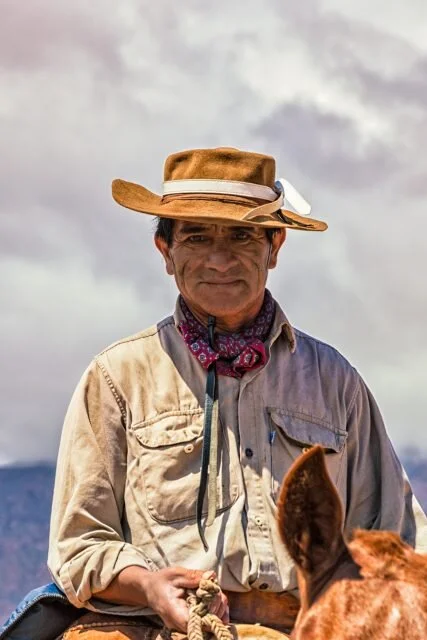
Giddy up: Mendoza is home to many a gaucho

Giddy up: Mendoza is home to many a gaucho


If wanting to base yourself in the centre of Mendoza city itself, the Park Hyatt possesses not just the best location, but also a wine list that is truly special. Two formidable young sommeliers, Amparo Andaluz and Erika Hammerle, have transformed what’s on offer, either by the glass or bottle, increasing the number of Argentine producers represented to over 100, with 25 varieties to choose from.

“We have shaken up the list and brought many new wines in,” says Hammerle. “A large number of brands is important, as we are in the land of wine. The hotel now has arguably the best selection of wines in Mendoza.”

A cheaper alternative to the Hyatt, just round the corner, is the good value boutique Villaggio Hotel, which does marvellous breakfasts. Both are five minutes walk from the Siete Cocinas restaurant, which boasts not only wonderful cuisine but also a very extensive wine list.

Try the slow-cooked goat, for which celebrated chef, Pablo Del Rio, is renowned. His wife, Estefi, is export director for leading producer, Altos Las Hormigas, and uses her connections to secure some impressive allocations.

A culinary feast of equal distinction awaits you at Fogon, the Lagarde winery’s own restaurant, in Chacras de Coria, which is open for lunch every day as well as dinner at high summer weekends. Lucas Olcese, the talented chef there, conjures up delicious traditional recipes from the north of Argentina right down to Patagonia.

Juan Roby, Lagarde’s winemaker for 20 years, has crafted an exceptional range that is available for tasting at the bodega’s splendid cellar door. “We used to have hard tannins, and my focus was to round them,” Roby says. He has managed to do this very well, notably in the Henry No 1 Gran Guarda 2016, one of Argentina’s great red wines. This is predominantly Malbec (70%), with Cabernet Franc and Petit Verdot making up the remainder of the blend.

Lagarde is one of several leading bodegas in Chacras de Coria, an attractive, leafy village half an hour’s drive south of central Mendoza. Many winemakers choose to live in Chacras, where there are two particularly nice places to stay. Finca de Adalgisa is an elegant property with 11 rooms and one-and-a-half hectares of vines first planted in 1916 by the great grandparents of the owner, Gabriela Furlotti.

The region is framed by the dramatic backdrop of the snow-capped Andes

The region is framed by the dramatic backdrop of the snow-capped Andes

Some good Malbec is still made from them in Adalgisa’s pocket-sized winery, which is lovingly constructed around a 100-year-old walnut tree.

A few minutes walk away is the delightful Casa Glebinias, which offers cottage-style accommodation in a huge garden adorned with scores of trees, many of them old. The owners live on site and are attentive hosts.

Those wanting to get close to the Andes foothills should head south to Casa de Uco, near Tunuyan. This new, luxury hotel has stunning mountain views over its recently-planted vineyards, which are producing good quality wine under the consultancy of Alberto Antonini. It is a lovely place to relax for a few days, offering wine tastings, hiking excursions, horse riding and spa treatments.

Close to Casa de Uco is the imposing Salentein bodega, named after the castle in Holland of the Dutch family who own it. As many as 31,000 people visited the winery in 2018, which has 850 hectares under vine, producing 20 million litres a year.

The winery is a remarkable piece of architecture, featuring a grand piano in the barrel room where two classical concerts are performed each year. Like Salentein, Zuccardi has an outstanding new winery and restaurant in the Uco Valley, whose delicious lunches make the 90-minute drive from Mendoza to Altamira worthwhile.

Nearer to Mendoza, Lujan de Cuyo boasts a plethora of wineries. Prominent among these is Catena Zapata, whose prestige cellar door with multiple label tastings is a must-visit. Close by is Bodega Monte Quieto, a small producer that is well worth popping into, although an appointment is necessary.

Sebastian Zuccardi at his family estate’s shiny new winery in the Uco Valley

Sebastian Zuccardi at his family estate’s shiny new winery in the Uco Valley

Winemaker Leonardo Quercetti fashions a top-class blend named Enlace (meaning ‘link’), with the 2015 version made predominantly from Cabernet Franc (52%), backed up by Malbec and Syrah in equal quantities.

A trio of Lujan de Cuyo wineries that are in close proximity offer the visitor a good way to spend a day. Achaval Ferrer is not the easiest to find, but is well worth the trouble for the cellar door is atmospheric with stunning Andean views, and the wines top-notch.

The oldest Malbec vines date back to 1900. A short drive away is Casarena, whose restaurant is an excellent place to have lunch. A six-course menu with fine single vineyard wine pairings from the bodega attracts around 500 patrons a month. Meanwhile, nearby Norton trumps that with 10,000 visitors a year, lured by 65 different labels that make it the fourth largest producer in Argentina.

Finally, there are two wineries in Chacras de Coria that should not be missed. Bodega Familia Cassone, family-owned as the name suggests, is a boutique producer with an inviting cellar door. Catena Zapata’s head winemaker for their Agrelo vineyards, Estela Perinetti, is as charming as she is capable, and is a consultant for Cassone, helping to craft high-quality wines.

From Cassone, it’s a short journey to the historic Weinert bodega, whose ancient cellars date back to 1890. There, you can find giant intricately-carved 44,000 litre foudre (known locally as a ‘tonel’), which was built in 1940 with German oak. It is the only one still in use in Argentina (containing Weinert’s Malbec 2012), with the other two being in museums.

In all, Weinert has as many as 235 of these ‘toneles’, most being 7,000 litres but some smaller at 1,200 litres. All are still being utilised, and allow Weinert to hold back its top reds (their 2006 Malbec being the latest one). Old red vintages are available for tasting by the glass thanks to Coravin, with the 1983 Bordeaux blend showing superbly. Indeed, Weinert typifies how well tradition and modernity have juxtaposed in the Mendoza region, which remains the jewel in Argentina’s wine industry.


HIGH AND MIGHTY: SALTA

Screen Shot 2019-11-20 at 11.48.35.png

By Geoffrey Dean

Of all the wine tourism regions in South America, none can be more dramatically beautiful than Salta in Argentina’s far north. Extreme altitude terroir, stunning mountainous or semi-desert terrain, and the wonderfully quaint little town of Cafayate combine to make this a special destination. Throw in outstanding wines and the friendliest of welcomes, and you have all the ingredients for a memorable wine tour.

The long and winding road from Salta to Cafayate

The long and winding road from Salta to Cafayate

Salta is home to the world’s highest vineyards, with Colomé’s Altura Maxima site planted at 3,111m. China has a hectare of vines at 3,500m, but it hasn’t produced any wine yet. Salta’s 33 wineries are for the most part situated between 1,700 and 3,000m in the picturesque Calchaqui Valley, which stretches 500 km from the north of the province into two provinces further south, Tucuman and Catamarca.

Making friends with the locals

Making friends with the locals

Cafayate, reached by driving through a startlingly beautiful 40-mile long canyon – Quebrada de las Conchas, is the base from which to visit most of these bodegas. One of Argentina’s must-visit locations worthy of an extended stay, Cafayate, with its colonial architecture and laid-back rhythm, is hard to leave.

There is a range of excellent accommodation choices that start with the top-end Grace Hotel on the Estancia de Cafayate just south of the town. If this offers modern luxury, the Patios de Cafayate has a more old-fashioned, country-house feel.

It’s a very comfortable place to stay, and has the advantage of being part of the celebrated El Esteco bodega. This prestige producer has 1,200 hectares of vines, many very old, and exports umpteen labels from entry-level to super premium to as many as 55 countries.

The Viñas de Cafayate Wine Resort, just to the west of the town at the foot of San Isidro Hill, is another excellent hotel, and more boutique than the name suggests. It overlooks vines, while El Porvenir’s accommodation is in the middle of its own vineyards at Finca El Retiro. It has three options, all good ones: bed-and-breakfast in the owners’ house (February excluded due to harvest), rent the guesthouse next door, which sleeps six, or stay in the converted stable-block (one bedroom with kitchenette). Part of El Porvenir’s appeal is its quiet tranquillity, allied to the fact that it is still walking distance into town for bars and restaurants.

The rather glorious Grace Hotel on the Estancia de Cafayate

The rather glorious Grace Hotel on the Estancia de Cafayate

One restaurant that shouldn’t be missed is Bad Brothers, named after the wine brand created by winemaker Agustín Lanus and his American business partner, David Galland, a marketing expert who settled in Cafayate when, as he put it, “I found paradise here.”

The Bad Brothers wines are all about freshness and drinkability, with Lanus’ Sunal labels (a play on ‘sun and altitude’, but also his name spelt backwards) being high-quality examples of Malbec from micro-terroirs.

Cafayate has a host of appealing cellar doors, including El Porvenir, El Esteco, Domingo Molina and San Pedro de Yacochuya. Estancia Los Cardones, a short drive south of Cafayate in Tolombon, is also well worth a visit.

Meanwhile, Vallisto’s wines are available both at the Pancha restaurant and Vino Tinto wine shop in Cafayate. The El Porvenir winery, in the middle of town, is a fascinating mix of historical and new buildings.

Giant old foudres, made from local algarrobo wood, are a splendid adornment (being long retired). Winemaker Paco Puga produces three different styles of Torrontés, with his oak-fermented Laborum label coming from 70-year-old vines at Finca El Retiro. Paul Hobbs, a longtime former consultant, led the successful quest for fresher fruit with more purity in El Porvenir’s impressive range of wines, which includes a 100% Tannat.

Estancia Colomé is enjoying a spike in tourism

Estancia Colomé is enjoying a spike in tourism

The drive up several kilometres of dirt-track to two neighbouring high altitude wineries at 2,000m handsomely rewards visitors, both for the high quality of the wines and the magnificent views.

The Domingo Molina bodega, run by the Domingo brothers – winemaker Rafael and viticulturalist Osvaldo – produces some superb single varietal wines, including Torrontés, Merlot, Malbec and Cabernet Sauvignon.

Meanwhile, Pablo Etchart crafts wines of comparable quality at his San Pedro de Yacochuya winery, which features the oldest vines in commercial production in Cafayate dating back to 1913. Michel Rolland still acts as a consultant after Etchart’s father originally recruited him to help combat green or tough tannins.

Not far from San Pedro are Vallisto’s cacti-dotted vineyards, where a new tasting room/restaurant will open early next year with glorious views. Winemaker Pancho Lavaque crafts a string of fine reds, including an enticing Barbera and a classy Criolla 2018 from very old, low-yielding vines. Vinified like Pinot Noir, the latter has a similarly light colour and body.

No review of Salta would be complete without mention of the wineries in the Molinos sub-appellation, 120 km northwest of Cafayate. It is here that the celebrated Colomé winery is located, although getting there can be a challenge, as this correspondent found when heavy early February rains led to rockfalls that blocked the narrow mountain road. Bodega Tacuil is also situated in Molinos, at 2630m, where the Davalos family make impressive wines without any oak influence.

The last word should go to Rafael Domingo. “We want to show Salta in our wines, which is why we use no new oak at all,” he says. “They are all about the freshness and spiciness you get from our high altitude.”


Uruguay - wine tourism

Screen Shot 2019-11-20 at 11.29.14.png

Galavanting gadabout Geoffrey Dean begins his wine tour of South America with a fruitful trip to Uruguay, where he finds the Tannats are no longer tannic.

With wine tourism’s inexorable growth around the world showing no sign of abating, adventurous wine tourists on the lookout for fresh destinations should focus on Uruguay. Something of an undiscovered gem, even though wine has been made there since the nineteenth century, the ‘kid-brother’ of Argentina, with whom it retains very close links, is punching well above its weight. Wine tourism in Uruguay looks to have a bright future.

The Palacio Salvo in Montevideo

The Palacio Salvo in Montevideo

Its relatively small size, certainly by Latin American standards, makes it very easy to get around. Around two-thirds of the surface area of the United Kingdom, it has only 3.4m people and more than three times as many cattle. All grass-fed, these provide some of the best beef in the world. This is an ideal accompaniment for some of Uruguay’s hearty reds, although its reputation of yesteryear for producing tannic Tannats has been supplanted by a desire to make wine that appeals more to the global palate.

While some traditionally styled Tannat remains in production, the vast majority of wine made from this and other black grapes has soft, approachable tannins with forward New World fruit. Above all, this is a country whose wines are now characterised by a freshness that makes them very drinkable.

Narbona Wine Lodge

Narbona Wine Lodge

“We are the New Zealand of South America,” declares Daniel Pisano, who runs the highly regarded Pisano winery with his two brothers thirty kilometres northeast of Montevideo. “We have high natural acidity thanks to the wide diurnal range in Uruguay. Cool nights allow us to retain acidity, meaning that we have to make minimal acid additions. There is a good balance between acid, alcohol, tannin and fruit.”

Uruguay would appear to have all the right ingredients to follow New Zealand’s success as a wine tourism destination of note. It has some wonderful places to stay for wine tourists, and its cellar doors are being flung open to welcome them.

“We say to anyone who loves wine, ‘Please come, we promise you will not be disappointed,” says Fabiana Bracco, owner of Bracco Bosca winery near Montevideo, and an ambassador for Uruguayan wine.

To get to Uruguay from the UK, there are no direct flights, but an agreeable way of entering the country is by ferry from Buenos Aires, whether to Colonia in the west or Montevideo further east. From Colonia, it is an hour by road to the charming town of Carmelo, a natural starting-off point for a wine tour of Uruguay.

Just outside Carmelo is the delightful Narbona Wine Lodge. The only Relais & Chateaux hotel in Uruguay, it has seven ginormous bedrooms, with two in the old homestead and the remainder attached to the bodega. Traditional old furniture gives it an estancia-like feel, and with its vineyard views, it is a pleasurably tranquil place to stay. The food is superb, with its celebrated pasta and homemade dulce de leche.

Carmelo Resort & Spa

Carmelo Resort & Spa

Narbona’s Tannat vines, first planted in the 1870s, provide quality fruit that allows talented winemaker, Valeria Chiola, to craft three differing styles from the variety. If Puerto Carmelo 2016, a 12.5% offering with soft tannins and attractive red fruit, is a highly drinkable everyday quaffer, then Tannat Roble 2014 is a premium wine for consumption with or without food.

That sees 30% new French oak, while the iconic Luz de Luna 2014 comfortably copes with 19 months in 100% new French oak. Complex and concentrated, with powerful but beautifully integrated tannins, this is a brilliant advert for top-end Uruguayan Tannat.

Chiola, with whom Michel Rolland worked as a consultant for Narbona from 2011-14, says the Frenchman’s influence was profound. “He helped us most in the vineyards, where we were looking for better balance, especially with the tannins,” Chiola told db. “Our largely calcareous soils have a high pH, which leads to a low pH in our wines and high acidity.”

A few miles down the road from Narbona is the Carmelo Resort & Spa, one of just 16 Hyatt hotels globally to qualify for the franchise’s special Unbound Collection. The only one in South America, its eucalyptus forest location with 24 villas and suites overlooking the River Plate is stunning.

Throw in outstanding cuisine, and an extensive wine list that includes Uruguay’s leading labels, and you have a world-class hotel in prime wine country. Along with Narbona, there are two other notable bodegas locally – Irurtia, which dates back to 1913, and the oldest winery in Uruguay, Los Cerros de San Juan (founded in 1854). Irurtia, a large-scale producer of over a million bottles a year, makes appealing Viognier.

From Carmelo, it’s a scenic three-hour drive through rolling hills to Montevideo, where two splendid hotels offer wine tourists different options. The monumental five-star Sofitel, a national landmark on the waterfront in upmarket Carrasco, is noted for its opulent French architecture. Built over eight years between 1913-21, it was closed in the late 1990s after falling into disrepair, but re-opened six years ago after a complete renovation.

Bodegas Garzón

Bodegas Garzón

By contrast, the boutique Alma Historica hotel, in the old part of the city, was a former mansion overlooking Plaza Zabata that has been beautifully converted. Its location 400 metres from the ferry terminal makes it an ideal hotel for those leaving, or arriving in, Montevideo by boat. Nearby, in the Punta Carretas suburb, is must-visit restaurant Baco.

From Montevideo, many excellent wineries can be reached on a day trip, including a quintet that should not be missed: Pisano, Bouza, Bracco Bosca, Stagnari and Juanico. Garzón, meanwhile, is three hours drive east of the capital, and ideally requires an overnight stay at Maldonaldo. Pisano offers tasting by appointment, but once you are there, the welcome from Daniel and his brothers could not be warmer.

Half of their 30,000 cases per year are exported to as many 48 markets, with the USA and UK numbers one and two. Founded by the brothers’ grandfather in 1916, this is a prestige winery with a host of terrific wines, including the only Torrontés in Uruguay, and two other rare varieties there – Sangiovese and Petit Verdot. Three styles of excellent Tannat are made: sparkling, fortified and dry.

Bracco Bosca, while much smaller, is no less special, for visitors can’t fail to be infected with the irrepressible enthusiasm and bonhomie of owner Fabiana Bracco. Varieties like Ugni Blanc, Moscatel, Sauvignon Blanc and Syrah are found there along with Tannat, while her Cabernet Franc is, in my opinion, the best in Uruguay. Silky tannins, gorgeous red fruit and fine structure from 100% new but lightly toasted French oak are its hallmarks.

While Antigua Bodega Stagnari is another boutique producer whose Tannat is excellent, Bouza and Juanico each attract large numbers of visitors. Both are beautiful estates that are immaculately maintained, producing impressive ranges of wines. Bouza makes some very good Albariño and Riesling, along with some Pinot Noir, Merlot and Tempranillo. Its super-premium Tannat is made in two styles: unoaked, and with 80% new oak.

Bouza’s top-class restaurant and remarkable collection of old vintage cars are another reason why it attracts so many visitors. It is a standard-bearer for Uruguayan wine tourism, and a fitting symbol of the quality of the country’s wine industry.

Liquid treasures from one of Austria's greatest cellars

Wine writer Geoffrey Dean has the enviable job of tasting a selection of liquid treasures from one of Austria’s greatest (and largest) cellars at Hotel Jagdhof in the Stubai Valley, including a glorious glass of Lynch-Bages 1947.

Screen Shot 2019-11-20 at 11.48.35.png
Hotel-Jagdhof-large-640x304.jpg

Nestled in the quaint Alpine village of Neustift in Austria, Hotel Jagdhof’s cellar boasts 25,000 bottles of wine

Tucked away in the Stubai Valley, south of Innsbruck, the quaint Alpine village of Neustift is hardly a location where you would expect to stumble across one of Austria’s greatest wine cellars. But on venturing into Hotel Jagdhof you will find one of the most extensive family-owned collections of fine wines in central Europe. And some very old wines at that too. The good news is that twice a year, in November and January, the hotel lays on a long weekend of dinners for interested connoisseurs to drink some of these great wines.

Your correspondent was fortunate enough to attend one such dinner in late January at the 5-star hotel, when 20 vintages of Château Lynch-Bages between 1945 and 2000 were unfurled over dinner. More on how the older wines tasted later, but first a little more on what’s in this remarkable cellar, how it came to be, and who is responsible for looking after it.

Bordeaux-wine-tasting-Stubai-valley-Neustift-Tyrol-5-star-wine-cellar-427x640.jpg

The cellar is looked after by the hotel’s head sommelier, Albin Mayr

Armin Pfurtscheller, owner of Hotel Jagdhof, started the cellar in 1990, using his family’s connections to buy in a string of classed growths from the Medoc. All of the five first growths are represented, with some ancient bottles of Mouton-Rothschild going back as far as 1937. Right bank icons like Cheval Blanc, Petrus and Lafleur are all to be found, as are Le Montrachet, La Tâche, Richebourg and Grands Echezeaux from DRC.

Super Tuscans are also very much in evidence, with Sassicaia, Ornellaia and Tignanello in abundance, while Gaja heads an impressive selection from Piemonte. Vega Sicilia (with fourteen different vintages of Unico to choose from) flies the flag for Spain, while select vintages of Screaming Eagle and Penfolds Grange provide some champion New World representation. I could go on…

Pfurtscheller recruited one of Austria’s leading sommeliers, Albin Mayr, to oversee the cellar’s development from 1994 to 2005. After a lengthy spell in Italy, Mayr was lured back to the Jagdhof in 2017 and given complete responsibility for the cellar. This is a considerable role, as Jagdhof’s restaurant sells a staggering 25,000 bottles of wine every year.

“I buy in that same number each year, and the bottle population in the cellar varies between 18-25,000 at any one point,” Mayr told db. To accommodate such a large number of wines, the hotel built a second cellar in 2003, the first having been constructed in 1990.

Mayer is assisted by Pfurtscheller’s son, Alban, whose passion for wine was enhanced by a three month stint working at Château Figeac a few years ago. Every bottle of the St-Emilion estate’s wines between 1987 and 2015 are in the cellar, along with the 1945, 1950 and 1959 vintages.

But what of the Lynch-Bages? There were 20 vintages from the Pauillac fifth growth on pour, spreading over half a century from 1945 to 1995, and broken down into five flights. The first fight all came from the 1940s: 1945, 1947, 1948 and 1949. The uneven-numbered years formed a triumvirate of great post-war vintages, with the 1949’s fruit the best preserved of all.

Among the stars of a recent Lynch-Bages vertical tasting was the 1947 vintage

Among the stars of a recent Lynch-Bages vertical tasting was the 1947 vintage

Starting with the 1945, this looked the oldest, as it was much lighter coloured. Severe May frost that year led to a very low yield off vines that were mature after negligible replanting during the Second World War. The small crop helped to enhance the concentration of fruit that possessed exceptional ripeness thanks to a very hot, dry summer.

Still in remarkable condition, the 1945 we tasted had glorious fruit with great concentration and notable intensity of flavour. Its length was a clear feature, and its fresh acidity and superbly integrated tannins held it all together. A slight cloudiness was not an issue.

The 1947 had no deposits like the ’45, and was as clean as a whistle, with pronounced intensity of flavour and a very long finish. Voluptuous fruit, vibrant acidity and gloriously integrated tannins made this a wine to be cherished.

The 1948’s tannins were dry and quite clingy, but the fruit was still very much apparent, and its length impressed. Being stuck between two great years in 1947 and 1949, it was largely ignored by the trade but was still a good vintage.

Of the three memorable years from that decade, the 1949 was the winner by a short head. Complex, with excellent concentration and an extremely long finish, it was also an elegant, refined wine with stunning fruit. Its still overt but fine tannins were superbly meshed.

Finally, what of the five wines from the 1950s we were treated to? These were 1950, 1952, 1953, 1955 and 1959. The last was the pick of the quintet, with the 1953 not far behind but suffering from drying tannins. It was still a very impressive wine with wonderful concentration and a long finish.

The 1959, from what was proclaimed by many pundits at the time as ‘the vintage of the century,’ lived up to its billing. Pinot Noir-like in its colour, it had such freshness and intensity with pronounced acidity and beautifully integrated tannins. It was also fabulously long.

The 1950 and 1952 showed much better than might have been expected of two largely unheralded vintages, while the 1955, an under-rated year at the time, had lots of character with fine tannins and a long finish.

Hotel Jagdhof’s next vertical tastings in October will include Cheval Blanc, Figeac and Guado al Tasso, Matarocchio. For details visit: www.hotel-jagdhof.at