Ch de Pommard Simone 2018: like a sporting great

logo-new.png

Times cricket correspondent and wine expert Geoffrey Dean knows a thing or two about sporting legends – he has met many during his playing and writing careers. Which is why, when he covered the launch of the new Château de Pommard Simone 2018 for The Buyer, he knew instinctively that he was in the presence of real greatness. Not the ‘fly-by-night’ kind – but one that is young now, will improve with age, and then keep getting better and better. Dean raves about the wine in the presence of Emmanuel Sala, the head winemaker at Château de Pommard.

by Geoffrey Dean

Sometimes, when wearing my sports writer’s hat, you instinctively know when you have been in the midst of greatness. Some of those performers I’ve written about that spring straight to mind are tennis’ Roger Federer, golf’s Tiger Woods and cricket’s Vivian Richards. And, putting on my wine writer’s hat, there is no doubt in my mind that Château de Pommard Simone 2018 is nothing less than a great wine.

Like the illustrious sporting trio above, all of whom got better and better for many years before they reached a plateau and gradually descended from it, Simone 2018 will continue to improve. It is, of course, still a youngster but with massive potential. One is almost loath to use the P word because it is so good already, but it has a long life ahead of it – another 10-15 years before it reaches its plateau – and will doubtless develop new qualities as it ages. 


Head winemaker Emmanuel Sala (left) and Ch de Pommard owner, Michael Baum, online tasting 2020

Head winemaker Emmanuel Sala (left) and Ch de Pommard owner, Michael Baum, online tasting 2020

Right now, though, one can only extol its manifold current virtues. Quite dark in colour, it is already a delight to drink for, notwithstanding its power, it has fine, sensuous and beautifully integrated tannins that melt in the mouth behind a wall of seductive red and black fruit. Exotic spices, so apparent on the nose, dance on the mid-palate while vivacious freshness helps achieve wonderful harmony to the wine. Structure comes from highly judicious use of new oak (38%), which underwent ‘very very light toasting’ according to Emmanuel Sala, the head winemaker, who has achieved perfect balance in the wine, sitting at 13.6% abv as it does. 

To conclude, Simone 2018 is refined, complex, rich and ripe, yet exceptionally silky in texture; very long, concentrated and intensely flavoured but at the same time graceful and fresh. Above all, it has a feeling of being absolutely natural, a reflection perhaps of Chateau de Pommard’s biodynamically-farmed vineyards. Multi-layered, its finish lingers on and on. And as soon as you have drunk the first glass, you want a second. And then another. 

“This is our pride and joy of the estate – it comes from an amazing terroir that embodies the soul of Pommard’s domain,” Michael Baum, the American owner of Château de Pommard, said of Simone 2018, a 0.53 hectare plot within the 20-hectare walled Clos Marey-Monge (the largest monopole or single vineyard in the Côte d’Or). In 2018, Sala made only 1800 bottles of it – a low yield of 30 hl/ha, although it is normally even less productive (22 hl/ha in 2017 and a mere 16 hl/ha this year). The vines were planted in 1986.

Ch de Pommard

Ch de Pommard

How Château de Pommard Simone 2018 is made in the vineyard

More on Sala’s vinification methods later, but all great wines are made in the vineyard, and the terroir is the secret to Simone. The key is the quality and internal surface density of the clay in the plot. Sala provided a detailed and fascinating insight on the subject.

 “If we look under the microscope at a soil containing true clays, that is to say from the decalcification of rock, we observe that these clays form a stack of small sheets, a little like a book, that are made of alumina silicates,” he said. “Cations (positively charged ions), retained between these sheets, are all very important elements in the diet of the vine, whether for its growth, flowering or maturity, and are essential to the manufacture of the components of the grape and in particular polyphenols.”

“Depending on their classification, not all clays retain these elements, nor water, in the same way. Some clays are very simple and others very complex. In the same amount of clay, say one gram, the number of sheets can be very different. The inner surface density of clay is therefore the surface, or ‘SI’, of all the sheets contained in one gram, expressed in m2/g.”

Carving at the 300 year old Château de Pommard that confirms Joseph Marey built the winemaking cellar in 1804.

Carving at the 300 year old Château de Pommard that confirms Joseph Marey built the winemaking cellar in 1804.

Sala is a disciple of Claude Bourguignon, the well-known and much respected viticulturalist, who maintains that if soils have a larger internal surface density of clay, their capability to produce great red wines is significantly enhanced. The actual clay proportion in a soil is not a sufficient indication of whether it has great potential. In Burgundy, the majority of soils contain about 30% clay but they do not have the same internal surface density, which helps to explain big differences between the wines.

Sala recalled Bourguignon’s astonished reaction when checking Simone’s SI clay level for the first time. “I remember in 2009 I made a big study with Claude on all the Clos Marey-Monge plots, and when he was testing Simone, I was in the cellar doing the filtration. Claude came in and said ‘Manu, Manu come with me.’ I told him ‘I can’t I’m doing the filtration.’ But he insisted, so I went with him and he said, ‘Look at this – I’ve never seen a plot like this.’ 

Sala explained why: “The average internal surface density of clay in the Côte de Nuits is close to 500 m2/g, while on the Côte de Beaune, where the greatest white wines do not require high SI clay, it is 300 m2/g. The plots that had clays with the largest internal surfaces before our study were the Musigny and the Richebourg (660m2/g). Most of our plots in Clos Marey-Monge are around 400 m2/g but one of our plots, Chantrerie, is as high as 640-650 m2/g, and Simone, highest of all at 736 m2/g, constitutes a record for Bourguignon.

“Of course, the quality of the clays is not the only qualitative factor to produce great red wines – the limestone content, the exposure, the subsoil, everything matters. However, wines from soils containing clays with high SI show more depth, as well as quality of tannin, with silkiness that is remarkable. Also such multi-layered character, which can be found in the mouth only on very few wines.”

Sala (left) and Eric Pignal, assistant winemaker

Sala (left) and Eric Pignal, assistant winemaker

Whole bunch, biodynamic farming and salivation

As far as vinification was concerned, Sala made one important change in 2018 that he thinks proved beneficial. Having destemmed all his fruit previously, he adopted 75% whole cluster. “It was the first time I used whole cluster,” he revealed. “Stems bring more structure, and although they lower acidity, they can add more freshness and complexity. I also opted for four and a half weeks of maceration to achieve the right balance of structure and elegance. But my biggest challenge in 2018 was to keep the freshness of the wine as we had a lack of acidity that year with a TA that was less than 4g/l and a higher than normal pH of 3.8. I never add acid as you destroy the natural balance of the wine.”

How then does Simone 2018 exhibit such freshness? “It’s a mystery of tasting … a less acidic wine that seems fresher!” Sala mused. “I think Simone’s freshness is mainly related to her slightly saline finish, which helps salivation. Despite a very high pH, a wine produced on a great terroir should not lack freshness. It is a relative freshness, which is not related to acidity, but rather resulting from an almost perfect natural balance. I am convinced that if you try to correct a wine to modify its natural balance, the freshness tends to disappear because you will lose some of the vibrations and energy that make you salivate. Salivation is the basis for tasting great wines, and if you taste technological wines, even very aromatic ones, you will find that they do not make you salivate. We at Château de Pommard are getting really good freshness in warm years, which is maybe a reflection of the biodynamic treatments of our vines.” 

While Sala oversees both viticulture and vinification, he is quick to praise his assistant winemaker, Eric Pignal, as well as Baum, who has invested heavily since buying the estate in 2014. To his credit, it was Baum, a hugely successful Silicon Valley entrepreneur, who hatched the idea of multiple labels from Clos Marey-Monge.  “Finally, this crazy Californian convinced this traditional authentic Burgundian we could bottle all these cuvees separately,” Baum recalled.  “In 2017, we did this, and today, we make eight different labels – the blend and the seven plots, Simone being the most special thing we do.”
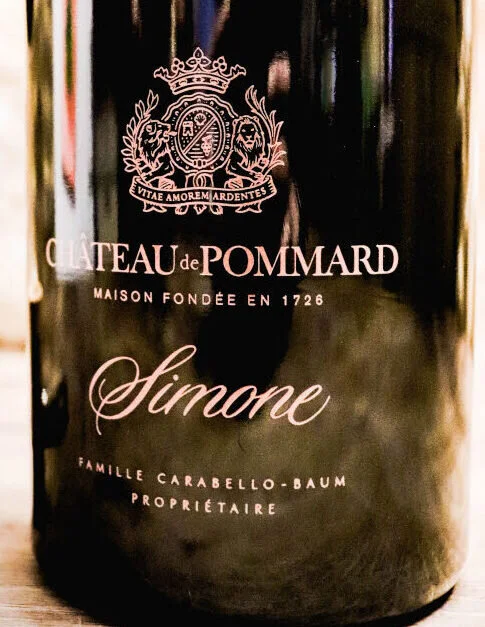
2016-Château-de-Pommard-Simone-Clos-Marey-Monge-Burgundy-Pinot-Noir-red-wine-front-label-france-e1607862557686.jpg

Château de Pommard’s Simone 2018 has won multiple gongs at the 2020 Sommelier Wine Awards, the 2020 Global Pinot Noir Masters, the 2020 TEXSOM International Wine Awards and the International Wine Challenge 2020. Due for release in January 2021, it has an RRP of £360.


A memorable Loire Valley tasting

Despite all the problems that Covid-19 has created for the usual smooth running of the wine supply chain, there are huge efforts being made by generic and trade bodies to give producers and buyers as much of a chance as possible to still show, taste and select wines. This was typified last week with Business France’s Val de Loire Unlocked session that gave buyers and the press the chance to taste in person a selection of 70 AOC wines from producers looking for distribution in the UK. Geoffrey Dean was there for The Buyer to pick out his highlights.  

logo-new.png

By Geoffrey Dean November 13, 2020

The Val de Loire’s bold and praiseworthy decision to go ahead with a walkabout tasting in central London in early November just before lockdown was rewarded by a strong turnout that included a number of prominent buyers. All the 24 producers whose wines were on show are looking for representation in the UK, and such was their overall quality and general value-for-money that many may succeed in their quest. They deserve to. 

Business France UK, supported by Food Loire and Dev’Up, did an outstanding job setting up and administering the tasting in Brettenham House, just off the Strand near Waterloo Bridge. Tasters were allotted a specified window over the course of the day, with no more than six in attendance in any one hour. No one failed to show up, according to the event masterminds, Pandora Mistry and Claire Prothon, senior marketing advisors for Business France UK.

Tasters were able to sample the full range of styles from the Loire – sparkling, dry, off-dry and sweet – with a lengthy list of red and white varietals featured along with some rosés. The tasting was carefully managed by Business France to both show a wide range of seeking distribution wines from the Loire but to do so in as Covid-safe environment as possible

loire-tasting-2-1024x735.jpg

For many of us, it was – the seated UGC de Bordeaux event in October apart – the first tasting of its kind since the initial springtime lockdown. It was, therefore, memorable, and many of the wines will live in the memory. Maybe it was the excitement of being back at a tasting again, but a clear theme of it was the sheer freshness of the wines. While Melon de Bourgogne, Sauvignon Blanc and Chenin Blanc, as well potentially as Chardonnay, lean towards reliably high acidity levels, the winemakers still have to ensure they make balanced wines. Overridingly, they did here.

Single varietals 

As might be expected, there were also some appealing single varietal Sauvignon Blancs. Antoine de la Farge and Domaine Chavet were good ambassadors for Menetou-Salon, while Adèle Rouze and Domaine Ponroy flew the flag impressively for rustic Quincy and nearby Reuilly respectively. Domaine des PierrettesDomaine Octavie and and Earl Paris-Simoneau did the same for AOP Touraine.

As for Chenin Blanc, there were some terrific wines. Vignoble Vade, with its wacky, rather un-French label, produced a fine ‘Domaine St Vincent’ Saumur Blanc 2019 with honeyed notes and floral aroma; Domaine du Puy Davyeau’s L’Envol 2018 (AOP Anjou) oozed class, as did labels from Domaine de la Chataigneraie and Domaine Oudart.


Vade’s wacky label

Vade’s wacky label

Domaine de la Commanderie’s Médiévale Cabernet Franc 2018 (AOP Chinon), exported through Flodivins in the town of Sevremoine, was a classic example of the grape. Two Cab Franc specialists that also impressed were Joel Taluau & Thierry Foltzenlogel and Domaine Nau Frères, who each exhibited three different labels from AOC Saint Nicolas Bourgueuil and AOP Bourgueil. Domaine de la Belle Etoile’s AOP Anjou Brissac Village 2018 Cabernet Franc was another to show well, while the same producer made a very quaffable Rosé from Pineau d’Aunis and Gamay. The three other rosés exhibited were made from Pinot Gris, Pinot Noir and Cab Franc/Grolleau. 

Sparkling choice 

A raft of impressive sparkling wines were spearheaded by Maison Louis de Grenelle, a bubbly specialist based in Saumur. Their three non-vintage labels, all aged in tuffeau stone cellars, were a Crémant de Loire named ‘Louis Bio’ (a blend of organically-farmed Chenin Blanc, Chardonnay, Grolleau and Pinot Noir), and a pair of AOP Saumur sparklings: the Grande Cuvée white (Chenin Blanc and Chardonnay) and a 100% Cabernet Franc Rosé called ‘Corail.’ 

 Other sparkling producers to catch the eye were Domaine des Pierrettes (AOP Touraine) and Château d’Avrillé in Anjou (AOP Crémant de Loire). Three AOP Vouvray estates, Domaine de La Racauderie, Domaine du Clos de l’Epinay and Domaine de la Chataigneraie also stood out, the latter imaginatively labelling their Chenin Blanc fizz ‘Sparkling Bubbles Kiss.’

There were many good examples of lively, scented Muscadet from the Sèvre-et-Maine region, notably Domaine de la Potardiere, Domaine Delaunay and Jean Aubron.  Also making a good impression was Château de la Grange Barbastre in the newish Côtes de Grand Lieu (first recognised in 1994), which has the most maritime influence of all Muscadet regions. The Goulaine family has been making wine there since 1777, with Victor Goulaine having just taken over from his father Baudouin, who was vigneron for nearly 40 years. His IGP Val de Loire Chardonnay also showed well.

Perhaps, the most beguiling Muscadet was Vignoble Marchais’ Champtoceaux Côteaux de la Loire 2017 from schist and quartz soils in Thouaré that helped give it minerality. It was certainly a little leaner than riper Sèvre-et-Maine examples.

For unexpected variety, two producers showed approachable damson-fruited Malbecs from 2017 and 2018: Domaine Oudart, based in Mareuil, and Domaine des Pierrettes, situated in Rilly. Two other AOP Touraine domaines, Ponroy and Chavet, sent elegant 2019 Pinot Noirs over, while a third, Octavie, threw a light-bodied Gamay in from the same vintage.  

loire-vouvray-saint-georges--768x1024.jpg

Half a dozen sweet or off-dry wines were available for tasting. Château de la Grange Barbastre’s Pinot Gris-Sauvignon IGP Val de Loire 2019 was an interesting blend for the latter style, while Domaine de La Racauderie and Domaine du Clos de l’Epinay went for 100% Chenin Blanc. Domaine de la Chataigneraie’s AOP Vouvray Saint-Georges Moelleux 2018, from botrytised Chenin, was a reminder of how sumptuous stickies from the Loire can be. It represented a fitting finale to a tasting for which the region must take huge credit.


A fascinating blend: Suntory's "Ao" whisky

How Suntory made its new Ao spirit from 5 distilleries around the world

Not one to shirk a challenge, Suntory decided to launch its new world travel retail brand Ao during a global pandemic, when international travel is at an all-time low. The spirit itself was also quite a feat, being a blend of whiskies from the five countries where Suntory owns distilleries – Scotland, Ireland, United States, Canada and Japan – with the concept behind it being a whisky that is all things to all whisky lovers the world over. How could it possibly succeed? Suntory’s Mike Miyamoto, whose brainchild Ao is, explained to Geoffrey Dean the thinking behind the brand which involved an ingenious tasting of different components to illustrate each country’s whisky brings to the party.

logo-new.png

By Geoffrey Dean November 5, 2020

Despite the uncertain economic times, Beam Suntory, the oldest Japanese whisky producer, has boldly embarked on a worldwide launch of an innovative brand, Ao that is now available in global travel retail. A blend of whiskies from the five countries where Suntory owns distilleries – Scotland, Ireland, United States, Canada and Japan – Ao is the brainchild of their global brand ambassador, Mike Miyamoto, who has been involved in whisky production since 1978.

Suntory’s refreshing determination not to bow to Covid-inspired doom-and-gloom mongering fits in with their company motto, “Spirit of Bold Ambition” (‘Yatte Minahare” in Japanese). That motto dates back to 1923 when the company’s founder, Shinjiro Torii, built its first distillery at Yamazaki. His blending ability was passed down to his son and his grandson, Shinji Fukuyo, who is the current chief blender at Suntory. 

Suntory’s chief blender Shinji Fukuyo

Suntory’s chief blender Shinji Fukuyo

The concept behind Ao, which was initially sold only in Japan from early 2019, was explained in a Zoom call by Miyamoto, a much respected figure in the whisky industry. “We wanted a whisky that brings the world together ‘as one’ through Japanese craftsmanship,” he said. “We called it Ao as that means ‘deep blue’ in Japanese, reflecting the oceans that link it. The bottle has five faces to represent the five countries.” The celebrated Japanese calligrapher, Ogino Tansetsu, designed the bottle’s fetching label.

Mike Miyamoto

Mike Miyamoto

The whole blending exercise was, Miyamoto admitted, a difficult and complicated exercise, taking as many as 100 trial blends before Fukuyo felt they had got it right. “We had four main challenges,” Miyamoto continued. “First, what should the flavour of the final product be? Secondly, how will each region perform within the blend? Thirdly, which component whiskies should be used to represent best each region’s characteristics as we had a choice of distilleries; and lastly, what is the availability of each component whisky, and how should that supply be managed? This was all very tricky for Shinji as he had to achieve harmony but some individuality, which was contradictory.”

To allow journalists best to understand the composition of Ao, Beam Suntory sent out five different samples of whisky to show what each region offered. What was imaginative was the fact each sample was the final Ao blend without one region’s component whisky. So sample 1 was the blend without Scotch, sample 2 was the blend without the Irish whisky, sample 3 was without the Bourbon, sample 4 was without the Canadian whisky and sample 5 without the Japanese. A sixth sample was the finished Ao blend.

ao-1-1024x768.jpg

The samples showed precisely what each region brought to the blend. Miyamoto’s commentary during the tasting was pertinent: “The one without the Scotch lacks a bit of smokiness and spiciness as well as some complexity,” he declared. “The Ardmore gives smokiness and the Glengarry spiciness, while both provide richness and depth of flavour, which is the role of Scotch. Sample 2 is a bit flat without that much kick, so the Irish whisky from our Cooley distillery also gives that depth of flavour and some complexity; the Bourbon from Jim Beam adds some bright aroma and some vanilla sweetness from the new American oak; the Canadian from the Alberta distillery adds some smoothness and sweetness; the Japanese components from our Yamazaki and Hakushu distilleries help round off any roughness, for the smokey malt from the latter is much softer than the Ardmore smokiness. So the role of the Japanese whisky is bringing together the parts into a whole. So it is a co-ordinator of perfect balance.”

mainvisual-2-1024x538.jpg


What though of Ao itself? (RRP US$65 or €65). Miyamoto revealed that the five components were aged for between five and 18 years in Bourbon casks and sherry butts. The nose was bright with a top note of vanilla and pineapple-like fruitiness. A sweet, woody aroma with honey and cinnamon-like spiciness preceded a smooth and sweet mouthfeel with smoky, spicy and woody notes. Then came a very long, lingering finish with many layers of complexity. In short, a terrific whisky in complete harmony.

Ed Stening, Beam Suntory’s marketing manager, revealed more of the rationale behind Ao’s release. “We could have held this innovation back until well after the rebound,” he said, “but we feel it’s a great opportunity to throw some energy back into the travel retail channel and give some of the things we’ve all been going through over the last nine months a bit of a break. So we’re pretty excited to get this out. It’s in the UK and has just arrived at Dublin airport and JFK in New York. It’s also available in Canada, Australia, China, India, Dubai, Singapore and Hong Kong as well as European countries such as France, Germany, Netherlands and Turkey.” 


The 2018 vintage in Bordeaux

logo-new.png

UGC tasting shows off the might of Bordeaux 2018 vintage

201013-ugcb-011-1024x683.jpg

No elbows were needed at this year’s annual Union des Grands Crus de Bordeaux (UGC) tasting in London, and the Leoville Barton didn’t run out – the new tasting environment for the assessment of the Bordeaux 2018 vintage was seated, took five hours with 130 wines tasted. Our man at the tasting, Geoffrey Dean, selects the best wines, appellation by appellation as well as gets the views from 13 of the top châteaux owners on where lies the strengths and weaknesses of Bordeaux 2018.

By Geoffrey Dean

The annual October Union des Grands Crus de Bordeaux (UGC) tasting in London was like no other: not a single Bordeaux producer in attendance, and all tasters seated at individual tables so as to observe social distancing. It was, therefore, not the usual scrum, and with five hours allotted to taste the 130 wines on show, it was a great opportunity to get truly to grips with the 2018 vintage. Around half of the classed growths in the Medoc made their wines available although the percentage was a little higher for their Graves and Saint-Emilion counterparts.

Hailed as a great year by certain Bordelais, the wider consensus is that it has produced some outstanding and indeed exceptional wines, but not across the board. Climactic conditions ensured this, notably with white wines, both dry and sweet, which did not reach the heights of some of the reds. Parts of the Left Bank dazzled – notably Margaux and Saint-Julien – but it appears to have been more of a Right Bank year.

The magnificent setting of Church House, Westminster was the location for PR supremo Sue Glasgow’s last UGC tasting

The magnificent setting of Church House, Westminster was the location for PR supremo Sue Glasgow’s last UGC tasting

What is undeniable is that weather conditions in 2018 were far from straightforward, with all sorts of extremes that both threatened and assisted quality grape production. Hailstorms in May and July caused damage, with a big one falling on the same day France won the football World Cup. A very wet winter was followed by a particularly damp spring, with rain lasting through till the latter half of June. This meant that one of the five conditions for a perfect red wine vintage, as laid down by the Oenological Research Unit from the Institute of Vine and Wine Science at Bordeaux University, could not be met: namely no significant rainfall after fruit set.

Downy mildew was a major problem throughout much of Bordeaux, with yields reduced accordingly. Christian Seely, general manager of Pauillac second growth Château Pichon Baron, admitted that “mildew pressure was so virulent that it was extraordinarily scary.” Organically or biodynamically farmed vineyards were especially badly hit, with Margaux third growth Château Palmer’s yield cut to a mere 11 hl/ha. By contrast, neighbouring estate Château Rauzan-Segla, which is conventionally farmed and could spray against downy mildew, produced 28 hl/ha (down from a normal yield of 40 hl/ha). Timings of sprayings were still crucial, with Seely declaring that being out by as little as two hours could prove too late.

Crucially, though, flowering, which began in late May under satisfactory conditions, was thankfully quick, ending within ten days with very little ‘coulure’ (where small berries fall off due to shrivelled stems). The timing was fortunate as rain then fell from 9-18 June before sunny weather arrived for most of the rest of the month.

Geoffrey Dean (in sleeveless jersey): “Parts of the Left Bank dazzled – notably Margaux and Saint-Julien – but it appears to have been more of a Right Bank year.”

Geoffrey Dean (in sleeveless jersey): “Parts of the Left Bank dazzled – notably Margaux and Saint-Julien – but it appears to have been more of a Right Bank year.”

What now made the vintage was wonderful sunny and dry weather from early July till late October, with above average sunshine hours and temperatures for that period. All the black grapes reached optimum ripeness and could be harvested at winemakers’ time of choosing with no risk of dilution or rot. Total acidity levels were not an issue thanks to the water reserves from the wet winter and spring. Patrick Maroteaux, whose family co-owns St-Julien fourth growth, Branaire-Ducru, declared that “the alcohol is one of the highest but the pH is one of the lowest.”

Etienne Charrier, technical director at Margaux fourth growth Château Prieuré-Lichine, said his pH was 3.69, with no need to correct it. Veronique Bonnie Laplane, owner of Graves estate Château Malartic-Lagraviere, revealed the pH for her reds was 3.50, while her whites came in at 3.22. The pH for Paulin Calvet’s whites at his Pessac-Leognan estate, Château Picque Caillou, were even lower at 3.10. Sufficiently low pH levels – so crucial to freshness – did not appear an issue therefore.

Those who considered this “un grand millésime” included Ludovic David, managing director of Margaux fourth growth, Château Marquis de Terme. “This is a great vintage of Bordeaux: one more – thank you global warming!” he told The Buyer. “The wine is rich and powerful because the berries had a very beautiful maturity. It is a more classic vintage than 2015, with more acidity; more powerful than 2016 and with perhaps more elegance. Difficult to say which is best because each vintage has its personality, but what connects all these wines is their quality and their balance. They are all of a very high level like the 2019 … and the 2020 that is coming.”

Likewise, Olivier Bernard, owner of leading Graves estate, Domaine de Chevalier, considers that his 2018s are the best he has made. Certainly, his white possessed vibrant acidity, layers of complexity with glorious concentration and length; and his stunning grand vin was similarly complex with gorgeous red and black fruit, sensuous tannins and a very long finish.

A general difference between the red 2018s and the much lauded 2016s is their higher sugar, and often higher alcohol levels, rendering them exuberant and almost untamed. By contrast, the 2016s are in a more classical mould. Bruno Borie, owner of Saint-Julien second growth Château Ducru-Beaucaillou, called 2018 “a revolutionary vintage that sets new standards.” His comparison of 2018 to the legendary years of 1945, 1961 and 1982 may reflect the notable Bordelais capacity to talk up the vintage.

201013-ugcb-047-1024x683.jpg

Prominent Right Bank estates showed especially well, helped by the fact Merlot and Cabernet Franc reached optimum ripeness. Nicolas Audebert, managing director of one of the stars of the vintage, Château Canon in Saint-Emilion, declared pertinently: “We wanted to keep the freshness and limestone expression. We have to find that balance – we don’t want to lose that classic style but still follow the climate.”

Neighbouring Château Canon-La-Gaffelière, a certified organic estate, was another standout, leading Count Stephan von Neipperg, its general manager, to tell The Buyer: “We have a pretty perfect balance and freshness that becomes for me more and more important…..there’s energy in this wine. 2018 is a little between 2016 and 2015. It is less ‘easy’ than the 2015, but the tannins are more integrated than in the 2016.” Ronan Laborde, whose family own Château Clinet in Pomerol, said that 2018 “is a vintage that does not show off but has a lot of class.”

As far as the sweet wines of Sauternes and Barsac were concerned, the lack of botrytis until late in autumn militated against a memorable vintage. Seely revealed that only three tries were made at Château Suduiraut, yielding a tiny crop of 5 hl/ha. Its wine still shone out, along with those of Château Coutet, Château Sigalas Rabaud and Château Lafaurie-Peyraguey.

TOP 12 MEDOC

Brane-Cantenac

Branaire-Ducru

Lafon-Rochet

Langoa Barton

Léoville Barton

Léoville Poyferré

Lynch-Bages

Marquis de Terme

Pichon Baron

Pichon Longueville

Rauzan-Ségla

Talbot

TOP 10 GRAVES (red)

Carmes Haut-Brion

Domaine de Chevalier

Fieuzal

La Louvière

Latour-Martillac

Malartic-Lagravière

Olivier

Pape Clement

Picque Caillou

Smith Haut Lafitte

TOP 6 GRAVES (white)

Domaine de Chevalier

Fieuzal

Larrivet Haut-Brion

Pape Clement

Picque Caillou

Smith Haut Lafitte

TOP 12 SAINT-EMILION

Beau-Séjour Bécot

Canon

Canon-La-Gaffelière

Clos Fourtet

La Gaffelière

Larcis Ducasse

La Tour Figeac

Pavie Macquin

Troplong Mondot

Trottevielle

Valandraud

Villemaurine

TOP 6 POMEROL

Beauregard

Clinet

Gazin

La Croix de Gay

L’Evangile

Rouget


Care for Wild wines & saving the Rhino

logo-new.png

Care for Wild range hopes to help rhinos & boost South African wine

You could probably make a team out of the number of former English cricketers who now have their own wine brands, but Darren Gough’s wine project is a little different. For a start his name does not appear on the label, and he does not claim to be involved in any part of the winemaking. But he 100% believes in what it stands for. As the the new Care for Wild wine range, launched last week by Freixenet Copestick, shares the name of the South African rhino sanctuary that Gough has been involved with since his playing days. Here Geoffrey Dean shares the story of how Care for Wild wine came about and how it hopes to boost sales of South African wine and help save and protect its endangered rhinos at the same time.

By Geoffrey Dean September 30, 2020

If you are looking for a South African wine brand with a point of difference then Frexienet Copestick’s new Care for Wild range – initially available through Slurp – hits the mark for so many reasons…

For much of his nine years in the England cricket team, Darren Gough was the heartbeat of the side, a man for whom the cliché – ‘he wore his heart on his sleeve’ – might have been written. As a passionate animal lover, particularly of rhinos, there could be no better brand ambassador for the appealing new South African range, Care for Wild, which was launched by Freixenet Copestick last week. Twenty per cent of profits from sales will go to the highly deserving rhino sanctuary of that name.

The passion Darren Gough has for the rhino sanctuary that will benefit from the new Care for Wild range shone through on last week’s Zoom launch

The passion Darren Gough has for the rhino sanctuary that will benefit from the new Care for Wild range shone through on last week’s Zoom launch

Gough was in the early stages of his international career in 1997 when he went to Kenya with England for an ICC tournament there. On a day off, he visited the Daphne Sheldrick animal orphanage in Nairobi, where he encountered orphaned elephants and rhinos. “I was there rolling in the mud with these babies, and there was this one young rhino who really took me by storm,” he said. “He was called Magnum. I took a real shine to him, so we adopted him and paid his way for a few years till he got released into the wild.”Not surprisingly, one of Gough’s nicknames became ‘Rhino’.

Chance meeting

Gough and his wife Anna’s love for rhinos led them to do volunteer work for Care for Wild, which was set up in 2001 two years before the cricketer’s international retirement by South African conservationist, Petronel Niewoudt.

By chance last December at a charity dinner Gough sat next to Robin Copestick, managing director of Freixinet Copestick. “Darren spoke of his involvement with Care for Wild, got me thinking,” said Copestick. “While I recognise that South African wine is amazing for quality and value, there isn’t really any brand that’s doing a brilliant job in the multiple retail sector. I saw an opportunity that could not only add value to the South African category, but also to raise money for such an amazing charity. We have big ambitions for the on-trade and the retail sector for the range.”

Copestick added that much will depend on whether he can get the multiples involved. Volume should not be an issue, for 5,000 cases of the two mid-market wines from Walker Bay (Syrah-Viognier and Sauvignon Blanc-Semillon blends) are available, while the three entry-level wines (Rosé, Pinotage/Shiraz and Sauvignon Blanc) are also in plentiful supply. Only the two single varietal premium wines (Shiraz from Elgin, and Chenin Blanc from Swartland) are limited to a few hundred cases.

The Care for Wild range features rhinos who have been cared for by the sanctuary

The Care for Wild range features rhinos who have been cared for by the sanctuary

Fast launch

It is certainly a notable achievement by Copestick and his team to have delivered the whole project only nine months after it was dreamt up. “In wine terms it is really quick, and I’m proud of everyone for doing that,” Copestick said. “Thanks go to Jodie Newman for designing the rhino labels which were beautifully done by the artist Paul Stowe. And huge thanks to Overhex – and winemaker Ben Snyman – who’ve put all of these wines together for us in very difficult circumstances. They did an incredible job to get them over.”

Stowe has drawn a young male white rhino, Arthur, on the labels for the mid-market wines, and a young black male, Odin, on the premium labels, ‘The Protected Collection.’ While only 20,000 whites are alive, mostly in South Africa, around 1,000 per annum have been poached in recent years in that country. Black rhinos are even more critically endangered, numbering only 5,000.

All the orphaned rhinos rescued to the Care for Wild sanctuary are dehorned under sedation to deter poachers but the sanctuary’s location is still a closely guarded secret.

Darren and his wife Anna were able to share their own experiences of visiting and getting involved in the Care for Wild rhino sanctuary during the Zoom launch

Darren and his wife Anna were able to share their own experiences of visiting and getting involved in the Care for Wild rhino sanctuary during the Zoom launch

Darren and his wife Anna went out to South Africa five times last year to visit the sanctuary, and will go again shortly now that the ban on travel into the country is being lifted on October 1. “We’re so excited about going out there for the first time this year,” Anna said. “I’m so passionate about the charity. My passion has always been animals. The care and love that goes 24/7 into these orphans that are so traumatised is amazing. People think they don’t feel anything but they really do. Arthur put up a real fight when his mother was poached and he suffered machete wounds. They call him Arthur the Great as he’s a very special character.”

Darren and Anna visiting the sanctuary in October 2019

Darren and Anna visiting the sanctuary in October 2019

She added: “Petronel and her team rehabilitate orphans over four different phases before introducing them back into their natural habitat. Odin is one such. Even then, they’re monitored to check they are safe and stay healthy. Looking after the surrounding villages is so important as poachers will try every means to get at the rhinos in the orphanage, so the charity gives the villagers jobs and bursaries for their agriculture and farming.”

The sanctuary has been made possible by the personal commitment and drive of founder Petronel Niewoudt 

The sanctuary has been made possible by the personal commitment and drive of founder Petronel Niewoudt 

Gough admits he gets very emotional when he visits Care for Wild. “It is so rewarding when you leave there, knowing that you’ve helped,” he said. “You see the work that Petronel puts in every day. Five new orphans have come in recently and she lives with that rhino 24/7…it’s blindfolded initially to make it feel secure. There have been no volunteers since Covid, so they’ve had to lock in the staff, who’ve had to move their families into the sanctuary, to make sure those animals survive and get the best treatment.”


The Care for Wild team in action helping to rescue a baby rhino

The Care for Wild team in action helping to rescue a baby rhino

Petronel’s devotion to helping save a species marks her out as a remarkable woman. “May I always be so humble as to recognise how little we started with and how far we have come,” she declared. “We now understand exactly what it takes to save an orphaned rhino calf. We appreciate the time, money, and effort to save a species from extinction. This is by no means a single person’s journey. It takes a team. We spend our energy wisely and share our experience and knowledge. Why? Why not? Is it not all of our responsibility to ensure a future for generations to come?”

Tasting Notes (introductory prices until October 4 through Slurp.co.uk

Care for Wild “Arthur” Pale Rosé, 12% abv, £9.95

Made from Pinotage from last two vintages, with a touch of Chenin Blanc to add extra acidity; dry, clean and fresh with some raspberry notes; 2 hours on skins – very light pink hue.

Care for Wild Sauvignon Blanc, 12.5% abv, £6.95

Plenty of tropical fruit and fresh acidity; a good non-vintage quaffer.

Care for Wild “Arthur” Sauvignon Blanc/Semillon 2020, 12.5% abv, £9.95

Tropical and citrus fruit from Walker Bay with mineral notes; lively acidity.

Care for Wild ‘Protected’ Bushvine Chenin Blanc, 2019, 13% abv, £15.95

Fruit from Swartland bushvines; apricot and peach notes; barrel-fermented giving some creaminess and richness; quite complex with very good length.

Care for Wild Red Blend, 13.5% abv, £6.95

Excellent value fruit-forward quaffer; fruit from two vintages – Pinotage with some Shiraz added; oak chips give some structure.

Care for Wild “Arthur” Syrah/Viognier 2019, 14% abv, £9.95

Grapes from Walker Bay with splash of Viognier (3%) to give some florally. Forest red fruits with soft tannins and hint of spice.

Care for Wild ‘Protected’ Shiraz, 2018, 14% abv, £15.95

Cool climate fruit from Elgin; peppery and spicey with velvety tannins; good combination of Rhone-style restraint and New World forwardness; very long finish. Will cellar well.

New South Wales Uncovered

Screen Shot 2019-11-20 at 11.48.35.png

Globetrotter Geoffrey Dean is back on the road, this time exploring the wine regions of New South Wales, from Semillon specialist the Hunter Valley to the high altitude region of Orange.

When the globe gets back to some sort of normality and travel becomes easier again, many wine tourists will doubtless return to old favourites, but for those keen to explore wine pastures new, one Australian state remains relatively undiscovered. Not the Northern Territory nor Queensland, but the country’s most populous state: New South Wales.

For, although the Hunter Valley has long attracted tens of thousands of visitors every year, other delightful regions, such as Orange, Mudgee and the southern Highlands, possess both the quality of wines, accommodation and restaurants to seduce the discerning patron. Throw in the likes of Canberra District, Tumbarumba, Hilltops, Shoalhaven Coast and Riverina, and you have a state wine circuit of genuine diversity and appeal.

The New South Wales coast

The New South Wales coast

Officially there are 16 wine regions in New South Wales, many of which can be taken in individually from Sydney. The best option, though, for the wine tourist with both the time and a sense of adventure, is to fit a selection in as a part of a wide sweeping circular drive, lasting anything between several days and a fortnight or more.

The route which I followed, and would happily recommend, is to start by heading south from Sydney to Bowral and the Southern Highlands; then drive in a north-westerly direction via Goulburn to Orange; go north from there to Mudgee and thence to the Hunter Valley; and then circle back to Sydney via the winemakers’ holiday haunt of Port Stephens, a gem of a destination to relax at the end of a trip.

The Southern Highlands are cool climate, as the name suggests, although they resemble somewhere like the Cotswold Hills in England more than their Scottish namesake. Bowral and Mittagong are two lovely old historic towns to explore the region from, with the dozen or so local wineries within commuting distance.

iStock-1161661491-640x427.jpg

At all of them, there won’t be much, if any, 2020 wines made owing to smoke taint from the bushfires, but plenty of back vintages are available for tasting. Joadja, the oldest winery in the region, having been established in 1983, is worth a visit, as is Artemis, which has a similarly relaxed cellar door atmosphere.

Centennial Vineyards is a more formal setup, with a smart restaurant and shop to complement its wide selection of good wines. The Tertini Wines cellar door should not be missed, housing what I thought the best and most interesting range of wines in the region. This includes not just Pinot Noir and Chardonnay but also Italian varieties like Arneis and Lagrein.

While the Southern Highlands wineries have the advantage of altitude – Tertini’s being at 675m – Orange boasts the highest vineyards in Australia: some over 1,000m, although winemaker David Lowe’s site, at Nullo near Mudgee, is as high as 1,100m. The resultant higher natural acidity levels, and with them greater freshness, are hallmarks of Orange’s wines along with minerality from volcanic soils.

Fruit quality is also exceptional, as is the cellar door experience, and when you add in the appeal of the beautifully laid-out town of Orange, with its many historic buildings, you have the ingredients for a most enjoyable stop-off of several days.

Most of the wineries are west of Orange, but one that should not be missed to the southeast is Patina, whose cellar door is open at weekends only. The stunning gardens there are well worth a stroll through.

Patina and its gardens

Patina and its gardens

Owner-winemaker, Gerald Naef, who came to Australia from California in 1981, skilfully crafts a wide range with particularly good reserve Chardonnay and a signature Cabernet-Merlot blend named Jezza.

Naef is the first to admit he has learnt much from his good friend Philip Shaw, one of Australia’s most revered producers, having twice been IWSC’s International Winemaker of the Year (in 1986 and 2000). It is Shaw that has spearheaded Orange’s rise to premier league status as a wine region after he moved there permanently in 2004.

Philip Shaw, IWSC winemaker of the year in 1986 & 2000

Philip Shaw, IWSC winemaker of the year in 1986 & 2000

Sons Daniel and Damian now run Philip Shaw Wines, whose cellar door offers delicious cuisine as well as a food-and-wine pairing tasting. Philip himself has branched off to make his own super-premium range called Hoosegg at his nearby Koomooloo Vineyard.

Tastings there are by appointment only but highly recommended, especially the exceptional Merlot blend (named Jade Moon) and outstanding Cabernet Franc blend (named Mountain Dragon).

Koomooloo Vineyard

Koomooloo Vineyard

Just down the road from Koomooloo Vineyard can be found the Heifer Station winery, which last year won the gold medal for tourism from Destination New South Wales. The farm there still has cattle but the owners planted 65 hectares of vines a decade ago and converted an old shearing shed into an atmospheric cellar door that has proved a huge hit since opening in 2016. “We want to ensure people don’t feel out of their depth in a wine sense,” the winery’s general manager, James Thomas, said.

“We have biking around the vineyard or in a golf cart. Apart from cheese platters or lunch at the cellar door, we also do private picnics in a romantic setting, which has led to nine marriage proposals.” Heifer Station’s wines also impressed, notably their sparkling Genisse 2015 (French for ‘heifer’) and Bull Paddock Chardonnay 2018.

Heifer Station

Heifer Station

Another fine sparkling wine producer is Printhie, whose Swift Series of bubblies included a 2010 blanc de blancs that spent nine years on the lees. De Salis Wines are also top notch with magnificent views from their Lofty Vineyard (the highest in the Orange GI at 1050m).

The Chardonnay and Pinot Noir from it make both superb sparkling and still wines in a range through which Charlie Svenson, owner-winemaker and most genial of hosts, takes visitors with passion and enthusiasm.

De Salis vineyards

De Salis vineyards

No visit to Orange would be complete without a tasting at Bloodwood with Stephen Doyle. One of the pioneers of wine-making in the region, having established the winery in 1983, Doyle is one of New South Wales’ top producers with a wide range that includes Shiraz, Malbec, Pinot Noir, Chardonnay and Riesling. His wines are all very reasonably priced given their high quality.

Vines at Bloodwood

Vines at Bloodwood

So too are James Sweetapple’s labels at Cargo Road Wines, from whose cellar door deck dramatic views can be had for 80km towards Nangar National Park. The engaging Sweetapple, nicknamed ‘Sweetiepie’ by his fellow winemakers, grows as many as 10 varieties, including Lagrein, Barbera and Nebbiolo.

Two other top Orange producers with welcoming cellar doors are Swinging Bridge and Ross Hill Wines. Tom Ward crafts excellent Pinot Noir and Chardonnay from the former’s six hectares under vine, while Ross Hill’s new winemaker, Luke Steele, presides over a range that includes a fine Bordeaux blend named the Griffin and a single varietal Cabernet Franc.

th.jpg

As far as Orange accommodation is concerned, The Oriana is a good mid-price hotel that is ideally situated at the western end of town for easy access to and from the wineries.

Within walking distance is the best restaurant in town, Charred, whose tasty cuisine is complemented by a wide-ranging wine list featuring the best Australian labels as well as many top international ones.

From Orange, it is a leisurely scenic drive of a couple of hours or so via Bathurst to Mudgee, another of New South Wales’ prime wine-producing regions. It is also the oldest, dating back in 1822 when the Cox family from Britain planted vines. German emigres followed them, and one of their descendants, Jacob Stein, is making world-class Riesling at the Robert Stein Vineyard.

The Pumphouse at Robert Stein Vineyards

The Pumphouse at Robert Stein Vineyards

It is well worth a visit, for apart from the wines to taste, the winery also has an outstanding restaurant named the Pumphouse along with a motorbike museum that houses a collection of classic old bikes dating back to 1926. Other top Mudgee wineries include Logan Wines, Huntington Estate, Robert Oatley Vineyards and Lowe Wines.

The latter, with the forward-thinking David Lowe at the helm, produce some of Australia’s best Zinfandel, which probably explains why their acclaimed restaurant is named the Zin House. Lowe’s wife, Kim Currie, produces delicious cuisine from their biodynamically-farmed Tinja property, over which the restaurant has glorious views.

Forgandenny House, Mudgee

Forgandenny House, Mudgee

A lovely place to stay in Mudgee is Forgandenny House, a historic B&B in overlooking Lawson Park and Cudgegong River. From there, it is an easy stroll along the river into the town centre. Named after a village in near Perth in Scotland, whence the current owners’ ancestors came, Forgandenny has three double bedrooms as well as a self-contained cottage for six.

Possessing its own tennis court within pretty gardens, and with a 50-metre Olympic pool in the park opposite, it has excellent amenities. Moreover, the Forgandenny breakfasts are legendary for their size and quality.

The Hunter Valley specialises in Semillon

The Hunter Valley specialises in Semillon

From Mudgee, it is a two-hour drive to the town of Pokolbin and the Hunter Valley, New South Wales’ best-known wine region. Of the umpteen wineries of note there, those not to miss include Brokenwood, Mt Pleasant, Tyrrell’s, McGuigan Wines, Audrey Wilkinson and Pepper Tree. All produce superb examples of the Hunter’s signature white grape, Semillon, which is picked early to preserve acidity and keep abv levels low, typically 11%.

Hunter Semillon is renowned for ageing beautifully with honeyed toast notes, and wonderful old library stock is generally available for tasting and purchase at wineries. Some highlights tried were Brokenwood’s Trevena Vineyard 2014. Tyrrell’s HVD 2014, from 110-year old vines, and Audrey Wilkinson’s The Ridge 2011.

Sunset at Tyrrell’s

Sunset at Tyrrell’s

Hunter Shiraz is very different to its Barossa counterparts, being much more medium-bodied than many of the South Australian big bruisers. Brokenwood’s iconic Graveyard Vineyard Shiraz 2017 showed especially well, as did Audrey Wilkinson’s the Lake Shiraz 2017 and Pepper Tree’s Single Vineyard Reserve Coquun Shiraz 2017 – Coquun being the Aboriginal name for Hunter Valley.

One other Hunter winery, Lake’s Folly, that specialises in Chardonnay and Cabernet Sauvignon must be highly commended. Rodney Kempe crafts special examples of both, although the latter also has small amounts of Merlot, Petit Verdot and Shiraz blended in. Tasting at the atmospheric cellar door is strictly by appointment, but very worthwhile, with Kempe the most engaging of hosts.

While the Hunter has a selection of places to stay, Spicer’s Guesthouse is an outstanding option, offering five-star accommodation in a relaxing location. Its excellent Eremo restaurant does contemporary Italian cuisine. ‘Leaves and Fishes’, which focuses on seafood with an Asian kick, is a scenic place for lunch, while the cosy EXP Restaurant has consistently won plaudits for its dinners. Binnorrie Dairy, which is open for visits, is a must for cheese lovers.

Quad biking on Port Stephens’ sand dunes

Quad biking on Port Stephens’ sand dunes

Many Hunter Valley winemakers have holiday homes in Port Stephens, an hour’s drive away on the coast and a ‘must’ stop-off on the way back to Sydney. A whole range of things to do and see there can be found, including quad-biking through the biggest range of coastal sand dunes in the southern hemisphere (sanddunesadventures.com.au), dolphin-spotting cruises (moonshadow-tqc.com.au) and a new koala sanctuary, opening late September 2020  (portstephenskoalasanctuary.com.au).

For world-class seafood cuisine as well as a superb wine list, there is the Rick Stein restaurant at the Bannisters hotel, which is a good place to stay.  Culinary delights also await visitors to the Little Beach Boathouse and the Shoal Bay Country Club.

Rick Stein at Bannisters

Rick Stein at Bannisters

All the ingredients for a boom in wine tourism in New South Wales, therefore, are in place. If it has remained something of a secret, that should change when travel eventually returns to former levels. The state’s sheer size means there will always be unexplored pockets, but there will be no better time to go than during the 2021-2 Ashes series, or the run-up to the Twenty20 Cricket World Cup in Australia, rearranged for autumn 2022.

For more information, go to: www.visitnsw.com

A Miraculous Recovery from Coronavirus

times-black-ee1e0ce4ed.png

Sister of England cricketing great Tony Greig salutes hospital staff after five-week stay in ICU

Geoffrey Dean

Saturday May 30 2020, The Times

The sister of the late England cricket captain Tony Greig has recovered from Covid-19 after spending five weeks on a ventilator. Sally Ann Hodson, 66, who was in an induced coma for most of her hospital stay, will be released today after initially being given a 20 per cent chance of survival by doctors.

Sally Ann Hodson with her brother Tony Greig

Sally Ann Hodson with her brother Tony Greig

Mrs Hodson, who has been using a Zimmer frame to take tentative steps around the ward at Pinderfields Hospital in Wakefield, Yorkshire, has been christened the “walking miracle” by nurses.

“I was longer in ICU than most, and on tracheotomy and life support for nearly six weeks, whereas most do no more than four,” she said. “I’ve just been blessed and very, very lucky. It’s beyond nursing what they provide for people like us. Every time anyone walked past — whether it was a cleaner, a tea lady, a nurse — they would kneel beside me and say ‘Come on, hold my hand.’ The little lady who showers me, Alison . . . she’s just fantastic. They are just the most incredible people at Pinderfields: I’ve never seen one nurse here lose their temper and they have a wonderful sense of humour.”

For Mrs Hodson, who has not seen her husband or two sons since being admitted on April 6, the past week has been emotional with messages and calls flooding in. “After my brother Tony’s daughter, Samantha, rang yesterday from Australia, I put the phone down and started to think I’m 66, and Tony died at 66. It really upset me.”

Referring to her brother’s death in December 2012 after a diagnosis of lung cancer, she said: “Knowing what it’s like to fight for your breath, what he must have gone through, I started to sob, and every time I stopped and said my prayers, I started again. I was spared and I’ve lived. My mother was 98, but I can’t believe I’m the same age that Tony died at, but there but for the grace of God go I.”

Sally Ann pictured after five weeks on a ventilator

Sally Ann pictured after five weeks on a ventilator

Giles Toogood, of St James’s University Hospital in Leeds, sent an email at the weekend to Mrs Hodson’s husband, Phillip, a former president of Marylebone Cricket Club, in which he wrote that he feared last month that “it was not going to end well” but did not want to tell him at the time.

Professor Toogood said: “It’s amazing, quite amazing after 54 days in hospital, most of it in an ICU. I have a thing that if patients’ kidneys keep working, then they go home. As soon as you get multi-organ failure, you’re in deep trouble.”

The days after Mrs Hodson came round from her induced coma were far from straightforward. “When I sat up for first time, I had 30 minutes of the worst dizziness and sickness as I’d been lying flat for six weeks,” she said. “I didn’t realise when I came round that I wouldn’t be able to walk — initially I couldn’t move my legs, never mind my arms.

“The first time they helped me up and put my legs over the side of the bed, I could hardly breathe and I had this terrible nausea attack. That happened every day for seven days, but now it doesn’t happen at all.”

Sally Ann, second left, with her brothers Tony and Ian; their mother Joycie, and sister Molly

Sally Ann, second left, with her brothers Tony and Ian; their mother Joycie, and sister Molly

Happily, Mrs Hodson has been told that she will eventually recover all her physical capabilities in time. “I’m one of the few who’s recovered from my journey,” she said. “There’s no medication on discharge — just painkillers [paracetamol] as I’ve got a sore back from lying in bed and have quite a few headaches. I get a sleeping pill and a special liquid just to keep you calm. I have injections for clots and have been on quinine.

“I’ll be in isolation when I go home, although I can see family and will have a carer to help me manoeuvre. They don’t want me to have visitors — even the physio will wear a mask and gloves.”

Ahead lies a period of recuperation that is likely to stretch to 12 months. But as Mrs Hodson reflected, “a year out of my life after such a close shave is nothing — I’ve got lots to live for.” Already, she is looking forward to the birth of another grandchild in November, and a life beyond thanks to the efforts of outstanding medics.

'Super Rhone' Chene Bleu's latest releases

logo-new.png

Why for Chêne Bleu it is the best of times and the worst of times

Getting the UK’s first taste of the new wines from Chêne Bleu would normally be an occasion for unbridled joy, especially with the Southern Rhône estate having just won the 2020 Terre de Vins trophy for best wine tourism in  France. But Geoffrey Dean hears first hand from owner Nicole Rolet of the stark reality that small wineries face during Lockdown and coming into the recession that awaits – and all that she and her winery are doing to help those most in need in the hospitality sector.

By Geoffrey Dean May 12, 2020

The new vintages ‘Héloïse’ 2012, Abelard 2012 and Viognier 2016 are tasted alongside a selection of other Chêne Bleu back vintages.

Lovers of Chêne Bleu’s wines, as well as wine tourists who have visited the stunning estate near the old Roman town of Vaison-La-Romaine in the southern Rhône, will be heartened by twin pieces of good news in these most trying of times. First, The Buyer can reveal that the IGP Vaucluse winery’s latest releases – the 2012 reds and 2016 Viognier – are showing outstandingly well; secondly, Chêne Bleu has just won a prestigious oenotourism trophy from French magazine ‘Terre de Vins’ – namely the Grand Prix d’Or Restoration dans le Vignoble ‘Bistronomique.’

The La Verrière estate

The La Verrière estate

More on the award later, as well as the trials and tribulations facing Chêne Bleu under lockdown, but first the wines, which are available in the UK from Justerini & Brooks and in California from Wilson Daniels. The Rolet family, who in the mid-1990s acquired the estate, known as La Verrière after its medieval glass-making tradition, initially sold their grapes to the local co-operative before deciding to make their own labels in 2006.

Because Chêne Bleu did not want to take any chances with other wineries’ used barrels, they opted for 100% new oak in their first vintage, followed by 50% new and 50% second fill in 2007, and 33% new, 33% second fill and 33% third fill thereafter. Feeling that the wines needed time for their tannins to bed in, they held back release. Hence the fact that the 2012 reds are the newest release.

The new vintages

Detailed tasting notes of several vintages follow this piece, but it was noticeable how effortlessly well the 2012 reds had absorbed the new French oak. The ‘Héloïse’ 2012 (65% Syrah, 31% Grenache and 4% Roussanne), possessed quite overt but very fine, refined tannins that gave it impressive structure; the ‘Abelard’ 2012 (85% Grenache, 15% Syrah) had silkier tannins with sumptious red plum and cherry fruit. Both wines spent 18 months in barrel, were 14% abv and had a pH of 3.6, with an exquisitely weighted balance between tannins, acidity, fruit and alcohol.

Until 2011, the Héloïse contained no Roussanne, but that year it was added in place of Viognier at the behest of winemaker, Jean-Louis Gallucci, brother-in-law of Xavier and Nicole Rolet, co-owners of Chêne Bleu.

Nicole Rolet

Nicole Rolet

“It was a big departure for us,” Nicole told The Buyer. “The original decision to blend Viognier was very controversial as that’s classically a northern Rhône style. But we thought if we have a high micro-terroir elevation [530-550m] and good levels of acidity with it, as well as perfumes that are elegant rather than over the top, then maybe it’s a good idea to blend Viognier. We were very pleased with the result and that’s one of the reasons we stepped out of the appellation, and made wines we felt were a better reflection of our terroir. But Jean-Louis was very intrigued with Roussanne, and it was his idea. I was initially resistant to it as liked Héloïse as it was, but the Roussanne brings two benefits: we feel it adds to the pretty perfume on the nose and makes our Syrah a bit more feminine and appealing. I also love how it fleshes out Héloïse and gives it a bit more texture, adding to the voluptuousness of the wine.”

Chêne Bleu’s Viognier 2016 is a classy wine, oozing elegance and harmony. Barrel-fermented, it has a hint of oiliness and some pears-in-syrup richness, but apricot and peach notes on the palate provide attractive fruit.At 13% abv, the alcohol has been kept in check for a grape naturally high in it, and there is enough fresh acidity to balance the wine neatly. In short, a lovely example of Viognier.

How Chêne Bleu is coping with the lockdown 

“Jean-Louis and his wife Benedicte [Chêne Bleu’s viticulturalist] are at the property and trying to hold down the fort along with their son Hugo,” Nicole said. “They have very specific instructions as how to do work on the estate, social distancing and keeping everyone safe. A lot of people rely on Romanians and other Europeans at this time of year as there’s so much to do in the vineyards. These people, of course, are home with their families in whatever countries, so there’s really no one around to do the work. So it’s quite tricky.”

“I think small wineries are set to be whacked because they have very high fixed costs with no flexibility on production or labour costs. In France, you can’t furlough anyone in agricultural production, which includes wine. In a small company you have staff that are either your family or they’re like family, so you’re not going to be hard-nosed about saving the company finances at the expense of the people that make your company work. You’re going to do what’s right for your staff.”

“On the marketing and sales side, the cheques for a lot of the big ticket items like trade fairs have already been written, with no chance of getting the money back. So I think I speak on behalf of all small winemakers when I say it’s really not possible to lay low in terms of cashflow expenditures, which are pretty inflexible. Meanwhile, a small winery depends or over-depends on sommeliers and middle men talking about their wines, recommending them and getting people to buy them. The big wine companies all sell to supermarkets, whose sales have gone up 30-40%, but the little guys don’t really have access to them. And if you’re a small producer and you make high-end wine, you come straight into the jaws into one of the worst recessions for 100 years. I’ve done the scenarios for small wineries, and unfortunately I don’t think it’s looking good.”

Chene-BLeu-1024x1024.jpg

To their great credit, Chêne Bleu have been contributing to charities who support restaurants and their workers. “Those are the people we know are first in line to be hit, and we need to be looking after them,” Nicole continued. “In the USA, there are no safety nets… it’s a shocking sign when many sommeliers there don’t have enough money for food. The first thing was trying to figure out the best charities that would deliver on promises, so we did quite a bit of research for the US, UK and France as to how to support people.”

“In USA, we donated to the Restaurant Workers Community Foundation, which has no admin fees with 100% of the money going to those who need it – half to the restaurants and their owners and half to their workers, including immigrants who don’t have papers to qualify for benefits. In the UK, after asking around the trade, we were directed to the London-based Hospitality Action, which has a good reputation and has been around for a long time. In France, it’s less part of the culture and harder to find somewhere that’s been already set up. So we have a helpline every Monday where any member of trade can call in and talk with colleagues about any problems; and every Wednesday, at the winery, we have a weekly charcuterie happy hour gathering, which we’ve transposed online.”

Having personally experienced Chêne Bleu’s superb cuisine at La Verrière, it was no surprise to hear of Terre de Vins’ wine tourism award with its emphasis on food. “Our chef is so good, and sources ingredients very carefully,” Nicole declared. “He’s worked in Japan and Canada, and is bringing a bit of Japanese fusion. We’ve put a lot of effort into our tasting-room as we’re off the beaten path and want it to be a fantastic experience for people when they come. We treat people very well as we’re very happy they’re there. We try to punch above our weight and compensate for the handicaps of being in a lesser-known region and off the beaten path.”

“It’s great for the Ventoux region long-term as you get a lot of people around the world seeking out these little micro-terroirs with really exciting soils and micro-climates that require big investment of sweat equity but not a big investment financially. For you can still buy land for a very reasonable price in Ventoux compared to so many of the well-branded and established neighbours like Gigondas where the real estate prices have gone through the roof. A willingness to experiment and innovate gives you more long-term upside potential than if you want to sing from everyone’s else’s hymn book.”

So how are the Chêne Bleu wines tasting?

20200413_192610-768x1024.jpg

Abelard 2012 (85% Grenache, 15% Syrah; 14% abv): clove, licorice & pepper on the nose; red plum & red/black cherry fruit; very silky tannins; tremendous intensity of flavour; long finish with hints of spice.

Héloïse 2012 (65% Syrah, 31% Grenache, 4% Roussanne; 14% abv): truffle notes on the nose with hints of violet; red and black fruit on the palate with powerful, well-integrated tannins; notable concentration and very lengthy finish.

Abelard 2011 (85% Grenache, 15% Syrah, 15% abv): strong tannic backbone but beautifully integrated and silky; black cherry and plum notes with some fine spice; marked intensity of flavour and finish; balance not an issue despite 15% abv.

Héloïse 2011 (65% Syrah, 31% Grenache, 4% Roussanne; 15% abv): deep garnet with coffee, mocha and truffle on nose; black fruit and spice on palate; voluptuous texture with refined tannins; particularly long.

Abelard 2007 (90% Grenache, 10% Syrah; 15% abv): deep ruby colour with spicy garrigue nose; red fruit with some black cherries; silky tannins; complex wine with clear intensity and real concentration. Long persistence.

Héloïse 2007 (60% Syrah, 37% Grenache, 3% Viognier; 14.5% abv): deep ruby with floral sweet spice nose; red and black fruit merge seamlessly; rich with velvety tannins; wonderful concentration and lingering finish.

Aliot 2014 (65% Roussanne, 30% Grenache blanc, 4% Marsanne, 1% Viognier; 13% abv): golden yellow after 8 months in demi-muids; toasted almonds, brioche and honey on nose; rich, citrussy fruit yet freshness from low pH (3.3). Hints of minerality. Rich with persistent finish. 

Viognier 2016 (13% abv): apricot and almond aromas; peach, pear and brioche notes; richness from barrel fermentation (seven months in demi-muids); quite fresh acidity; lovely concentration & lengthy finish.

Rosé 2019 (60% Grenache, 15% Syrah, 12% Rolle, 8% Mourvedre, 5% Cinsault; 14% abv): pale pink, bone dry; hints of red fruit with elegance and freshness. Satisfying length.

How Bordeaux 2019 is shaping up

logo-new.png

With the Bordeaux en primeurs cancelled the Grand Circle des Vins de Bordeaux’s London tasting last Thursday was the first and only glimpse at Bordeaux 2019 for the foreseeable future. 2019 was a vintage which was all about the hot dry summer and the resulting high pHs – which led some châteaux to acidify. The whites are great, the reds mixed between good and very good, depending upon how much Merlot was in the blend – the Merlot ripening early and the Cabernet Sauvignon caught out at some estates by a lot of October rain. Geoffrey Dean tasted through the wines, talked to Grand Cercle’s Alain Reynaud and the winemakers about how 2019 compares with other vintages of the 21st Century.

By Geoffrey Dean March 16, 2020

At Saint-Emilion estate Château de Pressac winemaker Jean-Francois Quenin declared 2019 to be his best vintage in 23 years of ownership, writes Dean.

Amid so much global gloom and doom, it is heartening to report some encouraging news from the Grand Circle des Vins de Bordeaux’s annual mid-March tasting in central London. A healthy number of hardy Bordelais made the trip over the Channel to show the 2019 vintage to the trade, and while it is not going to be regarded as an exceptional year, some very good red and white wines were in evidence.

Alain Raynaud, who founded Grand Cercle in 2001 and has been president ever since, gave a frank overview of the wines made by the 150 châteaux from 26 appellations that are its members.

“2019 is a good vintage but not a great one,” he told The Buyer. “I would say that a third to a half of the properties made very good wines. There were some very good whites. The Right Bank is showing better in my opinion due to the fact the Merlot could be picked earlier than the Cabernet Sauvignon. In a lot of places, we had 125mm of rain from the second week of October till the end of the month. So we had to pick the Cabernet very quickly. There was no disease or botrytis, but the very hot summer led to some high pHs. Therefore many had to add acid to the reds – typically 1g/l of tartaric.”

Yields were, according to Raynaud, “a bit generous”, especially for those who opted against any green harvest. “So they had to make some saignee or increase concentration by reverse osmosis,” he added. “But that increases your alcohol. There was lots of sunshine, which led to thick skins and strong tannins.”

Geoffrey Dean gets the lowdown on Bordeaux 2019 from Alain Raynaud, London, March 2020

Geoffrey Dean gets the lowdown on Bordeaux 2019 from Alain Raynaud, London, March 2020

Certainly, the estate where Raynaud himself acts as consultant, Château Serilhan in Saint-Estèphe, produced a blend of startlingly dark colour and overt tannins (partly due to three days of cold soak). Long and extremely concentrated, this was an impressive wine, and with 50 hl/ha made, there should be plenty of it.

Another head-turner with notable colour but lower yield (40 hl/ha) was Château de la Dauphine. Widely distributed in the UK, this Fronsac estate, which farms its 53 hectares of vines organically, settled on a blend of 85% Merlot and 15% Cabernet Franc with 30% new oak. Fine, well-integrated tannins as well as lovely crunchy fruit and florality were hallmarks of this blend.

Another Fronsac property that stood out was Château Moulin Haut-Laroque, whose vines have an average age of 55 years, with the Malbec (which made up 5% of the blend) having been planted just after the Great War. Owner-winemaker Thomas Hervé revealed that his vines received just 15mm of rain over the growing season, allowing him to pick in the first half of October. “The lack of rain meant we had low yields – under 30hl/ha – but small berries and good concentration,” said Herve, whose family have been making wine on the estate since the 18th century.

Thomas Hervé: “I think 2019 can be as good as 2018. It is rich, dense, powerful and fruity.”

Thomas Hervé: “I think 2019 can be as good as 2018. It is rich, dense, powerful and fruity.”

The same power and concentration was evident in the very pleasurable wines of two Saint-Emilion Châteaux, Grand Corbin-Despagne and La Marzelle, both of whom used around 75% Merlot and a quarter Cabernet Franc with a dash of Cabernet Sauvignon. Meanwhile at another Saint-Emilion estate, Jean-Francois Quenin, winemaker of Château de Pressac, declared 2019 his best vintage in 23 years of ownership. Made up of 70% Merlot, roughly equal amounts of the two Cabernets as well as a dash of Carmenere, his wine was blessed with freshness, beautifully integrated tannins and excellent intensity and length.

“I replanted the entire 36 hectares of wines when I bought the estate, and I think the vine age, combined with the very dry summer, is the key,” Quenin said. “I also vinify each plot separately in 40 different vats.”

For Pessac-Leognan producer, Ghislain Boutemy of Château Haut-Lagrange, 2019 was “definitely one of the best, although not the best” years. “It was a very good vintage because we had enough sun and rain for the best maturity for the whites, which have a very nice freshness,” he said. “Also, we picked the reds early for freshness and acidity to have good balance.” His Merlot was harvested in mid-September and his Cabernet Sauvignon by the end of the month before any rain came. Both his red and white wines showed very well. So too did those of Graves estate, Château de Cerons, whose white blend (which included 10% Sauvignon Gris) showed notable freshness and length.

In MargauxChâteau La Tour de Bessan produced a delightfully elegant and harmonious wine which, unusually according to owner Marie-Laure Lurton, contained as much as 12% Petit Verdot due to its high quality. The balance was made up of 55% Cabernet Sauvignon and 33% Merlot. “It was a very good but not a great vintage,” she mused.

Further north in the Haut-MedocChâteau Lanessan settled on an almost identical assemblage to make an excellent wine. Estate manager, Paz Espejo, revealed yields were low at 35 hl/ha due to frost and some rot, but the floral character, beautiful balance and long finish of the blend made it especially appealing.

Perhaps the last word should go to Thomas Hervé. “Last year, Comte Stephan van Neipperg, who owns La Mondotte, told me he thought 2018 was the eighth best vintage of this century after 2000, 2003, 2005, 2009, 2010, 2015 and 2016. I think 2019 can be as good as 2018. It is rich, dense, powerful and fruity.”

Wine tourism in Tenerife

logo-new.png

First mentioned by the Bard, and shipped back to Blighty by the boatload in the 16th Century, the wines of Tenerife have long been admired for their quality and individuality. Geoffrey Dean went there to discover the island’s 6,500 hectares under own-rootstock vine, its dozen local grape varieties, five DOs, half a dozen wineries that are pushing the envelope, and tasted and recommends the wines that are worth seeking out. Dean also finds that wine tourism is alive and well, particularly in the European winter months.

By Geoffrey Dean

Unlike the five other wine-producing Canary Islands, which have a single D.O. named after each island, Tenerife possesses as many as five D.O.s which underlines the diversity of wines that can be found there.

Wine tourists and drinkers searching for an unheralded gem should look no further than Tenerife. Wine has been made since the 15th century on this best known of the Canary Islands, where the highest vineyard sites in the EU and volcanic soil combine to produce an ideal terroir. Indigenous varietals, both red and white, give Tenerife a unique selling point, with quality exceeding expectations on a five-day visit. Throw in excellent restaurants, characterful boutique hotels and, of course, warm weather in the European winter months, and you have all the ingredients for strong year-round wine tourism.

ppalweb-bodegamonje2016.jpg

Reference to wine production in Tenerife dates back to William Shakespeare’s times, with the Bard praising the island’s highly-reputed sweet wines. According to Carlos Cologán Soriano, in his well-researched tome, ‘History of Tenerife Wine’, around 13,000 barrels of the island’s wine were exported to England each year in the late 16th century and first half of the 17th.

Current Tenerife wine exports make up less than 5% of total production thanks to heavy demand on the island itself, not just from 800,000 residents but also from the legions of tourists, many of them thirsty imbibers. Moreover, domestic prices are extremely reasonable at all quality levels.

The island’s approximate total of 6,500 hectares under vine features a dozen ‘local’ varieties, although only two, Listán Negro and Marmajuelo, are thought to be genuinely indigenous. Listán Blanco (aka Palomino Fino), Negramoll and Vijariego, originated in Andalusia, while Baboso Negro and Gual (aka Bual) came from Portugal (Dao and Madeira respectively). Vijariego Negro (aka Sumoll) originated in Catalunya.

Unlike the five other wine-producing Canary Islands, which have a single DO (Denominación de Origen) named after each island, Tenerife possesses as many as five DOs. That underlines the diversity of wines that can be found there, although all DOs have varying amounts of volcanic soil. This comes from the island’s Teide Volcano, the most visited national park in Europe each year. The Tenerife DOs are Abona (in the south), Valle de Güímar (east), Tacorente-Acentejo (north-east), Valle de la Orotava (north) and Ycoden-Daute-Isora (north-west).

Juan Jesus Mendez, Viñátigo’s MD

Juan Jesus Mendez, Viñátigo’s MD

Some producers, such as Viñátigo, prefer to use the generic DO, Islas Canarias, especially for export purposes, as “nobody in the US or UK knows where Ycoden-Daute-Isora is” in the view of Juan Jesus Mendez, Viñátigo’s MD. He exports 60% of his 18 labels, four of which are available through Hallgarten in the UK. These showed particularly well, notably the Vijariego Blanco 2018. Fermented in barrique and receiving batonnage for six months while on the lees, this was complex and concentrated with a fullish body yet fresh acidity. Its pH was as low as 2.9, confirming it as the variety with the highest acidity in the Canaries.

One of several interesting Viñátigo reds was the Ensamblaje 2018, a blend of Tintilla, Baboso Negro, Negramoll and Listán Negro. Red and black fruit, together with supple tannins, underpin a complex, concentrated and long wine with ageing potential. An Ensamblaje Blanco 2018 made up of five varieties – Gual, Marmajuelo, Vijariego, Malvasia Aromática and Verdelho – also worked well. Gual is also used to make an ‘orange’ wine named Elaboraciones Blanco 2017 that is left on the skins for a month. A complex sweet wine, Malvasia Dulce 2009, completes a fine Viñátigo stable.

Bodega Monje vineyards beneath Teide Volcano

Bodega Monje vineyards beneath Teide Volcano

The Monje winery, which is situated at 600 metres in the Tacorente-Acentejo DO with fine views of the Teide Volcano, also has an impressively wide range. The family have been making wine since 1750, with fifth generation Felipe Monje now at the helm. Some of his Listán Negro bushvines are up to 200 years of age, for happily phylloxera has never made it onto Tenerife. As a result, all the island’s vines are on own rootstock, with none grafted onto American rootstock. 

Monje’s medium-bodied Listán Negro 2014, which is vinified traditionally (rather than with carbonic maceration as many examples are on the island) has appealing fruit, neatly-integrated tannins and good length. At €15, it offers great value. Monje’s Bastardo Negro 2013 (aka Trousseau)  is a pricier €46, but showed complexity, concentration and a lengthy finish as well as some structure from eight months in oak (a quarter new).

Listán Prieto, a dark-skinned variety that originated in Castilla-La Mancha, was brought to Tenerife in the mid-16th century, and is misleadingly known as Moscatel Negro in some parts of the island. Gratifyingly, the Alma de Trevejos winery near Vilaflor uses the correct name for their 2016 sparkling wine, which they proudly hail as the only one in the world made from Listán Prieto. At 1450m, Trevejo is thought to be the highest commercial winery in Europe, which helps to explain the thirst-quenchingly vibrant acidity of their bubbly. Made by the traditional method, aged on the lees for two years and receiving nil dosage, it offers real value at €15.

So too does Tenerife’s biggest co-operative, Cumbres de Abona, which receives fruit from over 300 growers and makes 17 different wines. Winemaker Pedro Rodriguez’s speciality is Malvasia Aromática, which he makes in both dry and sweet styles. His Testamento Esencia 2010 (RRP €30), which has 120g/l residual sugar, is very full-bodied, complex and long. It is one of Tenerife’s finest sweet wines.

20191127_194442-1024x768.jpg

Juan Ferrera with his Unico label

A white blend of real distinction, suitably named Unico is made by Bodegas Ferrera (in the Valle de Güímar DO), being fermented with wild yeast in chestnut barrels from Catalunya. Winemaker Juan Ferrera, whose organically-farmed vines are at 1000m, blends Malvasia Aromática, Listán Blanco and Albillo Criollo in equal quantities. Full-bodied, concentrated and long, it gains complexity from 12 months on the lees, coming in at 12% abv and an RRP of €28.

Many other interesting wines from Tenerife are available for tasting at the excellent Casa del Vino wine museum in El Sauzal. A 400-year old wooden press by the entrance represents an imposing reminder of the island’s long history of viticulture. The restaurant there is outstanding, as is another with a fine selection of wines, El Secreto de Chimiche, near Santa Cruz. Gastronomic delights await visitors all over Tenerife, with other establishments worthy of commendation including Restaurante Regulo in Puerto de la Cruz, Casa de la Comidas La Parada in Icod and Parador las Cañadas del Teide. The artesanal brewery Tacoa, which produces excellent craft beer, also does tasty lunches.

Teresa Queipo, owner of Tacoa, with son Eric

Teresa Queipo, owner of Tacoa, with son Eric

Tenerife, therefore, has everything needed for successful wine tourism. Two excellent boutique hotels to stay at are Hotel Rural Victoria in La Orotava and Hotel San Roque in the picturesque old coastal town of Garachico. A plethora of good bodegas, aside from those already mentioned, include Reverón, Linaje del Pago, Marba and Zanata. With the quality of the island’s wines not in doubt, the future of the wine industry there looks very bright. 

LEAVE A REPLY