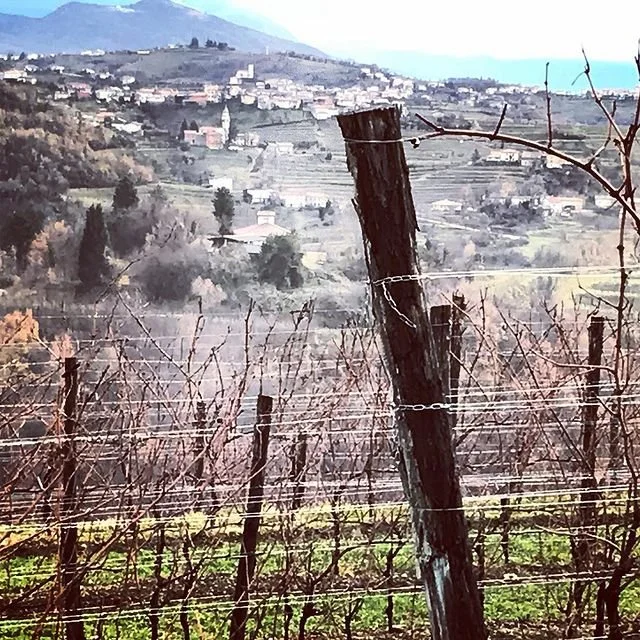
Antinori's Bocca di Lupo

Antinori’s Puglia estate, Bocca di Lupo, breaks free from Tormaresca

Ever since the Antinori empire purchased Bocca di Lupo in 1998 the Puglia estate has helped highlight the exceptional terroir to be found in the region. Now the decision has been made for it to break free from its sister winery of Tormaresca so that the Castel del Monte and Salento areas can be highlighted and appreciated for their character and distinctive identity, and can each bask in their own glory. Geoffrey Dean had lunch with the Antinori team to discuss the changes and taste the new vintages.

By Geoffrey Dean June 15, 2022
“The Antinori family’s purchase of Bocca di Lupo was another case – maybe even the best – of redeeming marvellous terroir.”

Drinkers of Bocca di Lupo, the iconic Puglia brand owned by the Antinori family, will note a new label and logo on the latest release of their flagship Aglianico from the Castel del Monte DOC. A collection of UK-based sommeliers as well as The Buyer were invited to a London restaurant to taste the 2018 vintage at what was an official launch of Tenuta Bocca di Lupo’s “solo journey – its separation from its sister winery of Tormaresca.”

The two estates had previously been under the Tormaresca umbrella, sharing the same logo. Older vintages feature Tormaresca at the bottom of the main label, but the 2018 one does not, and has a new lupine logo. The explanation for the change, according to Emanuele Barrasso, the Antinori brand manager at its UK distributor, Berkmann Cellars, is “because Bocca di Lupo and Tormaresca produce wines which are different and, from a trade perspective, ‘speak’ to different clients.”

The invited trade were able to taste, over lunch, three vintages of the Bocca di Lupo Aglianico – 2006, 2014 and 2018. Also tasted were two other Bocca di Lupo labels – their Fiano 2018, Puglia IGT and Pietrabianca Chardonnay 2019, Castel del Monte DOC – as well as the Tormaresca Furia di Calafuria Rosato 2021, Salento IGT.

Vito Palumbo

Vito Palumbo, brand manager for Bocca di Lupo, was keen to push Puglia’s merits as a multi-varietal wine-producing region. “We want to challenge the bias against Puglia,” he said. “To show we can make wines with freshness, acidity and balance. To put Puglia back on the map, and being recognised as somewhere where wines of quality and character are made. Our aim is to be considered as good as a region like Piemonte.”

Aglianico has, of course, earned the sobriquet of the ‘Barolo of the South’ on account of its high levels of tannin and acidity. Despite the former factor, the 2018 is already very approachable with soft, fine-grained tannins along with notes of chocolate, plum, spice and leather. “We want to give a silky finish to our tannins,” Palumbo continued. “Everything we do is to wear velvet gloves over an iron fist. So our fermentation temperature is a maximum 26C, and we take out the pips which we used to leave.” Whereas the 2006 saw 50% Hungarian oak, the 2014 and 2018 are matured in 100% French oak.

With Bocca di Lupo and Tormaresca between them producing three million bottles from 450 hectares under vine, Palumbo feels that the former’s Fiano label has an important role in pushing local identity. “We want to experiment with Fiano,” he added. “We leave it for ten months in big 500-litre oak vessels, of which 50% are new.” This oak regime helps to add structure to its full body and waxy texture. Appealing floral and almond notes made it a very pleasurable accompaniment to the Orkney scallops we ate it with

Equally palatable was the premium-quality rose Furia di Calafuria 2021 with its light, Provencal-like colour. A blend of three grapes – Negro Amaro (50%), Cabernet Franc (30%) and Syrah (20%) – it retails at €30 in Italy. “Puglia is well-known for its rose, which is like a religion there,” Palumbo declared. “In fact, the first Italian rose in Italy was made in Puglia in 1946. We decided to make this Furia rose the same colour as those from Provence, so there was less than three hours of skin contact. It has some spiciness and creaminess from the Cabernet Franc, as well as a bit of salinity. It is incredibly popular in Puglia, which is why only 35% of the production is exported.”

The Antinori family’s purchase of Bocca di Lupo in 1998 was, as Piero Antinori wrote, “another case – maybe even the best – of redeeming marvellous terroir.” Very poor soils with sea fossils, unlike the rest of Puglia, which is largely limestone, underpinned his reasoning, and now more than two decades later, his renowned head winemaker, Renzo Cotarella, gives his take on the investment.

“I believe we have had excellent results in Puglia in terms of quality of wine but also as a major contributor to the reputation of the region. Now that we can celebrate Puglia’s renewed allure, we believe that the areas we invested in [Castel del Monte and Salento] deserve to be highlighted and appreciated for their character and distinctive identity. We want each estate to bask in its own glory.” On the basis of the London tasting in May, they have every right to do so.

A Pinot matured at 3048m

The tale of Pino 3000: a 3-country Pinot blend matured at 3048m

We’ve seen wines matured underwater, in deserts, old mines and now, with Pino 3000, there is a wine that is matured in barriques at 3048 metres up an Austrian mountain. Sounding like an 80s pop band, Pino 3000 is a wacky Pinot Noir blend of wines made in Germany, Italy and Austria which are then blended and left to mature in their lofty perch. EU legislation forbids it being called Pinot Noir (naturally) but the effect of making the wine has had quite an impact on the winemakers as Geoffrey ‘Broadsword’ Dean discovered when he took the cable car up the mountain to Das Central.

By Geoffrey DeanMay 21, 2022

“During Covid when the gondola was not operating, the only way to get to the restaurant to top up the barrels of Pino 3000 was to climb the mountain on foot,” writes Dean.

Joachim Heger, one of Germany’s most celebrated winemakers, sat back as we talked at 3,048 metres (exactly 10,000 feet) by a glacier in the Austrian Alps and mused that “this exercise has been really, really interesting as it has changed my philosophy on winemaking.” He was not referring to a day’s skiing, but to a highly unusual experiment between himself and two other leading winemakers from Austria and Italy – Paul Achs and Wolfgang Tratter.

The story of their creation – a label named “Pino 3000” – is a bizarre one but worth telling. In 2010, the wine-obsessed owner of the Das Central hotel in the Austrian ski resort of Sölden, hatched an ambitious idea. This was to procure a three-country assemblage of premium Pinot Noirs from Baden, Burgenland and Alto Adige and mature the blend in barriques in their ‘Ice Q’ restaurant at 3,048 metres on the Gaislachkogel Mountain before bottling it. Under EU law, they could not call it Pinot, so they dropped the T and settled for Pino 3000 rather than the less catchy Pino 3048.

Paul Achs, Angelina Falkner, Joachim Heger and Michael Waschl in the maturation cellar at the Ice Q restaurant

Being well-connected, Angelika Falkner, the hotel owner, had little difficulty in persuading Heger, Achs and Tratter to sign up to the concept, with the three providing a brace of barrels each from their 2011 harvest. These were transported to Tratter’s Alto Adige winery, St. Pauls, where he blended the three wines in tank, racked them back into barrels and drove them over the border to Sölden and up the mountain to the restaurant. After a year’s maturation there, the barrels were taken back to Alto Adige, where the wines were bottled and then returned to the restaurant for cellaring there.

Always keeping a fatherly eye on the barrels at the restaurant has been the Das Central general manager, Michael Waschl, a wine fanatic, who deserves much credit for regularly topping them up, especially during Covid when the gondola was not operating. The only way to get to the restaurant was to climb the mountain on foot. He did so umpteen times.

Every year since 2011, the triumvirate of distinguished winemakers has provided a couple of barrels of their Pinot Noir, with Tratter handling the blending. The Das Central Hotel invites them at the end of every skiing season to their annual 3-day wine and gourmet festival called “Wein am Berg” (“Wine on the mountain”) along with a bevy of Austria’s top winemakers, who bring a selection of their wines. It is, therefore, a celebration not just of the Pino 3000 label, various vintages of which get tasted, but of many of Austria’s best wines.

Heger, whose Baden Pinot Noirs are much sought after, says the tripartite blend has taught him a lot. “My own production has benefited from this joint venture,” he declared. “Why? Because I am coming more and more to a fresher style. In the beginning, we started with a higher percentage of new oak but now we use less – just one new barrel out of four, with one a 500-litre tonneau.”

Achs is no less positive. “There is slight micro-oyygenation in the barrel, while the cooler conditions help to bring fruit and elegance,” he said. “The other good thing is that the amount of sulphur dioxide addition is less. The SO2 levels are quite low as the wine is very stable – about 40 mg/l free, and 80-85 mg/l total depending on the pH. It’s very important the residual sugar is below 2 g/l, while we aim for alcohol of 13-13.5%. It’s been a lot of fun and very interesting. I provide fruit from nearly always the same blocks at maybe 150m. Joachim’s fruit is from lower, while Wolfgang’s is much higher. The big challenge is climate change as if it gets too warm the grapes can ripen a bit quick.”

Because the wine comes from three countries, Pino 3000 cannot even have a vintage on the label under EU law. Instead, each year is listed on the back label as a lot number: so L11 for 2011, L12 for 2012 etc. A tasting of 2011 revealed a very light colour, an elegant wine with appealing raspberry and cherry fruit with lovely soft tannins and notable freshness. The 2020, which was tasted ex-barrel, had gorgeous red fruit and very suave tannins with real finesse. In short, the oldest and the youngest of the Pino 3000s both showed particularly well as did other mid-decade vintages.

Paul Achs and Joachim Heger

To taste Pino 3000, though, connoisseurs will have to visit Sölden and buy it with a meal at either Das Central or the Ice Q restaurant on a summer or winter holiday. Or they can do so at the next Wein am Berg festival from April 20-23, 2023. For wine lovers, the latter option is a brilliant opportunity to spend three days and nights in the company of some of Austria’s top winemakers. These include the likes of Stefan Tement, Kurt Feiler, Albert Gesellmann, Axel Stiegelmar (of Juris), Johannes Gross, the Sattler brothers (of Sattlerhof), as well as Brundlmayer general manager Andreas Wickhoff MW, and Rebecca Heger, the new chief winemaker at her father Joachim’s Baden estate.

Anyone visiting the Ice Q restaurant should also pop next door into the Elements 007 James Bond cinematic installation. This was designed by leading Austrian architect Johann Obermoser in collaboration with the art director of recent Bond films, Neal Callow. The state-of-the-art construction, built into the summit of the Gaislachkogl Mountain, focuses on the movie, ‘Spectre’, the Alpine scenes of which were shot a stone’s throw below. Complete with a tech lab, action hall, screening room and legacy gallery, Elements 007 offers a fascinating insight into the production secrets of the Bond franchise.

Six wines that stood out from tastings during the Wein am Berg Festival

Ried Steinriegel Chardonnay 2019, Familie Gesellmann, Burgenland

Alluring grapefruit zest notes with white stone fruit and some citrus. Very fresh acidity with attractive wood spice and nutty nuances. Refined with long and persistent finish. 12.5% abv. (UK distributor TBA).

Solitaire 2018, Feiler-Artinger, Burgenland

Blaufrankisch-led blend with 13% Merlot. Attractive blackberry and cherry fruit with silky tannins and structure from 50% new oak. Terrific intensity with fabulous length. 13.5% abv. (Tanners & Waitrose Cellar)

St. Laurent Reserve 2017, Juris, Burgenland 

Garnet hue with appealing red cherry fruit and spicy notes typical of the St. Laurent grape. Herbal and floral nuances with minerality, freshness and velvety tannins. A touch of salt on a lengthy finish. 13.5% abv. (Savage Wines, Northleach).

Ried Golser, Altenberg Blaufrankisch 2018, Paul Achs, Burgenland

Seductive black cherry fruit with spicy notes and white pepper on the nose. Overt but high quality, well-integrated tannins with a fresh line of acidity. An elegant wine with intensity and length. 14.5% abv. (Seeking UK representation).

Cuvee Kerschbaum 2015, Paul Kerschbaum, Burgenland

A high quality blend of Cabernet Sauvignon (40%), Merlot (40%) and Blaufrankisch (20%). Smoky forest aromas with glorious black and red fruit, along with tobacco and spice notes. Comfortably absorbs 100% new oak. Fine, well-meshed tannins and a lengthy finish. 14.5% abv. (Seeking UK representation).

Ried Grassnitzberg Sauvignon Blanc 2019, Weingut Tement, Sudsteiermark DAC

Green pear and nettle aromas with mineral lime notes on the palate. Mouth-watering freshness with a crisp, dry finish. An alluring Sauvignon. 13% abv. (Top Selection, Wandsworth).

Feiler-Artinger: Tanners & Waitrose Cellar

Paul Achs: seeking UK representation

New Zealand London tasting May 2022

Despite shortfalls in supply created by the poor 2021 harvest and issues with shipping, last week’s New Zealand Wine event provided many reasons to be cheerful. Average bottle prices are up, Kiwi Rosé is booming, vineyard acreage is up, the 2022 harvest is back to normal levels and there’s a new trade agreement coming this year. Geoffrey Dean welcomed the event back after two years away, talks to NZ Winegrowers’ Chris Stroud and picks six wines that stood out at the tasting.

By Geoffrey Dean May 8, 2022
Days after New Zealand reopened itself to the rest of the world after two years of border closures to foreign nationals, New Zealand Wine staged its first London trade tasting since 2020 on May 4 at Lindley Hall.

Notwithstanding a global shortage of the country’s Sauvignon Blanc after a low-yielding 2021 harvest, which was compounded by supply chain issues, Chris Stroud, New Zealand Winegrowers’ market manager for Europe, was in celebratory mood.

The free trade agreement between the UK and New Zealand that was signed in late winter doubtless had something to do with that, as the tariffs on Kiwi still wines will be removed by the end of 2022. These currently stand at 7.5p for 13% abv and under for a 75cl bottle, and 9p for 13.1-15% abv. In addition, the agreement has stipulated that the controversial VI-1 forms, which require wines to be lab tested before shipping, will be permanently scrapped.

Stroud, armed with fresh Nielsen statistics, revealed that the average price point for a bottle of New Zealand wine sold in the UK had risen above £8 for the first time (to £8.06). Driving the increase was the performance of Kiwi rosé, whose sales were up 80% and 77% in value and volume respectively. New Zealand reds were, he said, also performing well, coming in at £10.23 per bottle, nearly a fiver more than the average for all international reds.

Tim Fogarty, from the government-funded New Zealand Trade & Enterprise body, added to the feel-good factor when he revealed the average bottle of a Kiwi white wine sold in the UK was up from £7.28 to £8.01 (MAT to April 9, 2022). That increase of 9% is the highest recorded by any country. “All this confirms consumers trust Brand New Zealand and are happy to pay a premium for it,” Fogarty said.

The one sobering note for New Zealand was the fact that their wine exports for 2021 were down 3% to NZ$1.95 billion. After the record 2020 vintage, when a harvest of 457,000 tons represented an increase of 11%, the 2021 national crush fell as much as 19% to 370,000 tons, largely due to bad frosts. The impact of that for New Zealand was a seven million nine-litre case deficit in the face of global demand. “It’s open knowledge that there is a shortage of Sauvignon Blanc across the board,” said Joe Thompson of Delegat Europe, importers of the Oyster Bay brand.

Early signs are that the 2022 harvest in New Zealand is back to normal levels and will help plug the gap, although no production figures will be available till mid-June and the wines themselves will not hit shelves before August. The area under vine in New Zealand has increased 2% in 2021 to 41,603 hectares, of which 80% is white grapes (with 80% of white production being Sauvignon Blanc).

Geoffrey Dean (l) and Patrick McGrath from Hatch Mansfield

As much as 88% of New Zealand’s wine is exported, the highest percentage for any country in the world (the United States being amongst the lowest at 16%). The fall in exports in 2021, partly due to the worldwide shortage of containers, ended a long run of successive annual increases for New Zealand, whose wine exports doubled from 142 million litres in 2010 to 285m in 2021. The USA, UK, Canada and Australia remain the country’s key markets in that order.

The tasting itself was very well attended, with over 350 labels on display from 83 producers in eight regions and six sub-regions. As many as 28 different varietals were available from Albarino to Zweigelt, underlining the rich diversity of the New Zealand wine industry. While I met no one producer who had flown over for the event, there were UK-based Kiwis from winemaking dynasties present, such as Mackenzie Paton, daughter of Ata Rangi owner, Clive, and Toby Buck, whose family own Te Mata. Ata Rangi is among the 10% of wineries in New Zealand that have been certified organic.

There were two feature areas at the tasting. The first was a ‘Pour Yourself a Glass of New Zealand’, part of a campaign New Zealand Winegrowers are running this May when they are petitioning for a white wine emoji. The second was an Organic Wine Bar, showcasing 70 organic wines that included five different 2020 labels from renowned Central Otago producer Felton Road – their Block 3, Block 5, Calvert, Cornish Point and Bannockburn Pinot Noirs.

SIX OF THE BEST NZ WINES THAT STOOD OUT

Ata Rangi McCrone Vineyard Pinot Noir 2017

From a single vineyard planted in 2001 that, unlike the other Ata Rangi parcels, has a clay seam running through it. ‘This has ‘incredible site expression, with earthier and more robust notes,’ says Mackenzie Paton. Intense, opulent fruit with power, concentration and exceptional length. Supple tannins. A superb Martinborough Pinot from one of New Zealand’s supreme producers of the varietal. 13.5% abv (Liberty)

Esk Valley Heipipi The Terraces 2016

A celebrated Hawke’s Bay label from a very low-yielding, steep, terraced one-hectare vineyard. Made up of 40% Malbec, 33% Merlot and 27% Cabernet Franc, this is beautifully perfumed with blackcurrant, plum and spice notes. Elegant and harmonious with a tight structure from 100% new French oak, this has a long and great life ahead of it. 14% abv (Hatch Mansfield)

Hans Family Estate Viognier 2019

Winemaker Hans Herzog has crafted a finely-scented full-bodied Viognier with rich peach and pear notes with a hint of honey and spice. From very low-yielding, organically farmed vines in Blenheim, this is a complex wine with a gently oily texture and impressive harmony. 14% abv (Vindependents)

Seifried Aotea Sauvignon Blanc 2020

From vines in Nelson that are up to 40 years in age, this Sauvignon has very good depth of ripe, tropical fruit flavours as well as notable minerality and a mouth-wateringly crisp finish. Finely scented with pure melon and lime notes with a hint of gooseberry. 13% abv (Fells)

Te Mata Bullnose Syrah 2019

The best selection of 25 small batch ferments of Hawke’s Bay Syrah from what was a very low-yielding year, the first of a hat-trick of top vintages according to Toby Buck. Highly refined with elevated super-floral aromatics with blueberry, plum and peppery notes. Fine oak (40% new). Cool climate southern hemisphere Syrah at its best. 13.5% abv (Fells)

Villa Maria Single Vineyard Taylors Pass Chardonnay 2019

A wonderful example of how good NZ Chardonnay can be. From a vineyard in Marlborough’s Awatere Valley, this has arrestingly intense flavours with vibrant acidity and lovely concentration. Grapefruit and citrus notes with refined biscuity oak notes and a long finish. 13.5% abv. (Hatch Mansfield)

Cape Agulhas Wine Triangle

Geoffrey Dean discovers South Africa’s Agulhas Wine Triangle

There’s a great deal of excitement about the wines that are coming out of the Agulhas Wine Triangle – South Africa’s southernmost vineyards. This is a region with ancient soils, extreme winds and a raw landscape that are producing cool climate whites and reds of remarkable quality and elegance. On a recent trip to South Africa, Geoffrey Dean visited the region, tasted the wines from the 10 wineries and talked with some of the key players – Bruce Jack, Dirk Human and Pierre Rabie about what makes this new frontier of winemaking so special.

By Geoffrey Dean May 6, 2022

If the Swartland Revolution was the bright new force in the South African wine industry in the early years of the millennium, another is emerging in the form of the Agulhas Wine Triangle (AWT). It was set up by its 10 member wineries in 2019 as a non-profit organisation to showcase the wines, tourism and natural beauty of Agulhas, the most southerly point of the African continent. If the pandemic constrained its early momentum, the body is now well-placed to raise the profile of its top-quality wines on the international stage.

So who is involved in the Agulhas Wine Triangle?

More on its unique terroir shortly, but first an introduction to the triangle’s wineries. These are Black Oystercatcher Wines, Ghost Corner, Giant Periwinkle, Land’s End, Strandveld Wines, and Trizanne Signature Wines from the Elim ward; Sijnn from the Malgas ward; Olivedale from the Swellendam district; Lomond from the Cape Agulhas district; and the Drift Farm from the ward of Napier.

Some of the South African wine industry’s leading figures are involved, including Bruce Jack (Drift Farm), David Niewoudt (Ghost Corner), David Trafford (Sijnn), Dirk Human (Black Oystercatcher) and Trizanne Barnard (Trizanne Signature Wines). These are all highly respected winemakers, but they will be the first to tell you that what makes the AWT’s wines so special are its hugely varied soils and cool climate. Soils of sandstone, shale, iron ferricrete, quartzite and limestone lead to a whole host of different flavour compounds and complex, intense flavours. Ocean winds cool the vineyards.

Unique soils and cool climate

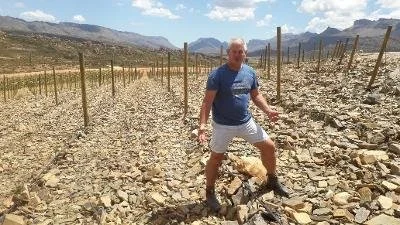
“The soils are different from other areas primarily because of the way they were formed,” Bruce Jack told The Buyer. “When the ancient super continent Gondwana broke up, bits of other continents were left on the edges of Africa. So the soils in Agulhas were made up of other continents – Africa where the Drift is, Antarctica where Black Oystercatcher is and a mix of Australia and India at David Trafford’s Sijnn.

Dirk Human & Bruce Jack

“While there are differences between the soils in the Agulhas Wine Triangle, there are differences with the rest of South Africa. That’s the first point, and the second point is that while a lot of the soils in the rest of South Africa are invigorating, our soils are devigorating leading to a naturally low yield, and naturally more elegant and concentrated wines as a result. And then when you combine that with the weather at the tip of Africa, it’s windy and the wind is cool. Those things have a big impact.”

That the western Cape is the windiest wine region in the world is another key factor for Jack. “The winds in the Agulhas Wine Triangle are predominantly coming from the south-east and the south-west, off the ocean,” he continued. “The majority of the vineyards are by the ocean and that has a significant effect in summer months. In winter months, it has less of an effect as there’s less wind and you don’t get as cold winters as you do on higher-lying areas or further inland. That’s one of the reasons why the white wines of the Agulhas Wine Triangle are so delicious.”

The AWT’s very isolation is actually more of a strength than a weakness in Jack’s view. “There’s a self-sufficiency here as a result, a philosophy if you like, that has a huge impact,” he declared. “Terroir doesn’t exist without human interaction with it. Farmers here have to be independent and resourceful because of the distance from the traditional wine services. You don’t get someone out on the same day who can fix the press, or viticulturists from Stellenbosch or Paarl available on a whim.”

“There is a lot of trial and error, and this means that, layered onto different soils and climate, a lot of the institutional wisdom that exists in Stellenbosch is not applicable to our terroir – the different ways we prune, the different times we prune, how we manage our canopies. The vine husbandry that takes place in this area is different and helps give elegance and lower crop levels. So all of those things combined mean we offer something different and really exciting.”

Distinctive whites and reds

What is remarkable about the AWT’s white wines is not just their exceptional quality but also their extraordinary capacity for longevity. “That is unusual in the world, never mind in South Africa,” Jack professed. “For a 15-year old wine from Elim to win the Old Mutual award for the best Sauvignon Blanc in SA is mind-blowing.” This wine was The Berrio 2006, made by Jack himself from fruit out of grower Francis Pratt’s vineyards.

Some of Bruce Jack’s range

“Those international wine judges who hadn’t come across Elim Sauvignons from the mid 2000s couldn’t believe what they were seeing. The wine was so fresh and had so much life to give still. I’m not knocking New Zealand, but you don’t get 15-year old Sauvignons from there that develop nicely. Theirs are incredibly powerful and wonderfully engaging in youth but they don’t have the longevity that ours do. Even Sauvignons from Sancerre, as well as whites from Bordeaux, don’t look any better than Elim Sauvignons after 15 years. So it’s an exceptional area from a white perspective.”

As for the triangle’s red wines, they are notable for their elegant, crisp, crunchy red fruited and lower alcohol levels. “These cool summers we get are the key, giving us a real point of difference from Stellenbosch and Swartland,” Jack said. “In the former, you get quite inky, quite ripe, rich alcoholic red wines. The Swartland is all about robustness, and their wines are quite rustic although they have their own charm of course. In our reds, you’re getting a lot more spice, a lot more herbaceous character and more pepper than elsewhere in the country. While I also like the more ripe, rustic styles, there’s something very beguiling about the elegance you’re getting from this area.”

Equally beguiling is the AWT’s beautiful Nuwejaars Wetlands, a protected conservancy of 47,000 hectares which was formed by 25 local landowners, the Elim community and the Department of Rural Development and Land Reform. Dirk Human, a passionate conservationist, is chairman of the Wetlands and operates safaris through it.

“We’ve chosen to run our land and waterscapes as a special management area to protect our natural world,” he said. “Our irreplaceable wetlands, the peat-like soils here that store carbon, the critically endangered habitat and the wildlife they support can all contribute to a nature-positive Overberg and South Africa.” The Wetlands, which connect the Agulhas National Park and De Mond Nature Reserve, provide ideal habitat for a rich diversity of birdlife as well as buffalo, hippo and rare antelope in bontebok and grey rhebok.

Taking a closer look at the wineries involved…

Black Oystercatcher Wines

View from the stoep at Black Oystercatcher

Exceptional white wine producer, specialising in Sauvignon Blanc and Semillon. Dirk Human planted the vines in 1998 on the family Moddervlei farm, helping to pioneer Elim as a wine ward. Only 48,000 bottles per annum made, with 5% exported, although Human would like to increase both counts. Delightful cottage accommodation available at the winery, which has become a popular destination with a deli, pizza restaurant and shop. Excellent own label craft beer also made on site by an English expatriate, Fraser Crighton.

The Drift Farm

Bruce Jack’s whites winemaker ,Thornton Pillay

The farm, near Napier, is home to Bruce Jack, one of South Africa’s most charismatic and innovative winemakers. Bruce Jack Wines has just made it into the top 20 of Drinks International Magazine’s “The World’s Most 50 Admired Wine Brands” for 2022. Although he skilfully oversees the whole operation, Jack’s excellent white wines are made at Black Oystercatcher by Thornton Pillay, while award-winning Canadian winemaker, Marlize Beyers flies in during harvest to craft a superb range of red wines, renowned for their wacky labels. These include the ‘Gift Horse’ Barbera, the ‘There Are Still Mysteries’ Pinot Noir and the ‘Ghost in the Machine’ Syrah, each single vineyards.

Ghost Corner

David Niewoudt

David Nieuwoudt, the renowned Cederberg cellar master, makes the eight-hour round trip to Elim every Monday for the day to oversee production of his acclaimed Ghost Corner range. The Wild Ferment Sauvignon Blanc 2020, with its silky quince and white pear notes, is a stunning wine, matured in 400-litre barrels, of which 20% is new. A touch of residual sugar (4g/l) masks race acidity (pH3.3). The Semillon 2019, with an even lower pH, is linear with honeyed notes, while both the Pinot Noir and Syrah are classic cool climate examples.

The Giant Periwinkle

Pierre Rabie

No exports as yet, but if anyone can persuade eccentric Cape Town barrister-cum-winemaker Pierre Rabie to ship some, drinkers will not be disappointed. Named after the sea snail that is pleasant to eat, the impressive range includes Sauvignon Blanc, an SBS blend, Syrah and Pinotage.

Land’s End

No wines tasted but winemaker Shawn Thomas is producing two Syrah and two Sauvignon Blanc labels with strong exports to several markets, including the UK and US.

Lomond

Multiple labels from this scenic estate within the Walker Bay Conservancy, with its 130 hectares under vine and 4-km long dam (and restaurant overlooking it). The vines were planted in 1998 under Distell’s ownership before they sold out seven years ago. Former Simonsig winemaker Hannes Meyer joined in 2020, and crafts several superb Sauvignon Blanc labels, including Pincushion, Sugarbush and Ben Nevis. The Conebush Syrah 2019 from sandy clay and granite soils is another stunning wine.

Olivedale

Olivedale

On vineyards planted right by the Breede River, there is notable minerality in the white wines (from ‘mineral clay 2.5m down under sandy topsoil’ according to winemaker Jolene Le Roux). Her ‘Respect for Nature’ labels – both the Chardonnay and the Tempranillo – showed especially well while her rare Roobernet ‘Mystery of Nature’ (a cross of Cabernet and Alicante Bouschet) had endearing freshness and bright red fruit. Their Edel Laat Oes 2015 noble late harvest Semillon is premier league SA dessert wine.

Sijnn

No wines tasted, but they come with a reputation. Pronounced “Sane”, the winery is owned by Stellenbosch producer David Trafford and business partner Simon Farr, with Charla Bosman the winemaker. Mainly southern French and Portuguese varieties planted as bush vines on rocky soils by the Breede River. The ‘Sijnn Red’ and ‘Sijnn White’ labels, which are Shiraz and Chenin Blanc-driven respectively, have been especially well received.

Strandveld

Winemaker Conrad Vlok (in pink shirt)

South Africa’s southernmost winery, very close to Cape Agulhas, produces a top-class Sauvignon Blanc label named Poffaderbos, which is flinty with a long mineral finish as well as some texture and richness from five months of lees contact. Winemaker Conrad Vlok also produces some excellent reds, with his Grenache 2020 showing freshness and appealing cherry fruit (old oak only). The Navigator 2019  blend (70% Syrah, 26% Grenache, 4% Viognier) comfortably absorbs 35% new oak and has lovely fruit. The savoury single varietal Syrah 2019 displayed distinctive peppery and meaty nuances typical of Elim.

Trizanne Signature Wines

Trizanne Barnard, a top-class surfer with film star looks, is one of SA’s rising winemaking stars. Her Reserve Syrah 2019 won the Old Mutual Trophy for Best Shiraz in South Africa last year, while her Semillon-Sauvignon ’19 blend (both labels from Elim fruit) is as good as any SSB in South Africa.

The best SA game lodges & wine cellars

These lodges offer not just wildlife and world-class cuisine but superlative wines, the vast majority of which are leading South African labels and whose vintages date back to the 1990s.

25 March 2022

Author:

Geoffrey Dean

Singita Ebony Lodge, Sabi Sands, Mpumalanga

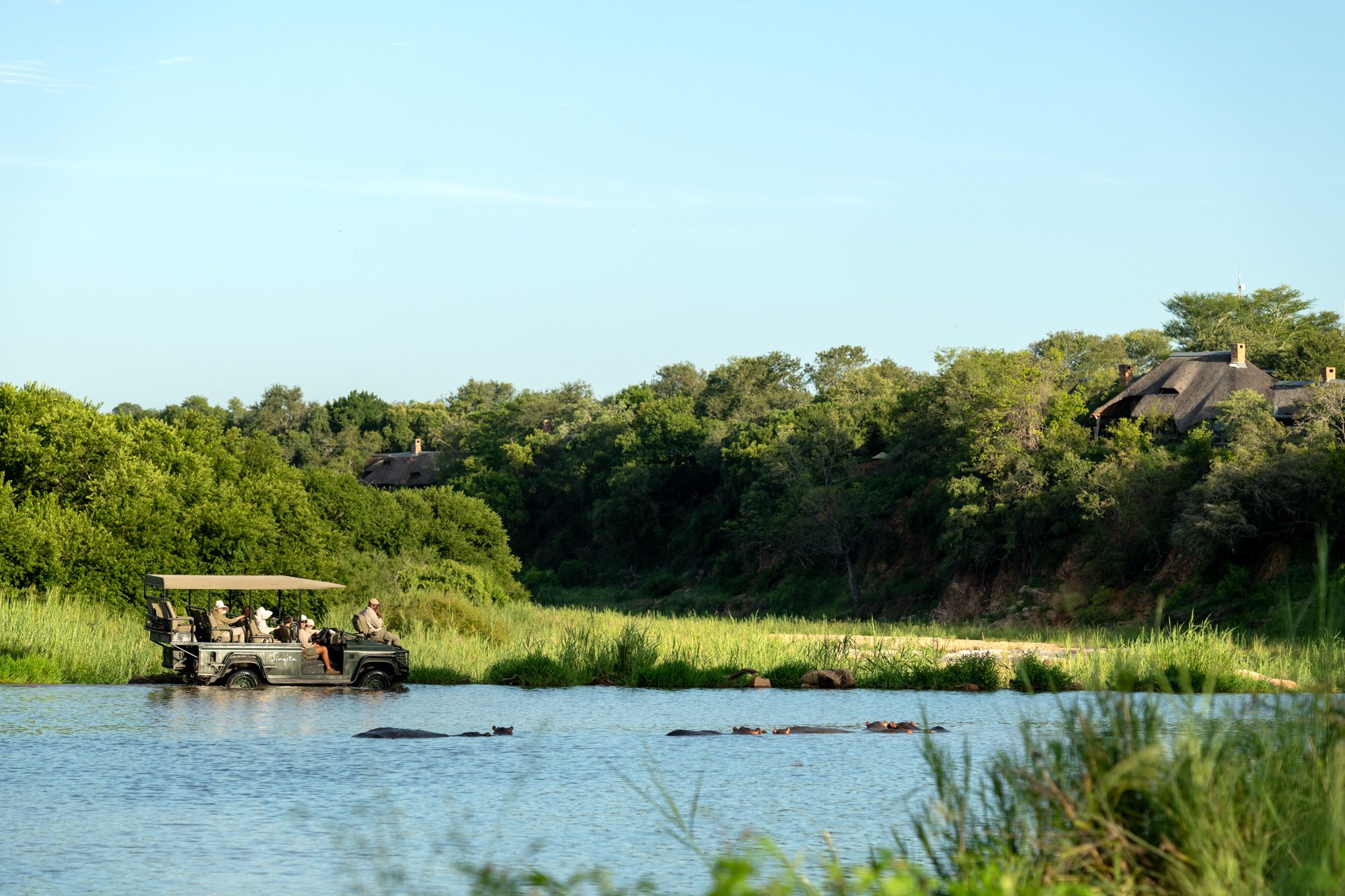
Singita owns a 5,000ha/12,355 acre concession in the Sabi Sands game reserve adjoining the Kruger National Park. With traverse rights to another 10,000ha/24,710 acres, its game drives can encompass a quarter of the Sabi Sands, one of the richest sources of wildlife on the African continent. Legendary leopard sightings are commonplace, as are close encounters with the rest of the ‘Big Five’ game animals. More on the wildlife later but first the wines of Singita, which means ‘Place of Miracles’ in Shangaan.

It is, perhaps, miraculous that Ebony Lodge, with a stunning location by the Sand River, manages to house as many as 8,000 bottles of wine in its refrigerated bush cellar. Experienced sommelier, Ngoni Mtizwa, oversees it and runs daily tastings for guests. Enjoy these with meals or choose from Singita’s multiple labels from 85 producers. All South African wines are included in the cost of a stay, with only Champagne, the sole foreign interloper, being charged as an extra. Given the high quality of the local sparkling wines, it is easy to stick to these. Other styles that come recommended are Eben Sadie’s red Columella blend from 2012 and Kanonkop Estate’s Paul Sauer 2003, an excellent year for what is arguably South Africa’s finest Cabernet Sauvignon.

A deep cellar

Even older vintages are stored in Singita’s maturation facility in Stellenbosch where a staggering 100,000 bottles of fine wine are kept at a constant 12°C/54°F. Singita maintains such a substantial wine holding because it has other lodges in southern and eastern Africa to supply. It also sends cases of wine to clients who want more of a label/vintage they drank in camp. For example, it has every vintage of Vin de Constance, South Africa’s best known sweet wine, going back to 1992

The good life

Ebony Lodge, with its swimming pool, gym, spa centre, art gallery and impressive animal sculpture shop, lacks for nothing. The dozen large, thatched suites enhance the feeling of uber luxury bush living. From your own plunge pool and expansive deck, you can survey the river beneath you, watching animals and birdlife with a glass in hand. It really is hard to beat. So too is the game viewing on the early morning and late afternoon drives.

A game drive by the River Sand

You are assigned your own guide and tracker, who will take you by vehicle (or on foot). On one early drive, we picked up the spoor of a female leopard and found her up a wild olive tree. We stayed with her for the next two hours, having her completely to ourselves, as she climbed two further trees and offered some special photo opportunities.

Black rhinos

Later, we witnessed the rare sight of a buffalo giving birth, protected from predators by a 300-strong herd. We encountered four black rhinos lying together happily in a muddy depression. Poaching of these magnificent beasts is still an acute concern in South Africa, but thanks to Singita’s well-resourced anti-poaching team, not one rhino has been poached in their concession in the last seven years.

Grootbos Private Nature Reserve, Western Cape

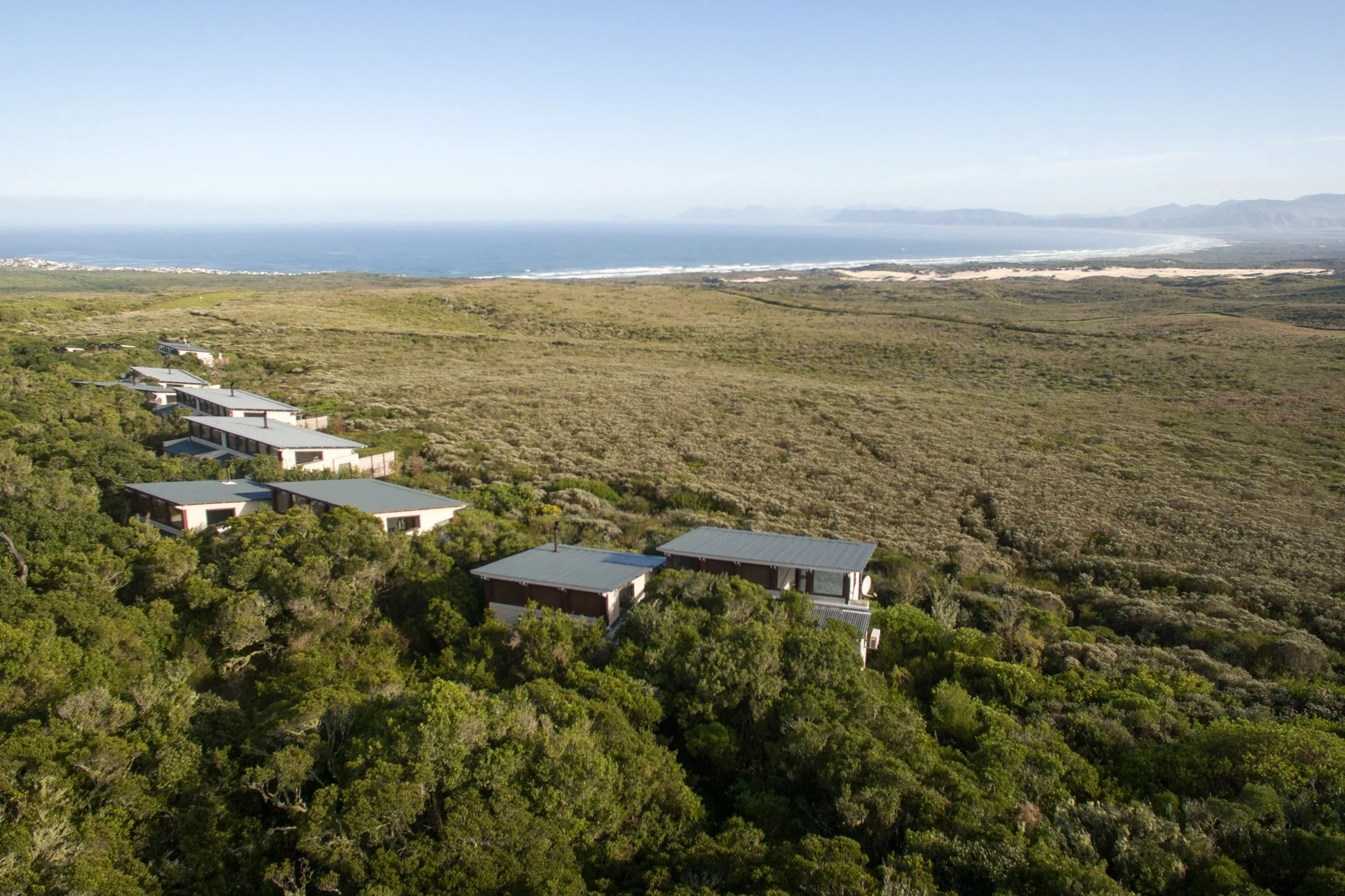
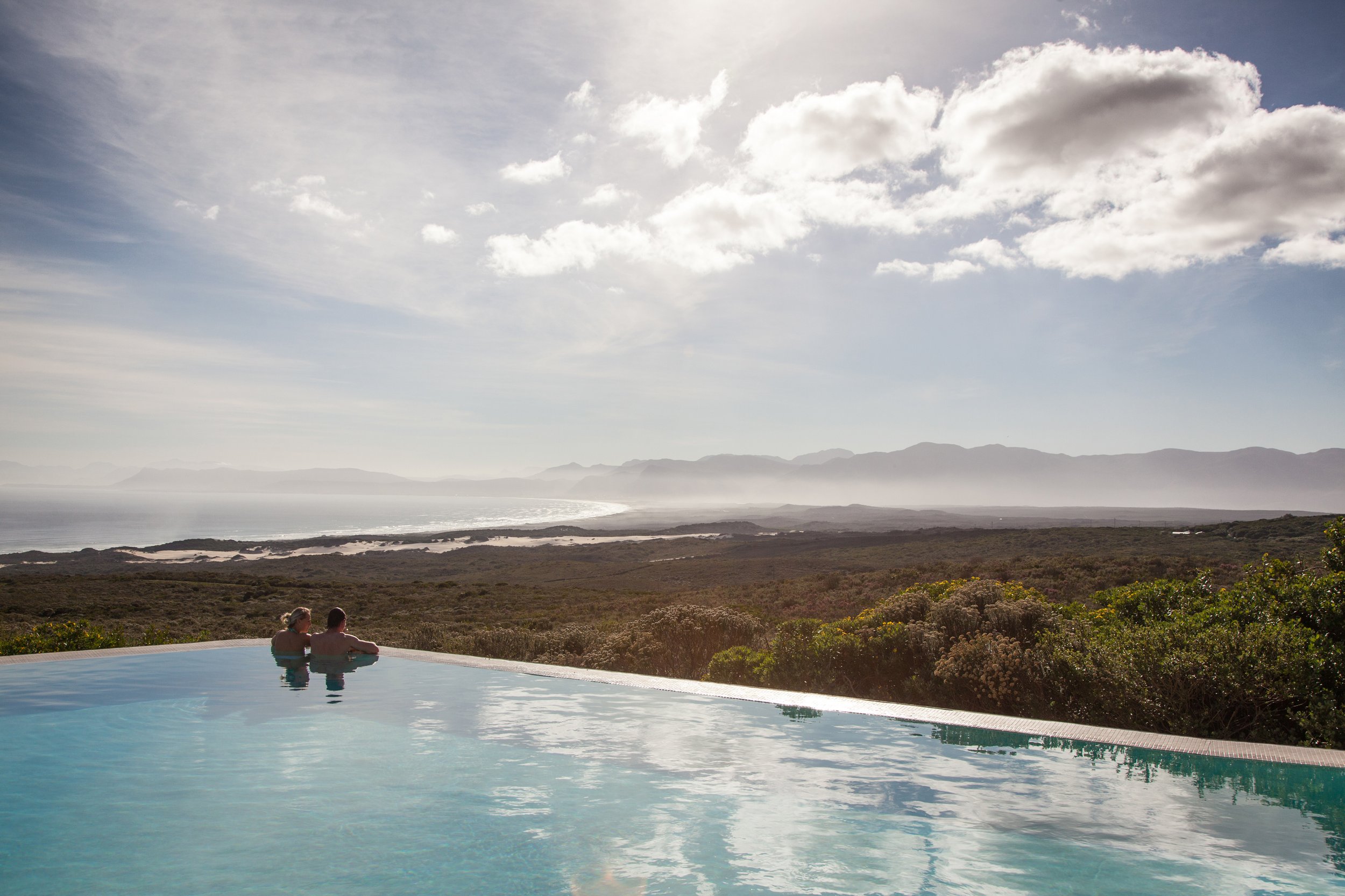
Nowhere in the western Cape has more spectacular views than Grootbos. Set in 3,500ha/ 8,649 acres of hilly fynbos, its two five-star lodges – named Forest and Garden – overlook Walker Bay and its miles of beaches and sand dunes. Beyond it, you can see all the way to the Cape Peninsula. To the west lies the picturesque Kleinrivierberg mountain range. Part of the Cape floral kingdom, one of only six in the world, Grootbos is extraordinarily rich in plants, with over 9,000 species, including three that are exclusive to it. That has resulted in more than 2,500 inspect species. Cone bushes are the tallest plants, while the three that must be present to constitute fynbos – proteas, ericas and restios – all proliferate. Take a plant safari through the reserve or traverse it on one of the dozen horses stabled by Grootbos for guests to ride with an experienced equine guide.

Rare wines

Whale watching (in the second half of the year), trail hiking and spa therapy are all possible at Grootbos, which prides itself on its fine cuisine and its 15,000 bottle cellar. Like Singita, these are all South African apart from a few Champagnes, but what makes it such a unique collection is that a third of the wines are Cape Winemaker Guild labels. The Grootbos owner, Michael Lutzeyer, has long been buying up Guild labels – amongst the most exclusive that South Africa has to offer – at their annual auction. These wines are made in small quantities rarely make it to retail. Mature vintages are a Grootbos speciality, Bruce Jack’s glorious CWG Barbera 2013 from his Drift Farm in Elim is one such example.

Heavenly peace

Local winemakers  – whether based in Elim, Cape Agulhas, Stanford, Hemel-en-Aarde or Bot River – are strongly represented on the wine list, which features labels from as many as 127 western Cape producers. As such, it may well be without equal in South Africa. The two lodges are half a kilometre apart, with Forest (and its 16 suites) being adults only, while the recently rebuilt Garden (11 suites) also caters for families and houses the main cellar. Guests can visit it or just admire it through its resplendent glass frontage. The spacious suites, all with picturesque views out towards Walker Bay, are beautifully designed and luxuriously furnished. None of the other suites can be seen from the large verandas, giving the impression that guests have this special floral kingdom to themselves.

Vegan or omnivore

Grootbos’ delectable cuisine is prepared by celebrated chef Ben Conradie. All produce is sourced from the local community, with a fresh array of seafood bought from the fishing port of Gansbaai 10km away. But vegans have a plentiful choice, too: up to eight different options on the lunch menu. A special ‘botanical dinner’ and ‘boma’ dinner under the stars are also available.

View from the pool at Grootbos looking out towards Walker Bay

Bushmans Kloof Wilderness Reserve & Wellness Retreat, Western Cape

A three-hour drive north of Cape Town takes you to Bushmans Kloof, a private inland wilderness reserve of 7,500ha/18,533 acres. Next to it is the 50,000ha/123,553 acre Cederberg Wilderness area, so you really are in the middle of nowhere, with the nearest town of Clanwilliam being over 50km/30 miles away. This beautiful mountainous region bordering the semi-desert Karoo is home to over 1,000 Bushman rock paintings, of which 140 are found on Bushmans Kloof (kloof translates as ‘deep ravine’). The bulk of these are at least 1,500 years old, with a few possibly dating back as far as 10,000 years.

Ancient art

Many of these well-preserved paintings of antelope, sheep, cattle and dancing humans, are on rocky faces under overhangs quite close to the lodge, making them easy to visit. A fascinating collection of old photographs, artefacts and hunting pieces of bushmen is kept in the heritage centre of the homestead, where the owners, the Tollman family, have assembled a notable collection of wildlife art. They also own the Bouchard Finlayson winery in the Hemel-en-Aarde Valley, which produces some of South Africa’s best Chardonnay and Pinot Noir. Chris Albrecht, the winemaker, visits periodically to conduct vertical tastings with guests.

Global wine list

As many as ten different Bouchard Finlayson labels are cellared at the lodge, with vintages dating back to 2009. More than 30 other top South African producers also feature on the extensive wine list, including David Nieuwoudt’s outstanding Cederberg range. Interestingly, Nieuwoudt’s grandparents once owned Bushmans Kloof. Where Bushmans Kloof differs from both Singita and Grootbos is that its cellar includes wines from all over the world – France, Italy, Spain, Germany, USA, Australia, New Zealand, Chile and Argentina. Three vintages of Château Margaux from 1983, 1986 and 1989 are available, as is Château Lafite 1986.

Literally stellar

Although Bushmans Kloof does not have big game such as elephant, lion and buffalo, it is home to 36 species of mammals such as gemsbok, eland and the endangered Cape mountain zebra. While two thirds of the reserve is traversable by vehicle, much of it is ideal for hiking and mountain biking. Hiking trails of various lengths are clearly marked, offering wonderful views. Fly-fishing and canoeing are also available, along with spa treatments. At night, thanks to the complete lack of light pollution, the African constellation of stars is nothing less than memorable.

Wildflower heaven

Between mid-August and mid-September, another spectacular sight is the blanket of multi-coloured wildflowers over the reserve. “We get people from across the globe and from Cape Town coming to see the wildflowers here,” Rory du Plessis, the reserve’s general manager, says. “Up to half the valley is carpeted with several species of Namaqualand daisies - pinks, oranges, yellows and purples. It is unbelievably beautiful here then.” Indeed, it is beautiful whatever time of the year you go to Bushmans Kloof, a small, tucked-away gem of a five-star retreat.


Discovering the hidden gems of Collio DOC

Whether it’s its tiny size, proximity to Slovenia or its remote hilly location, very little is known about the hidden gem of a wine region that is Collio Gorizia DOC in the North East of Italy. With almost 90% of vineyards planted to white varieties, and multi-generational winemaker families, Geoffrey Dean found a treasure trove of quality white wines – from the cult skin contact wines of Sasa Radikon to the many examples of wines made from Friulano, Malvasia and Pinot Grigio.

By Geoffrey Dean February 2, 2022

...“Central to the whole identity of the Collio is the long family history of winemakers, several of whose surnames sound more Slovenian than Italian,” writes Dean.

Wine writers and drinkers alike love nothing better than to uncover a hidden gem of a region that produces good wine. Given that Collio Gorizia (Collio for short) is the third oldest DOC in Italy, it might seem a misnomer to call it ‘hidden,’ but to the majority of UK consumers it has remained largely unknown.


Perhaps, it is its tiny size – a slither of land shaped like a half-moon or croissant that is 20 km long and barely 4km across at its widest point; or maybe it is its remote, hilly location, bordering Slovenia in the top right-hand corner of Italy near the town of Gorizia in Friuli Venezia Giulia. What is not in doubt, though, is the quality of the Collio’s wines and the skill of its winemakers, many of whom are aiming for greater distribution in the UK.


Getting to know the grape varieties of Collio DOC

While the Collio region produces some premium red wines, it has won a deserved reputation among cognoscenti for some of Italy’s most prestigious whites. Indeed, 87% of its 1500 hectares under vine are planted to white varietals. Pinot Grigio is the most common (comprising 26% of all plantings), closely followed by Sauvignon Blanc (19%), but many of the most interesting white wines are made from Friulano (14%), Ribolla Gialla (10%) and Malvasia Istriana (3%).

Formerly known as Tocai Friulano, until the EU banned the name in 2008 after pressure from Tokaj producers in Hungary, Friulano has been proved by ampelography and DNA profiling to be Sauvignonasse. Introduced into Friuli in the early 19th century, Friulano has almond and herbal notes as well as a fuller body than Sauvignon Blanc if less acidity and aroma. Notable producers of it include Felluga, Castello di Spessa, Zorzon, Bracco, Fruscalzo, Humar, Formentini, Villanova and Bolzicco.

Ribolla Gialla is an indigenous variety from Friuli, dating back to the 13th century. First written mention of it can be traced back to 1296 when the Pope settled a dispute about its sales between the bishop of Trieste and a monastery in Venice. The village of Oslavia, a stone’s throw from the Slovenian border, is regarded as the varietal’s spiritual home, with fermentation traditionally done on the skins, with many orange wines resulting. Oslavia producers include Radikon, Fiegl, Gravner, Princic, Primosic and La Castellada, while Korsic, Mania and Marcuzzi also make good white versions of Ribolla in Floriano del Collio.

Malvasia Istriana has been grown in the Collio almost as long – since the 14th century – although it is likely to have originated in what is now north-west Croatia. We encountered some superb dry examples of it, with many showing floral perfume notes as well as hints of salt and spice. Two fine examples of it are listed below, but others come from Casa delle Rose, Pascolo, Il Carpino and Colmello di Grotta.

Soil, wine styles and a sense of history 

The Collio’s complex soil structure features clay, sand, silt and minuscule marine fossils. “This layering of different soil types is called ‘flysch’ and it’s the secret ingredient behind our wines, giving minerality,” Paolo Bianchi, former director of the Collio Consorzio, declared.  The Collio also benefits both from the cool winds from the east and warm sea-breezes from the nearby Adriatic, which help dry out vineyards in what is one of Italy’s wetter regions. Another key climactic factor is the region’s wide diurnal range, which helps to explain the notable freshness evident in Collio wines of all colours.

The Collio’s production code permits 18 official wines that qualify for DOC status, with the vast majority being single varietals (12 white and four red as well as two blends – Collio Bianco and Collio Rosso). There are also sub-zones within the DOC – examples including Oslavia, Plessiva, Pradis and Zegla. Locals proudly liken them to Crus in Burgundy.

Grappa Nonino, 2019’s best distillery in the world

Central to the whole identity of the Collio is the long family history of winemakers, several of whose surnames sound more Slovenian than Italian. The area, originally part of the Austro-Hungarian empire, was a fierce battleground in the Great War, with trenches still in evidence, and after the Second World War, the hills were split between Italy and Yugoslavia. Only in 2008, when Slovenia gained independence, were boundary controls lifted. At one point during our winery visits, we cut through Slovenia to do one side of a triangle instead of two.

No appraisal of Collio would be complete without mention of Grappa Nonino, which was voted best distillery in the world in 2019 by Wine Enthusiast. Founded in 1897, it is situated a few kilometres outside the Collio region but is part of its DNA. Its grappa is amongst Italy’s finest, while its Quintessentia Amaro Nonino, a liqueur, was winner of the Ultimate Spirits Challenge in 2021.

12 wines from Collio that caught the eye

Stella’s Erika Barbieri

Tenuta Stella, Malvasia Istriana DOC Collio 2019

Talented winemaker Erika Barbieri has crafted a superb Malvasia from very low-yielding, organically-farmed vines of 15-20 years age; wild yeasts add complexity while 60% malolactic fermentation gives extra body and richness; a complex wine that spent ten months in untoasted casks.

Tenuta Villanova, Friulano DOC Collio 2019

The same family has owned the Villanova estate since 1932 and have 100ha under vine; very expressive nose with apricot, apple and spice aromas; spent six months on the lees in concrete tanks, giving it complexity and body; elegant with pronounced acidity.

Bolzicco, Friulano DOC Collio 2019

From 1960s vines, this is another fine example of Friulano that saw only stainless steel; lots of freshness, concentration and length as well as some saltiness and characteristic almond notes on the palate.

Livon, Malvasia Istriana Soluna DOC Collio 2020

From low-yielding vines on Ponca soil, consisting of layers of minerals from the prehistoric sea bed as well as clay and limestone (in the village of Ruttars). Herbal sage notes give way to attractive citrus fruit; velvety creaminess from eight months on lees (80% stainless steel, 20% used oak); also possessing notable minerality and excellent length.

Marcuzzi, Ribolla Gialla DOC Collio 2019

Appealing apricot and peach flavours on this single varietal Ribolla Gialla, made by Riccardo Marcuzzi. Excellent freshness and length. A good food wine, especially with risotto.

Sasa Radikon

Radikon, Ribolla Gialla IGT Venezia Giulia 2017

Sasa Radikon has a cult following for his whole range, notably this orange wine. “Orange wines were re-born here thanks to two men – my late father Stanko and Boris Primosic,” Radikon told me. “Why do we use Ribolla Gialla? Because it has a thick skin.” He revealed his sunset-coloured orange wine underwent skin contact for three months and had no sulphur dioxide added to it. Very complex with quince, orange zest and apricot notes, this big-textured wine has vibrant acidity.

Tenuta Angoris, Pinot Grigio DOC Collio 2020

Light copper colour thanks to cold maceration on the skins for ten hours. Very fresh acidity and saltiness counter-balances 13.5% abv. 5% spent ten months in old oak tonneaux with the rest in stainless steel. Time on lees gives body and softness to a wine that is a pleasure to drink.

Fruscalzo, Pinot Grigio DOC Collio 2019

Clean with no pink hue despite some skin contact which gives it a bright straw colour. Elegant and fresh with peach and pear notes as well as some subtle oiliness.

Tenute Marco Felluga e Russiz Superiore, Sauvignon Blanc DOC Collio 2020

Sauvignon Blanc was planted as long as 150 years ago in Collio, and this fine example has herbal aromas with passion fruit notes. Clean, elegant and refined, it is quite full-bodied at 13.5% abv but has vibrant acidity to counter-balance. Very persistent finish.

Gradis’Ciutta, Riserva Collio Bianco DOC 2016

Robert Princic, who also makes good Pinot Grigio and Sauvignon Blanc, has fashioned an alluring blend of Friulano, Malvasia and Ribolla Gialla. Until 1992, when ‘international’ varieties were added, these were the only grapes that were permitted. Complex and long, while still fresh, this underlines how well the blend works.

Tenuta Baroni del Mestri, Merlot Barone di Schoenberg DOC Collio 2018

A good illustration of how Collio can also produce high quality reds. This single varietal Merlot went through 21 days of maceration and was matured in oak barriques, 25% being new. Lovely plummy fruit with freshness, concentration, well-integrated tannins and impressive length.

Tenuta Stella, Pinot Nero DOC Collio 2019

There are only eight hectares of Pinot Noir under vine in the Collio, but this lightly-coloured, delicate and elegant example impressed. From 60-year old hillside vines that are a mixture of clones, it showed some classy raspberry and cherry fruit as well as structure from maturation in 50% new barriques. Untoasted, these included some Friulian mulberry, which adds roundness and is less intrusive.

Where in the UK can you buy these wines?


  • Russiz Superiore (Berkman)

  • Castello di Spessa (Delitalia, Barnsley)

  • Tenuta Borgo Conventi (Annessa Imports, London)

  • Tenuta Stella (Pandemonio di Luca Dusi, London)

  • Fruscalzo (Colosseum Wines, Scotland)

  • Livon (Eurowines)

  • Primosic (FortyFive 10 degrees)

  • Radikon (Dynamic Wines)

  • Gravner (Raeburn Fine Wines)

  • Fiegl (Virgin Wines)

  • Dario Princic (Les Caves de Pyrene)


How 2020 was a freak year in Burgundy

The 2020 vintage was the hottest year ever in Burgundy – beating even 2003 and previous hottest vintage 2018 – and there were also drought issues. Miraculously, however, there are no signs in the wines of over-ripeness or cooked characters and, writes Geoffrey Dean, there is the right amount of structure and substance to allow these wines to age for a considerable length of time. Dean hears from Albert Bichot’s team of the technical adjustments they made to cope with the challenges and recommends six of the wines from its extensive range that you need to have on your buying radar.

By Geoffrey DeanJanuary 13, 2022

.“The hottest vintage ever,” professed Matthieu Mangenot, Albert Bichot’s assistant technical director, during the leading Burgundy producer’s trade tasting of the 2020 vintage in London in December. And after sampling eight whites and 16 reds from their six Burgundian estates, it was clear that 2020 is a very fine vintage that will give drinkers a huge amount of pleasure.

The 2020 vintage will also go down as a visual freak – for the reds that is. They have so much colour that drinkers will be forgiven for wondering if it is indeed a glass of Burgundian Pinot Noir in front of them. “It is a very dark colour and not normal,” Mangenot admitted. “We were surprised how Pinot could give such good colour, but there is no sign of over-extraction – it is the vintage.” Richard Bampfield MW, Albert Bichot’s longtime UK brand ambassador, concurred that the hues of the 2020s were “unique over the last 20 years.”

It is possible of course that the heat of 2020 was a key factor behind the deeper colour of the Pinot Noirs. “2020 was much higher in terms of polyphenols even than 2015, which had the previous record,” Mangenot continued. Yet the 2018 vintage, which he said was the previous hottest, did not see the same colour.

Matthieu Mangenot and export director Delphine de la Fouchardiere in London, Dec 2021

“We had to deal with several issues which were quite challenging. If you look at the figures, 2020 is the hottest vintage ever. Even 2003 was a bit cooler compared to 2020. We were a bit frightened by the climactic conditions of the vintage as we had in mind what happened in 2003 and the balances of the wines then, but 2020 was totally different to 2003 – you can’t really compare the two. Because of the water shortage the Chardonnay slowed down and we had quite a hectic maturation process…kind of stop and go with the maturity affected by the lack of water. Chardonnay was more affected than the reds by the water shortage. The concentration increased thanks to the heat and the north wind. There were no issues of sorting, though, and the fruit aromas were not overcooked.”

Mangenot revealed that very slow extraction, longer cold soaking and extra whole bunch maceration had been three important technical adjustments for the 2020 vintage. “The idea was to extract very slowly and get as much fruitiness and expression of the terroir as we could. We used a bit more cold soaking: 5-7 days to get more fruit and freshness. We also did a little bit more whole bunch maceration – more than the 20% we normally do. It was up to 40-50% in some wines. It did not increase acidity levels if you look at the lab results but did help freshness. It also lowered alcohol levels a bit too. We also moved from pigeage to pumpovers, and got good results here with the freshness. Bottling was a bit earlier than normal to help retain that freshness.”

The importance of when to pick was especially acute in 2020 but the signs are that Albert Bichot got it right in its six estates: Domaine Long-Depaquit in Chablis, Domaine du Clos Frantin and Domaine du Château-Gris in Nuits-St-Georges, Domaine du Pavillon in Pommard, Domaine Adélie in Mercurey and Domaine de Rochegrès in Moulin-à-Vent. Although harvest was earlier than usual, so was budburst, which meant that the desired 100 days of ripening elapsed between flowering and picking.

No cooked characters or over-ripeness were evident in the wines tasted. Importantly, they look to have the combination of substance and structure to last. The oak regime appears to have been skilfully judged, with no over-oakiness apparent. Between 20-35% new oak was used for the whites, and 30-40% for the reds.

Six wines that stood out from Albert Bichot in 2020


Meursault 1er Cru ‘Les Charmes’, 2020, Domaine du Pavillon

Intense citrus notes with fabulous concentration; exceptional length

Chablis Grand Cru ‘Moutonne Monopole’, 2020, Domaine Long-Depaquit

Pronounced minerality; very attractive fruit and steely line of acidity

Corton Charlemagne Grand Cru, 2020, Domaine du Pavillon

Magisterial, complex Corton with remarkable concentration, intensity and length


Chambolle Musigny 1er Cru ‘Les Chabiots’, 2020

Very seductive red fruit with herbal notes; elegant with silky tannins and a very long finish

Corton Grand Cru ‘Clos des Marechaudes’ Monopole, 2020, Domaine du Pavillon

Complex with excellent length and lots of freshness; quality tannins with a silky thread; power yet finesse

Echezeaux Grand Cru, 2020, Domaine du Clos Frantin

A veritable tour de force with delectable concentrated fruit, super fine tannins and great persistence


Top 10 wines of 2021

It comes as little surprise that five of Geoffrey Dean’s Top wines of 2021 are from South African estates. Dean is a massive fan of South African wine and, in a window of opportunity, he managed to get to SA in 2021 for a blissful five weeks of catching up with old friends and discovering new wines. These are the wines that stood out and which he would recommend, plus five more from across the globe.

Anwilka, Stellenbosch 2017, Western Cape 14% abv

An exceptional blend of Cabernet Sauvignon (47%), Syrah (46%) and Petit Verdot (7%). Seductive herbal and boysenberry aromas greet you before top-notch Helderberg fruit dances on the palate with its blackberry and cassis notes. While it has power and weight, with added structure from 19 months in 400-litre barrels, 50% of which were new, the tannin structure, while quite overt, is supple. Concentrated, complex and long, this ‘lekker’ wine has a long life ahead of it.

Château Pesquié, Cuvée Juliette, AOC Ventoux 2020, 13.5% abv

This blend of Clairette (70%) and Grenache Blanc (30%) from an estate at the foot of Mont Ventoux is blessed with wonderful purity of citrus fruit and freshness. From biodynamically-farmed vines grown at 300m on limestone and clay soils, the wine is vinified in concrete eggs with malolactic fermentation blocked. Salinity and minerality are hallmarks of this delightful production of 2000 bottles named after the dame of the Chaudière family that owns the estate, Juliette.

Chêne Bleu, Pont des Arts Rouge Vieilles Vignes Réserve Spéciale 2015, IGP Vaucluse, 14% abv

Just 1200 bottles of this blend of old vine Grenache (55%) and Syrah (35%), with a touch of Mourvèdre, were made from fruit grown at 500m on the steep, rocky slopes of the Chêne Bleu winery in the southern Rhône Valley. Thibault Pontallier, son of the late Paul of Château Margaux fame, collaborated in its production, and the result is a masterly cuvée, notable for its elegance, refined tannins and fresh acidity. Blackcurrant and black cherry fruit, along with notes of rosemary and black pepper, make this an absolute delight to drink now, even if it has clear cellaring potential. Art lovers will enjoy the label, one of Dutchman Piet Mondrain’s iconic works from 1921.

Domaine de Mourchon, Family Syrah, AOC Côtes du Rhône Villages 2018, 14.5% abv

The winery was founded by a Briton, Walter McKinlay, in 1998 when he bought a parcel of land at 350m above the picturesque village of Séguret, just north of Gigondas. His daughter Kate now runs the estate with her husband Hugo Levingston, while Sebastien Magnouac makes the wine. From 60-year old vines yielding only 15hl/ha, this Family Syrah has glorious red and black fruit with suave high quality tannins. Matured in old oak 600l demi-muids for two years.

Duca di Salaparuta, Duca Enrico 2017, Terre Siciliane IGP, 14% abv

A superb single varietal example of Sicily’s indigenous Nero d’Avola grape. Produced from fruit on the Duca di Salaparuta’s prime estate, Tenuta Suor Marchesa, this flagship label is already very approachable for a varietal renowned for its high levels of tannins. Maturation for 18 months in old oak, followed by 18 months in bottle before release, have proved beneficial. The tannins are soft, while the red plum and balsamic notes, with hints of rhubarb and medicinal herbs, are very beguiling as are the wine’s freshness and length.

Flagstone Winery, Time Manner Place, Pinotage 2017, Breedekloof, Western Cape 14.5% abv

One of South Africa’s great Pinotages. From a tiny, low-yielding high altitude parcel in the Breedekloof district in the Breede River Valley, this has complex blueberry and red cherry fruit, smoky dark chocolate and roast nut notes with mocha, cigar box and mint aromas. It effortlessly absorbs 100% new oak (a mix of French, American and Hungarian) which adds richness and structure. Mineral freshness, well-integrated quality tannins and a very lengthy finish make this a wine to cherish. Take a bow Gerhard Swart, head winemaker.

Klein Constantia, Block 382, Sauvignon Blanc 2018, Constantia, Western Cape 13.5% abv

No South African winery can boast a grander range of Sauvignon than Klein Constantia. It has 43 different blocks of the varietal, and has identified the six top terroir-driven single vineyard sites. Block 382 is perhaps the most special, located on a higher-lying E/SE facing slope. Winemaker Matt Day has crafted a beautifully pure expression of the varietal that is captivatingly aromatic with wild scrub and nettle notes with granadilla and passion fruit on the palate. Eight months on the lees in old 500-litre oak barrels adds some richness, which is counter-balanced by flinty minerality and vibrant acidity. The finish lingers on and on.

Muratie Wine Estate, Ansela van de Caab 2017, Stellenbosch, Western Cape, 14% abv

One of the oldest and most beautiful farms in the western Cape, dating back to 1685, Muratie is situated on the higher ranges of the Simonsberg to the north of Stellenbosch. Longtime owners Rijk Melck and his family have nurtured the most enticing of destinations, with its home cooking and regular live bands, and their winemaker Hattingh de Villiers has lifted their Bordeaux blend (50% Cabernet Sauvignon, with the rest being Merlot, Cabernet Franc and Petit Verdot) to new levels. Given structure by 60% new oak, in which it spent 24 months, it is a complex, multi-layered wine with tremendous concentration. Cassis, blackcurrant, plum and violet notes with fine-grained tannins and a very persistent finish.

Pikes, Traditionale Riesling 2021, Clare Valley, South Australia, 11.5% abv

A brilliant example of Clare Valley riesling from the Pikes winery, which goes from strength to strength after being founded in 1984. Andrew Pike, managing director as well as viticulturist, produces top-quality fruit from immaculately-tended Polish Hill vineyards. Winemaker Steve Baraglia profits from a very low pH of 2.93 to fashion a delicate wine with a mouthwatering backbone of acidity and glorious fresh lime intensity. Throw in citrus blossom and mineral notes, as well a dash of residual sugar (4.6g/l) to counter TA of 8.22g/l, and you have a well-balanced, extremely concentrated but refined wine with a seamless and lengthy finish.

Simon Halliday and Geoffrey Dean (r) tasting Doddie’s wine at Handford

Schalk Burger & Sons, Doddie’5 Red Blend 2019, Groenberg, Western Cape, 14% abv

Rugby fans should look no further than this outstanding blend of five cultivars – Cabernet Sauvignon, Cabernet Franc, Merlot, Mourvèdre and Petit Verdot. Made by former Springbok lock Schalk Burger senior and his younger son Tiaan, it is named Doddie’5 in honour of Doddie Weir, who wore the no. 5 shirt for Scotland and the British Lions in his heyday but who has been stricken with Motor Neurone Disease. Distributed in the UK by former England back Simon Halliday’s Sporting Wine Club, £5 from the £20 RRP goes towards Weir’s ‘My Name’5 Doddie Foundation’, which seeks a cure for MND. All the fruit came from the Burgers’ Welbedacht Estate near Wellington in the Groenberg ward. You can read more about this remarkable wine by clicking here.


Tasting Cheval Blanc 2005 & 2009

100,000 meals delivered to children in need was the serious purpose of a once-in-a-lifetime charity dinner at The Birley Wine Club last week. The frivolous side was drinking Krug, Cheval Blanc 2005 and 2009 as well as rounding the evening off with Yquem 2011. For Geoffrey Dean it was a rare opportunity to see how the vintages are evolving, with the ‘vintage of the millennium’, the 2005, possessing the structure and freshness to take it easily into the 2030s and beyond.

By Geoffrey DeanDecember 24, 2021

“You could say this was the vintage where winegrowers could sit back and relax in an armchair,” said technical director Pierre-Olivier Clouet, about the 2009 Cheval Blanc.

Much credit must go to the Birley Wine Club, and its members and guests, for raising £102,000 at a charity wine auction dinner at Annabel’s in London in early December. If patrons were fortunate enough to drink Cheval Blanc from both the great 2005 and 2009 vintages as well as Krug NV and Yquem 2011, they dipped into their pockets to bid generously for several lots of classic wines from Bordeaux, Burgundy, Champagne and Italy.

More on the wines drunk later but, given the proximity to Christmas, first a word on where the proceeds raised are going – to the Food from the Heart Campaign. This was launched last year by the Caring Family Foundation, which estimates that two million children face food insecurity in the UK each month. “This Christmas, we aim to distribute 100,000 meals to children in need,” revealed Richard Caring, adding that the foundation that he and his wife Patricia set up is funding projects both in the UK and Brazil. These are supporting both women and children’s causes by working closely with grassroots organisations to have a long-term impact.

The fact that Pierre Lurton, the CEO of Château Cheval Blanc and Château d’Yquem, flew in from France to attend the dinner underlined his brands’ commitment to the evening. He admitted that the 2021 vintage in Bordeaux was looking “average’ but there was nothing average about the vintages of the wines that were tasted.

First the 2005 Cheval Blanc. Pierre-Olivier Clouet, the winery’s technical director, considers it one of the greatest vintages of the millennium. “Yes Cheval Blanc 2005 is a very great wine, and it’s not hard to see why,” he said. “Drought conditions set in very early and lasted throughout the growing season, having a beneficial effect. This resulted in a correspondingly early stop to vegetative growth, an early start to ripening and very small berries. These small grapes were remarkably concentrated in terms of colour, aroma, tannin and acidity. This added up to a perfectly complete wine.”

The figures for 2005 are telling. As few as 344 millimetres of rain between January and September (compared to the average of 572) in what was a very warm year (temperatures between April and September being 1.7C higher than the seasonal average). The sugar levels were unprecedented but the fruit was not excessively ripe or candied. Acidity levels were a little lower than normal but a pH of 3.92 meant total SO2 levels were not unduly high at 94 mg/l.

The wine itself (14% abv) was exceptionally dark, deep and intense. Rich in every aspect, it had concentrated black fruit on the palate and a beautiful tannic texture. If power and richness came from the Merlot (51%), elegance and complexity was provided by the Cabernet Franc (49%). It has a long life ahead of it, with enough freshness and structure to last well into the 2030s or longer.

As for the 2009 Cheval Blanc, Clouet described it as another great vintage. “Stage after stage of the growing season took place seamlessly and under ideal conditions,” he said. “You could say this was the vintage where winegrowers could sit back and relax in an armchair. Flowering occurred quickly and evenly at just the right time, as did veraison. Ripening took place uninterrupted over a long period, and we were able to start picking in mid-September – one plot after the next, each at optimum maturity since the weather was so cooperative.

“We often say at Cheval Blanc that we like to pick the fruit at ‘al dente’ when the grapes are juicy and fresh. We tasted them as soon as they arrived in the cellar as we did the first must. It was clear the wine would be very full-bodied and generous. There was an incredible odour of cherry and raspberry in the cellar, and we were sure a great vintage was in the making. What makes Cheval Blanc so unusual is that the Cabernet Franc adds inimitable freshness and elegance, with hints of menthol and eucalyptus, resulting in a delicate balance and great ageing potential thanks to its tannic backbone.”

These tannins in the 2009 are so fine-grained that they melt in the mouth, feeling silky on the mid-palate. Seductive floral aromas, including violet, and a cornucopia of notes of fresh fig, blackcurrant, blackberry, raspberry and mint were apparent. Above all, there was perfect balance between exuberant concentration and finesse thanks to the wine’s remarkable freshness (probably enhanced by a lower pH of 3.71). Abv again came in at 14%.

The Yquem 2011 was creamy and opulent in a year where conditions were perfect for noble rot. Five ‘tris’ or passes through the vines were made to pick the grapes, according to Sandrine Garbay, Yquem’s head winemaker.  “Our average yield is still only about 10 hl/ha, but the level of residual sugar has gone up,” she said. “It always used to be 100-110 g/l but now we aim for 120-140g/l. The main changes since I took over as cellar master in 1998 have been to lower the time of ageing in barrels from 36 to 24 months, and to limit the introduction of air into wines during barrel-ageing. We rack from barrel to barrel without air, which helps to preserve the fruits aromas in the wine, particularly the thiols. That’s why our wines are now quite better to drink young, even two years after bottling because the fruits are there.


Whisky tourism in Islay

8 amazing Islay whisky distilleries to discover

15 DECEMBER 2021

By Geoffrey Dean

Now that we’re well into fireside sipping season, Geoffrey Dean reveals the key differences between Islay’s gems, from peaty and smoky to fruit-forward, as well as where to try them.

For the whisky lover, there is nowhere quite like Islay. The southernmost island of the Inner Hebrides, which lies just 25 miles from Northern Ireland, has nine distilleries, with a tenth under construction and a couple more in the planning phase.

In addition, the old Port Ellen distillery is being redeveloped and brought back into production. Several Islay brands enjoy legendary status among cognoscenti, and each one has its own special characteristics and different on-site experience.

Islay is Scotland’s fifth biggest island, being 25 miles from top to bottom and 15 across at its widest point. Throw in the friendliest of local residents (who number 3,250), a variety of accommodation from cottages to comfortable hotels, one of Scotland’s best golf courses (the Machrie) and some stunning scenery, and you have all the ingredients for a memorable whisky tourism holiday.

1.Ardnahoe

Islay’s newest distillery started production in 2018. The owners had a ceremonial opening of a single malt cask in early November – to mark its ascension to Scotch status after the obligatory three years maturation in oak – but do not plan to release any whisky for sale for another couple of years. Their elevated visitor centre should not be missed, for its views to the east towards the neighbouring island of Jura are breathtakingly beautiful. A very large lounge and restaurant area are ideal for morning coffee or lunch, while multiple experiences are available as Paul Graham, the visitor centre operations manager, explained. “We have the most varied experiences of all the distilleries on

Islay,” he said. “You can go right through the production process; you can do the warehouse experience, the blending experience, food and whisky pairings. There is a daily tasting at 3pm from wine, Bourbon and sherry casks as well as two tours per day, at 10am and 4pm. Ours is a pretty unique Islay whisky, with fruit at the front followed by smoke at the back – a sort of role reversal of your usual Islay single malt.”

2.Bunnahabhain

A couple of miles to the north of Ardnahoe, along a narrow winding road is Bunnahabhain, a distinguished distillery celebrating its 140th anniversary this year.  Right by the sea, with its own jetty, Bunnahabhain also enjoys superb views across to Jura as well as to Colonsay and Mull to the north. Its new visitor centre is not as big as Ardnahoe’s but what it does have is 30 different labels, most single casks, in the shop. Billy Sinclair, the visitor centre manager,

revealed it sells about 10,000 20cl bottles per annum to visitors, who relish the huge variety of different types of vessels – around 15 – that the distillery uses for maturation. While 70% of Bunnahabhain’s casks are sherry butts for Manzanilla, Oloroso, Amontillado, Palo Cortado and Pedro Ximenez, also used are red and white wine barriques from Italy, Spain and France as well as Port, Calvados, Madeira and Marsala vessels. And of course, Bourbon.  Many of these can be tried at the daily 10.30am and 2.30pm tastings. Bunnahabhain’s unique selling point is that, while the rest of Islay’s whiskies are largely peated, 80% of its products are unpeated. “Our 12, 18 and 25-year old single malts are all unpeated,” Sinclair said. “Our peated labels have about 40-45 parts per million of peat, which is about the same as Lagavulin and Caol Ila but they have a very different taste because of the nature of the spirit. Our stills are massive and we only fill them about a third, so you get a huge amount of copper contact, leading to a lighter, softer more delicate spirit without very many of the heavier medicinal phenols.”


3. Bowmore

From Bunnahabhain, it is a 12-mile drive or cycle to the Bowmore distillery in the centre of the island. En route, you pass the Ballygrant Inn, which has one of the great national collection of Scottish whiskies. Bowmore’s maturation warehouse is the oldest in Scotland, dating back to 1779, and according to distillery manager, David Turner, Bowmore is one of only six Scottish producers who malt some of their own barley. The others are Laphroaig, Kilchoman,

Springbank, Balvenie and Highland Park.  “The tropical fruit flavours that Bowmore are renowned for all start in the malt barns,” Turner said. “We in the centre of Islay are a middlingly peated distillery, with those in the north being lightly peated and the south more heavily so. We use predominantly Bourbon casks for maturation, but 22%

are sherry butts and we’ve also been using wine and port vessels for many years.”  What is an excellent visitor centre at Bowmore attracts around 24,000 visitors a year.

4.Bruichladdich

Just across from Bowmore, although it is an 8-mile drive around the bay, lies Bruichladdich and its extremely impressive visitor centre and shop. Master distiller Adam Hannett took me into the distillery warehouse, a treasure trove of more than 200 different single casks, some of which came from the most famous wineries in Sauternes and

Pomerol as well as Chapoutier in the Rhone. The reddish hue in the whiskies matured in red wine barriques was noticeable. The forward-thinking Hannett delights in experimentation, having started whisky production from rye in 2017. “It’s relatively unusual but more people are doing it, although we’re the only ones on Islay at present,” Hannett revealed. “You get lovely spicey, citrus notes and fine texture and complexity, with the wood really doing its job.

We use a mix of 55% rye and 45% malted barley.” Bruichladdich’s rich array of whiskies includes its Octomore label, the most peated whisky made on Islay with between 80-100 ppm of peat.

5.Kilchoman

Islay’s most westerly distillery is Kilchoman, on a scenic farm located half a dozen miles inland from Bruichladdich.  The two brands’ joint point of difference is that they alone on Islay use barley grown on the island, with the other distilleries bringing theirs in from the Scottish Borders (although Laphroaig generally source theirs from the

east coast of England, notably Norfolk). Set up by English entrepreneur Anthony Wills in 2005, Kilchoman, which makes single malts only, has been a major success story. Malting their barley on site, they started off producing 50,000 litres of alcohol in 2006 but will have increased that to 630,000 litres by next year. An expansive new visitor centre, which opened in February 2020, has brought in important income streams from the cafe and gift shop. “We’ve chosen to do everything on site, producing Scotland’s only single farm single malt,” Wills said.  “We warehouse almost everything here, and will build four more warehouses over the next eight years. From a staff of seven in 2005-06, we now employ forty people. Our style is softer and fruitier, with not quite the same power as say Laphroaig.”

6.Laphroaig

Laphroaig was used to 25,000 visitors per annum before the pandemic but are currently restricting numbers, with a half-hour tasting the experience on offer along with the shop. Prince Charles’ favourite whisky affords the distillery the Royal Warrant, and production is now 3.4 million litres of alcohol per annum. “It was a third of that when

I started 27 years ago,” said John Campbell, Laphroaig’s distillery manager who moved to a Lowlands producer in late November for family reasons. “Unbalanced distillation has been the key for Laphroaig, and I don’t know if any other distillery has it. That’s when Laphroaig lost its really fruity heavy flavour and became more earthy and medicinal. With the small stills, you get more depth of flavour and lovely lighter flavours along with the peat.” All Laphroaig labels

start their maturation in Bourbon casks, with some being double matured in other casks such as Fino, Amontillado, Oloroso and Madeira vessels.

7.Ardbeg

Ardbeg, which is renowned as the peatiest and smokiest of the big three brands on Islay’s south coast, also employs a combination of Bourbon and Oloroso maturation casks for its celebrated Uigeadail Single Malt (world whisky of the year in 2004). Founded in 1815, Ardbeg has hit record production levels this year, mashing 110 tons of

malt per week according to new distillery manager, Colin Gordon. “We’ll produce 1.8 million litres of spirit this year, and our aim is for 2.5m by 2023,” he said. “We have the new stillhouse, and the visitor centre plays a large role. One of the things we’ve looked at since Covid is our restaurant. It’s one of the great things people loved here – it was like organised chaos, so we’re looking at how we can develop that and restructure nicely so we have an outdoor eatery.”

8.Lagavulin

No trip to Islay could be complete without a visit to Lagavulin, which is nestled between Ardbeg and Laphroaig.  Founded a year after Ardbeg, its reputation as an Islay icon has been enhanced by its celebrated 16-year-old single malt, with its intense aromas of peat smoke, sea salt and pepper with dried fruit on the palate. The hour-long

warehouse tastings with the theatrical Iain McArthur, who has worked for Lagavulin since 1970, are a must. The 66-year-old Islay native, whose grandfather worked at Lagavulin and father at Laphroaig, said:

“The warehouse is like my family – you come in here, know all the casks and how they should be. If you see a cask that’s leaking, you’re very annoyed because you’re in every day trying to look after the spirit.” More than anyone, Iain embodies the spirit – both liquid and metaphorical – of Islay, the Queen of the Hebrides.

The 2022 Islay Whisky Festival will take place from 27th May to 4th June.