A legendary importer

Tony Laithwaite: My life in wine

The founder of Laithwaites Wine discusses his second family in France, the trade secrets he’s learnt – and how he built his wine business

From 10 cases in a Cortina boot to a wine business, Tony Laithwaite shares the highs, lows and family milestones of his life in wine

Geoffrey Dean

Published 03 February 2026 10:55am GMT

Tony Laithwaite is one of the wine industry’s most colourful characters. Having created a wine-importation business called Bordeaux Direct back in 1969 – starting with five labels and 150 customers – he transformed it into a multi-million-pound concern, renamed Laithwaites Wine in 2000, which now has over 1,500 wines and 750,000 customers. In 2019, he was awarded the CBE for services to the UK and global wine industry but, modest to the core, he feared the official notification envelope might contain a speeding fine.

As a youth, Tony dreamt of being a farmer, and his love of geography earned him a place at Durham University. While studying there he went on a field trip to Bordeaux and hatched the idea of importing wine. In 1988, nearly 20 years after starting his wine business, he suffered a heart attack; doctors advised him to seek a less stressful career but he carried on regardless with his wife Barbara, expanding the company into one of the great UK success stories. We had a lot of questions to ask Tony, who celebrated his 80th birthday last December, about his fascinating career.

The husband and wife team at their Windsor base, where they turned a small startup into a national success

When did wine first get under your skin?

We were northerners but Dad got a job in London, where we were surrounded by bottle shops. One day, when I was 16 or 17, he brought back a bottle of Mouton Rothschild, which must have cost all of £5 then. He soaked the label off it and stuck it on the cupboard as a souvenir –  and I thought there must be something in this. So I got a bit interested then, and he bought me a little book on wine. I looked at that and thought I’d like to go to France someday to do a harvest. 

How did your early days with the business in France begin?

My grandmother had met an older French lady in the street and took her home for tea, where she told her I wanted to do a harvest. The French lady said she lived in Bordeaux and would take me in before I went up to university. And, after a series of lucky breaks, I ended up working for an old couple named Jean and Ginette Cassin, who had a vineyard in Bordeaux. He ran a co-operative winery and I got a job there. 

My French was terrible at the beginning but they decided to “adopt” me. They became more than friends – they were my French parents, really. I ate and stayed with them at Sainte-Colombe, but they wouldn’t speak English to me, they made me speak French. They taught me not just about wine but about everything French. I do love the French, I always have – especially those two. Eventually, Jean Cassin persuaded me to start a business, so I owe him a lot. He helped me get some wine from his co-op, and sent it across to London – but cases kept being nicked by the dockers! So I drove down to Bordeaux in my Cortina and came back with 10 cases in the boot. Then I rented a van and put 100 cases in it, before buying a new Ford Transit van (after Jean, four other grower friends of his and my granny all put in £200 each). I would catch the night ferry, drive down and pick up the wine that I had already sold by having already had tastings and collecting orders. 

The real reason it worked was that when I delivered wine to people, they would often ask me in to chat about it. This was what got us going.

Who were the winemakers who really influenced you? 

The first person I dealt with outside that original co-op was Henri Bourlon, who was a successful vineyard owner in the Puisseguin-Saint-Emilion appellation. I stayed with him, bought his Château Guibeau wine and have bought it ever since. I now deal with his grand-daughter, Brigitte. When I asked Bourlon for some cheaper wine, he said to go down to the Languedoc and talk to his friends in the Midi. I bought wine from a fanatically passionate guy there who had an estate just outside Narbonne on a ridge called La Clape. I sold a lot of Clape. It was an advantage being quite young as people sort of adopted you, took you around the region and introduced you to others. I learnt everything that way. At the time, the Midi was renowned for plonk. But I’ve always believed in that area and, in fact, that’s probably my main stamping ground now. It’s really exciting these days with all the new possibilities coming along.

How much did you learn from the legendary French oenologist Emile Peynaud?

He taught a wine course at Bordeaux University, which I attended when Jean gave me time off work. Peynaud was the professor there and a great taster. He taught us a lot of things I’ve remembered. One of them was that if you think a wine is off, it’s more likely to be you that’s off. If you have a group of people around a table, and one person says, “I don’t like this wine,” none of them will like the wine. People do believe in their wine merchants, not just me. You get loads of comments like “I’ve never had a bad wine from you,” but logically, they must have had some they liked more than others. Some days you’ll like a wine that on other days you might not like. It’s psychological. 

The other thing that Peynaud did was to make us try two glasses of wine and tell him which we thought was better. We all agreed on one, but he told us both glasses had come from the same bottle. That was a real lesson. 

You’ve built a career finding bottles most of us never see on a supermarket shelf. How do you stumble on those wines?

There’s a network. You’ve got some good growers, and you hear about others from them – especially in places like Australia where everybody’s very open. You don’t do it by sitting in an office and phoning people up. A lot of people do that in the wine trade but it can’t possibly be as good as actually going there and seeing the actual people face to face. I’m not doing so much now, I’m old, but I used to spend so much of my time travelling.

Family has always been part of the story. What is it really like working with Barbara and your sons? 

Barbara and I learnt early on to avoid the subject of the business at home. Barbara had her areas to do with finance and management, and she was MD for 20 years. I was never MD. I just did the wines and the marketing. These days, the business is very much run by our sons. They’re all in their forties now and live reasonably close to us in Henley. They look after the day‑to‑day running, while also managing to keep themselves busy with their own ventures. Henry has his own winery and makes sparkling wines over in Marlow. Will’s got a brewery in Abingdon and Tom has a pub. We couldn’t be prouder to see the boys leading the business now, bringing their own ideas and taking it forward for the next generation.

Is there a place that feels like your second home in wine?

It would be Castillon and Sainte-Colombe, where Jean Cassin asked me to buy his vineyard, the first one I ever set foot in. I don’t go there every month but I get there quite a lot as my vineyard at Château La Clarière is a passion, and we go there for our summer holidays. It’s almost unbelievable that I got to go to France aged 19, landed in this village and I’m still going there 61 years later. How lucky can you get?

Can you pick a bottle with a back story?

Would it be cheating to talk about my wife’s wine? After she had retired from being MD, she and a friend who’d been widowed invested in two hectares in a hamlet called Wyfold. Their sparkling wine has got better and better. It was made by the Roberts family until our son Henry took over making it. It’s won awards and is a blend of Chardonnay and Pinot Noir with a dash of Pinot Meunier.

Your mantra has been “We stop at nothing to bring you great wine” – but was there a time that pushed you to the limit?

My annus horribilis was 1988, when my right-hand man, Tim Bleach, was killed in a car crash in Spain on a buying trip. Then I had a heart attack and I was told: “Pack it in or you’ll have another one” but I couldn’t pack it in. 

Barbara took on most of the work then. I did a little bit but stayed at home a lot. We got through it. It was just the two of us running the business then. It was stupid trying to do it on our own, so we went out there and found some good people, put a whole team of directors in and then the business took off. 

What still excites you most? And what simple advice would you give Telegraph readers for enjoying wine more this year?

I don’t travel much now, although I’m off soon to the Midi and then Australia, where we have an office and a winery in the Barossa called RedHeads. I think I’ve been almost everywhere, and every single wine district in France – which is well over 100! In other countries, I’ve been to all the main regions. I’m not so much thinking about discovering new bits as we have buyers who travel, as well as people in the different regions, who find stuff for us and send it in. 

A good day for me is when I’ve got some wine to write about, and I phone up people and find out about it all. And if it works and people buy it, it’s a fantastic day. In our game, if the customers like it, that’s what counts. I just love to write stuff, and people trust me not just to buy them a wine but to put together a mixed case of wine. My simple advice for readers would be to just try a bit more wine. Try new things you’ve never heard of, and pay a bit more. Find stuff that’s £20 or £15 and really enjoy it; focus on the pleasure it’s giving you.


Interview with James Morrison of Laithwaites

‘How we found the perfect pairing for Laithwaites Wine’

James Morrison, head of brand for the wine retailer, on the thinking behind Wine Shop by Telegraph Media Group provided by Laithwaites

Geoffrey Dean

Published 16 January 2026 9:58am GMT

The offers contained within this article have been provided by advertisers or selected by Telegraph Media Group's commerce content team. Affiliate links are in use, which means that TMG will earn a commission if you click a link, buy a product, or subscribe to a service.

As far as a business fit goes, James Morrison, head of brand for Laithwaites Wine, is in no doubt that the partnership with Telegraph Media Group is the perfect match. 

The wine retailer has been advertising with Telegraph Media Group (TMG) for years and last year started a partnership around grassroots cricket. This year, it has started Wine Shop by Telegraph Media Group, provided by Laithwaites.

“The TMG audience is curious and discerning – they value quality,” says Morrison. “And we know the Laithwaites brand is already well-regarded and resonates with them, so we’re keen to take it to the next level with an even closer relationship. We worked together last year to bring our wines to life through our partnership with the England and Wales Cricket Board. This year, the next natural step on that journey is a more integrated experience that’s curated for Telegraph Media Group readers – creating new ways to inspire readers to get into wine and to make it easy to access better wines that aren’t always widely available.”

Laithwaites’ great attraction is that it is still family-owned. Now run by sons Henry, Will and Tom, the business was originally set up in 1969 by Tony and Barbara Laithwaite following a university geography field trip to Bordeaux. 

“We’re a family business, and it all started with getting out there, building personal relationships with growers and discovering brilliant wines the big guys often miss,” Morrison says. “We’ve always believed that the best wines come from real relationships – and we bring those wines home to people who genuinely love them.”

“We believe this more personal, savvy way of buying wine is something that chimes well with the Telegraph Media Group audience. We’re not about anonymous, mass-produced wines; we’re about wines that have a story to tell and bring people together. That makes our partnership feel even more relevant. 

“Because we have long-standing relationships with growers around the world, we’re able to buy wines differently, not like a supermarket. We’re proud to offer a more unique and interesting range – in fact, by knowing growers in the region, we pride ourselves on offering customers wine that is just as good quality as those expensive brands, at a fraction of the price.”

Laithwaites’ extensive network stretches to 23 countries, more than 450 growers and between 1,200-1,800 wines, 95 per cent of which are exclusive to them and not sold in supermarkets or other retailers. “We’re really proud of our range,” says Morrison. “Wine Shop by Telegraph Media Group, provided by Laithwaites, we’ve deliberately created a selection of offers that are exclusive to Telegraph Media Group readers. 

“For people looking for some inspiration, we’ve created a subscription that features our most popular wines. This will be a 12-bottle case of favourites at a special price for Telegraph Media Group readers.

“We’re also going to be sharing cases of fine wines from limited parcels we come across, as well as offers on mixed cases of wine which are relevant to the time of the year. Over the summer, for example, Stuart Broad’s Beyond the Wicket range will be available with a special discount. And as we go through the year, we’ll bring more and more exciting new wines to readers.”

Communication with readers is something Laithwaites is very keen to foster. The company wants to hear back from them and what sort of events and experiences they are keen to embrace. There will be a special dedicated phone line for Telegraph Media Group readers* particularly if they want advice on anything. “Readers will be able to contact their own wine adviser, who can get to know you and what you like,” Morrison says. “That adviser would be the same one each time, which has proved really popular.”

Laithwaites regularly conducts tastings across the country, but its showpiece event this year is in Westminster over three nights from 31 October to 2 November. 

“It’s the UK’s biggest consumer wine event, and has been going since the 1980s,” says Morrison. “We expect more than 5,000 attendees, with more than 450 wines being available for tasting.” It is a testament to the enduring success of Laithwaites, which, Morrison says, has an industry-leading TrustPilot score and as many as 500,000 loyal customers. It is a statistic that speaks for itself.

*Dedicated line for Telegraph Media Group readers: 0330 029 7743 – open 9am to 5pm Monday to Friday; 9am to 2pm Saturdays. Or email: customerservices@laithwaites.co.uk


A visit to Romagna's vineyards

Romagna – not content to just be seen as 'Tuscany's neighbour'

Romagna has all the ingredients to be a household name for wine buyers worldwide – the soils, slopes, grapes and climate – so what are winemakers doing to make that scenario a reality? Geoffrey Dean travelled to the region and discovered that not only is the Sangiovese distinctive and drinking earlier, but the wines from the region’s sub-zones have strong territorial imprint and distinctive identities. Not only that but Albana, the once-mocked white grape that was Italy’s first white DOCG in 1987, is now truly coming into its own.

16th January 2026 by Geoffrey Dean

Romagna may be best known for its stunning towns like Ravenna, where eight of its monuments are UNESCO world heritage sites, Rimini, with its ancient Roman arch and bridge, and Ferrara, with its UNESCO-listed historic Renaissance centre, but head into the hills and vinous treats await you. For Sangiovese lovers, in particular, there are many outstanding examples of the varietal, with these being more approachable earlier on than most of their Tuscan or Montalcino counterparts.

The region’s indigenous white grape, Albana di Romagna, was the first in Italy of that colour to be elevated to DOCG status, in 1987. Romagna also has five DOCs – Romagna DOC; Colli di Faenza DOC; Colli d’Imola DOC; Colli Romagna Centrale DOC; and Rimini DOC as well as four PGIs. In all, there are 107 producers and eight co-operatives.

It is the best Sangiovese, though, that has underpinned the continual rise of Romagna’s burgeoning reputation as a region for top quality wine. Not the unexciting generic Sangiovese di Romagna on flat vineyards south of the River Po, but the Sangiovese di Romagna ‘Sottozone’ (sub-zones). There are 16 of these sub-zones, with some of the best-known being Bertinoro, Brisighella, Castrocaro, Imola, Marzeno, Modigliano and Predappio.

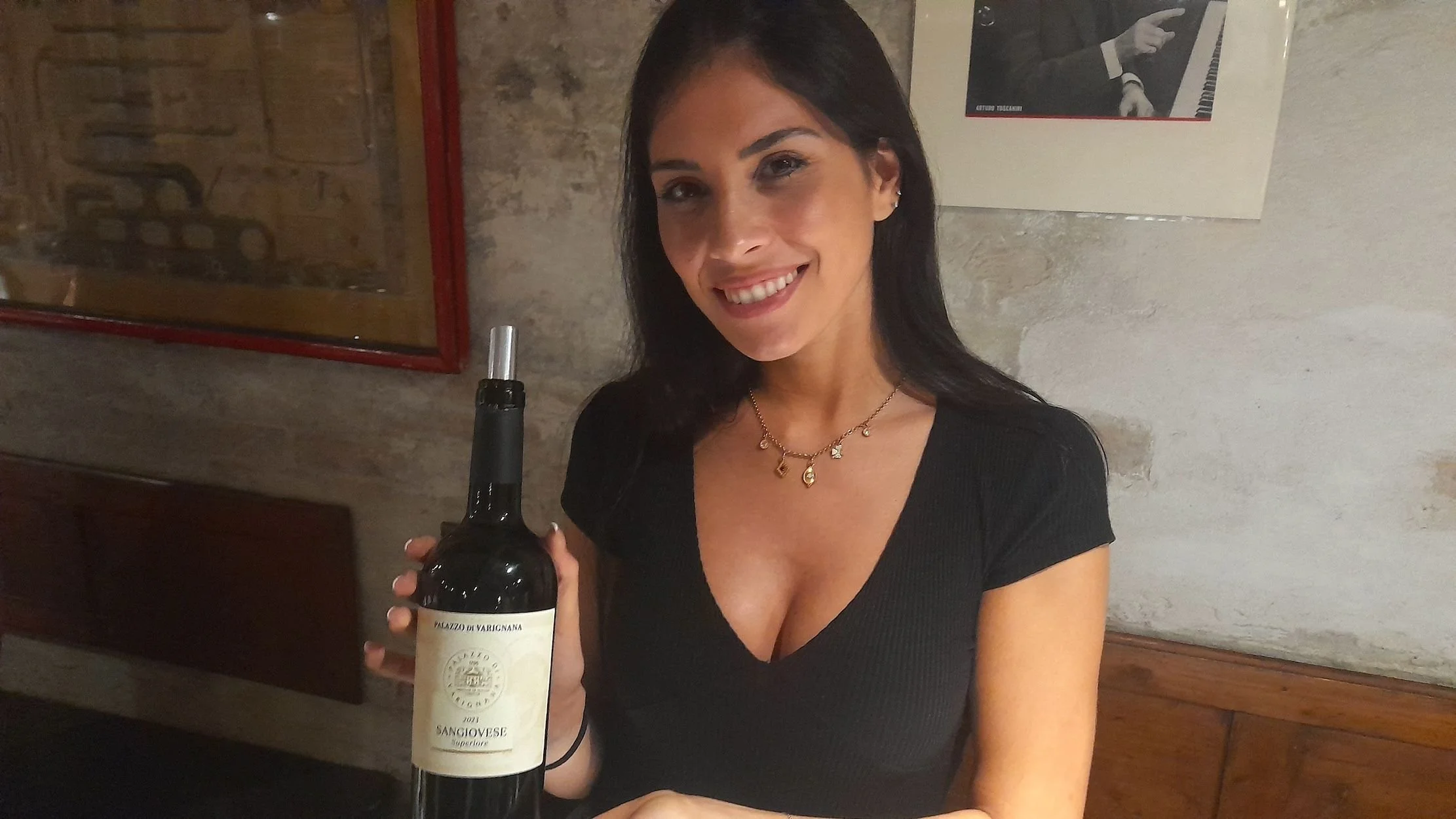
Eleonora Mazza of Palazzo Varingnana

Vinous treats await in the hills of Romagna

Modigliana - source of the Tiber

One of the sub-zones, Modigliana, used to be part of Tuscany until 1923 when Mussolini changed the provincial borders so that Modigliana was in his home province of Romagna, and with it the source of the Tiber which he regarded as sacred. The bulk of producers within the sub-zones use Sangiovese clones of Romagnan origin which, tellingly, proved to be some of the best when Chianti Classico viticulturists conducted quality analyses.

One Modigliana winemaker, Renzo Morresi of La Casetta dei Frati, believes his sub-zone’s wines are a match for any other Italian Sangioveses.

“Modigliana's are possibly as long lived as the best Tuscan and Montalcino Sangiovese wines,” he told me when I visited his winery. “However, we believe that those of Modigliana have little to envy Tuscan and Montalcino examples in terms of originality. Our wines are certainly recognisable for their elegance, minerality and spicy character. We believe they are surprisingly fresh, and therefore modern, although their longevity and authenticity are undeniable.”

Modigliana’s terroir is the key. Its high-altitude vineyards in the Apennines of between 450-570 metres ensure a wide diurnal range, and with it good acid retention in the grapes. Poor marl and sandstone soils are ideal for these Sangiovese vines, which produce elegant, fresh, and long-lived wines with complex balsamic and woody aromas. Dense surrounding forests not only protect the vines but also help produce blueberry, mushroom and forest floor notes on the palate. The region of Modigliana is divided into three valleys – Ibola, Tramazzo, and Acereta – each with unique soil and altitude, producing distinct mineral styles of Sangiovese.

Moreover, there are some very old vines in Modigliana. Cantina Maurizio Costa’s super-premium Cento 2020 flagship is made from a hectare of Sangiovese vines at 300 metres that are over 100 years old. The same winery’s excellent Cabernet Franc ‘Floss’ 2020 label likewise shows how well the variety can flourish in Modigliana.

Other producers’ Sangiovese to impress included Palazzo di Varignana (Imola sub-zone), Poderi dal Nespoli (Predappio), Fattoria Zerbina (Marzeno), Tenute Tozzi (Brisighella), Villa Papiano (Modigliana) and Tenuta Casali (Mercato Saraceno).

Notable white wines of Romagna

The winemaker of Tenuta Casali, Silvia Casali, revealed her labels are imported into the UK by Stone Vine & Sun. Her range includes the Romagna DOC Mercato Saraceno Famoso 2024, made from the white grape Famoso that, despite being mentioned in 15th century tax documents (when also known as Rambela), was almost extinct when only two rows of it were left by 2000.

Local producers, liking its sweet floral and exotic fruit aromas as well as its bright acidity, clubbed together to save it and were rewarded when it became an official Italian grape variety in 2009.

“Famoso is wonderful news for the region,” winemaker Massimo Randi declared, “because my clients around the world, who buy my reds, ask for something different to Trebbiano. They want a new white wine.”

While Romagna Trebbiano DOC is the most commonly produced white wine in the region (with 14,297 hectares under vine in 2024), Albana (with 768h) is the grape that is Romagna’s point of difference. The best examples of it come from a hilly area known as the Spungone Romagnolo, where calcareous clay-rich soils with marine fossils are found.

Producers whose 2024 vintage impressed included Branchini (Imola sub-zone), Caviro (Faenza), Fiorentini (Castrocaro), Giovanna Madonia (Bertinoro), Giovannini Giorgio e Jacopo (Imola), Podere La Grotta (Cesena), Tenuta Uccellina (Brisighella) and Tre Monti (Serra)

An orange wine from Albana, left on the skins for 20 days and aged in amphorae for nine months, is made by the Giovannini Giorgio e Jacopo winery in Imola. “We named it ‘8000’ as the first amphorae for wine was used 8000 years ago,” says Magdalena Giovannini, wife of Jacopo.

Apart from zippy acidity, aromatic intensity is a notable feature of Albana, with white flowers, pear and herbal notes apparent on the nose. Although the climate is continental, cooling breezes from the Adriatic mitigate the daytime heat. On the palate, light citrus notes are evident along with an almond, slightly bitter finish. Apart from dry (Secco) examples, sweet (Dolce) and straw (Passito) wines are made from the grape, underlining its versatility in the region.

One Romagna Albana DOCG Passito that caught the eye was Raffaella Bissoni 2023. Made from botrytised fruit picked during seven ‘tris’ from 35-year old vines on a half-hectare plot in Bertinoro, this had 140g/l of residual sugar and an abv of 12.5%. Blessed with concentration and a long finish, its vibrant acidity ensured its concentrated quince notes were not cloying.

The last word, though, must go to Romagna’s Sangiovese. To distinguish it from Tuscan and Montalcino versions of the varietal, the Consorzio Vini di Romagnalaunched in 2022 the ‘Rocche di Romagna’ logo that appears on its Sangiovese Sottozone labels. It features the iconic mosaic art of the Mausoleum of Galla Placidia in Ravenna, the Rocche being fortresses that were built all over the region, remain symbolic of Romagna.

“The objective of the Rocche di Romagna brand,” said the Consorzio's president Roberto Monti, “is to increase knowledge of the multiple identities of Sangiovese in our area, and to stimulate curiosity in the production of the sub-zones, which are the ones with by far the strongest territorial imprint.”

Lead pic. Eleonora Mazza (sales specialist for Palazzo di Varignana)


10 Top Wines from 2025

Geoffrey Dean's top 10 wines of 2025 (with a distinct Southern bias)

Covering the Ashes series in Australia for The Times, wine and cricket writer Geoffrey Dean, suddenly found lots of time on his hands as the five-dayers turned into two-dayers! Here he reflects on the past 12 months – a year which once again had a Southern bias – where not only did Dean cover a lot of ground in Australia, but also managed to make some great discoveries in South America and South Africa.

2nd January 2026 by Geoffrey Dean

,Avignonesi, Poggetto di Sopra, Vino Nobile Montepulciano DOC 2021, 14% abv

From biodynamically-farmed vines that were planted in the Caprile vineyard in the 1970s, this is a classically pure expression of top-end Tuscan Sangiovese. Floral, herbal and spicy aromas accompany glorious red fruit on the palate - notably cherry, mulberry and plum, with hints of hazelnut and chocolate. Possessing earthy complexity with firm but well-integrated tannins, this multi-layered Montepulciano will age gracefully if you can resist it now.

Bodega Colomé, Altura Maxima Malbec 2022, Calchaqui Valley, Argentina

The fruit for this iconic Malbec comes from the highest vineyard for black grapes in the world: Colomé’s Altura Maxima site of 3,111 metres, which was planted on limestone and granitic soils, and produces a floral wine with a genuine sense of place. Elevage is 24 months in third and fourth fill barrels, with French winemaker Thibaut Delmotte declining to employ any new oak. Dried mountain herbs, white pepper and savoury spices assail the senses before notes of blue and dark fruit, elderberries, tar and violets coat the palate. Fine, chalky tannins and racy acidity will allow this great wine to age gracefully.

Chapel Down, Kit’s Coty Blanc de Blancs 2019, English Sparkling Wine 12% abv

A highly impressive English sparkling wine from prized Chardonnay vines in the 100-acre Kit’s Coty vineyard on the Kent Downs. Spending three and a half years on the lees, and with a dosage of 7.5 g/l and a pH of 3.07, this has marked autolytic notes with biscuit, toast and brioche. Head winemaker Josh Donaghay-Spire take a bow. Noble traditional method bubbly to rival distinguished Champenois labels.

Joelle Weiss

Champagne Jacquart, Blancs de Blancs 2018, Champagne, 12.4% abv

Six years on the lees for this terrific vintage Jacquart that ticks all the boxes and more. The Chardonnay fruit came from premier and grand cru vineyards in Chouilly, Cramant, Oger and Villers-Marmery. Winemaker Joelle Weiss revealed that 75% of the wine underwent malolactic fermentation, with dosage of 6.5g/l achieving ideal balance. No barrel fermentation as is the policy at Jacquart. “What makes this Blanc de Blancs quite different from previous vintages is the feeling of natural beauty and delicacy,” Weiss told me. “That’s why I describe it as an impression of luminous elegance, natural grace and charisma. It has style after many years of high concentration and high fruit.” White flowers on the nose with mango, pineapple and citrus on the palate.

Château Lafon-Rochet, Grand Vin 2016, Saint-Estèphe, 14% abv

From one of Bordeaux’s best vintages this millennium, the Medoc fourth growth has come up trumps with this blend of 67% Cabernet Sauvignon, 25% Merlot, 6% Cabernet Franc and 2% Petit Verdot. Intensely perfumed, with aromas of lavender, mint, cigar box and subtle oak-derived cedar and pencil shavings. Beguiling black fruits, with a thread of blue fruit, merge beautifully together in this complex wine, with its polished tannins and firm structure. The Sainte-Estèphe estate, now owned by Jacky Lorenzetti, the Racing 92 rugby club proprietor, continues to impress with new MD Vincent Bache-Gabrielsen at the helm.

Forest Hill, Block 5 Cabernet Sauvignon 2023, Mount Barker, Western Australia, 13.8% abv

From the Mount Barker sub-region of Great Southern, in the South West Australia wine zone, comes a top-notch Aussie Cabernet Sauvignon from an especially good vintage. Forest Hill has long had a reputation for producing superb examples of the varietal, with their very low-yielding, dry-grown vines planted back as far back as 1965. Winemaker Guy Lyons employed 25% new hogsheads with élevage of 12 months. Beautifully balanced with fine-grained tannins, it has a mix of blue and black fruit, with earthy notes of cassis, clove and tobacco. Throw in a graphite line and exceptional length, and you have a formidable wine.

Paul Nelson Wines, Loam Chardonnay 2023, Denmark, Western Australia, 12% abv

Paul Nelson, helped by wife Bianca, makes a superb range in Denmark, another sub-region of Great Southern. The Loam Chardonnay is one of Australia’s best examples of the varietal, and worth every penny of its £125 retail price. White peach, lemon and pink grapefruit notes all dance across the palate, with hints of toasted cashew and clotted cream adding complexity. Racy acidity and a saline tang linger on a very long finish.

Dan and Bill Pannell at Picardy

Picardy, Tête de Cuvée Pinot Noir 2022, Pemberton, Western Australia, 13.5% abv

Master winemaker Bill Pannell, in partnership with son Daniel, has crafted a Pinot Noir that is as good as any I’ve tasted in Australia. The sage of Australian wine critics, Ray Jordan, with over 40 years of writing under his belt, gave the wine 99 points, describing it as “something very special - the pinnacle of the Pannell family’s quest for great Pinot Noir.” To reach it, Bill introduced as many as 11 Burgundian clones, six of which he says came ‘from a selection massale that we did from a friend’s grand cru vineyard in Corton.’ The cost of putting these cuttings through Australian quarantine cost the Pannells £15,000. Minute attention to detail in the family’s cool climate Pemberton vineyards that were first planted in 1993 has contributed to Picardy’s inexorable rise in quality. Daniel’s obsession with oak has also paid dividends with multiple toast regimes from seven different French forests and 40 different coopers having been tried. New oak is never more than 25%, with Picardy’s elegant but intensely concentrated fruit allowing its full expression, which is more Burgundian in style than New World. Dark cherry and plum notes with hints of earthy forest floor, truffle, spice and graphite. Complex with relentless length.

Pikes, The Merle Riesling 2025, Clare Valley, South Australia, 11.5% abv

2025 was the second driest on record in the Clare Valley, rendering it one of the most challenging of recent years, but the celebrated Polish Hill River estate managed to produce a Merle to rival the best. Named after owner Andrew Pike’s mother, this comes from the pick of the Riesling fruit. Joyously perfumed with aromas of frangipani, lime zest and citrus blossom, the palate exhibits notes of talc-like minerality and ground ginger with a taut acid backbone. A long, briny finish to a very serious wine that is compelling in its intensity and finesse. Winemaker Steve Baraglia deserves much credit.

Simonsig Family Vineyards, Langbult Steen Old Vine 2024, Stellenbosch, 13% abv

Not just a top South African Chenin Blanc (aka Steen in SA) but THE top one in this year’s Decanter World Wines Awards. Third generation winemaker Michael Malan crafted this classic Western Cape version of the varietal from vines in the Langbult single vineyard planted in 1987 on weathered shale at 100-150m. Five pickings at different ripeness levels were made with each one barrel-fermented separately. Elevage was in 300l and 400l French barrels, of which 20% were new and 30% second fill. Complex aromas of orange blossom, dried apricot and ginger spice give way to notes of white pear, melon and green apple. A streak of minerality as well light creamy texture from lees contact in barrel is apparent in this multi-layered wine that has notable freshness (pH 3.22) and length.


Related Articles

Most Popular

Wine tourism in Vaud, Switzerland

Geoffrey Dean: enotourism delights in Switzerland’s Vaud region

The Swiss canton of Vaud is a wine tourist’s delight with six AOCs to explore, as well as multiple outdoor pursuits. Chasselas, Gamaret and Pinot Noir are the staple grapes but, with a winemaking tradition spanning more than four centuries, there are plenty of obscure wines made from hybrids to discover such as Galotta and Garanoir. Geoffrey Dean reports.

22nd December 2025 by Geoffrey Dean

For the intrepid wine tourist who is looking for new places in Europe to visit, the canton of Vaud in Switzerland is becoming increasingly popular. Bordering France and the Jura Mountains to the west, and Lake Geneva (aka Lac Leman) to the south, it totals 3,212 square kilometres and is the second biggest wine-producing area in the country, with 3,800 hectares under vine.

The canton of Vaud set up its wine tourism development programme ten years ago.

Like the rest of Switzerland, less than 2% of Vaud’s wine are exported according to Ben Gehrig, director of the Bureau des Vins Vaudois, although producers are keen to increase that figure to raise brand awareness. The Swiss London wine tasting at 67 Pall Mall in November is testament to that. Vaud, meanwhile, continues to work on attracting wine tourists to its beautiful lakeside vineyards, and celebrated cities such as Lausanne, the so-called Olympic capital, and Montreux, home to the most famous jazz festival in the world and the most-visited historic building in Switzerland, the medieval Château Chillon.

Yann Stucki, director of Vaud Oenotourisme, revealed that the canton of Vaud set up a wine tourism development programme as long as ten years ago.

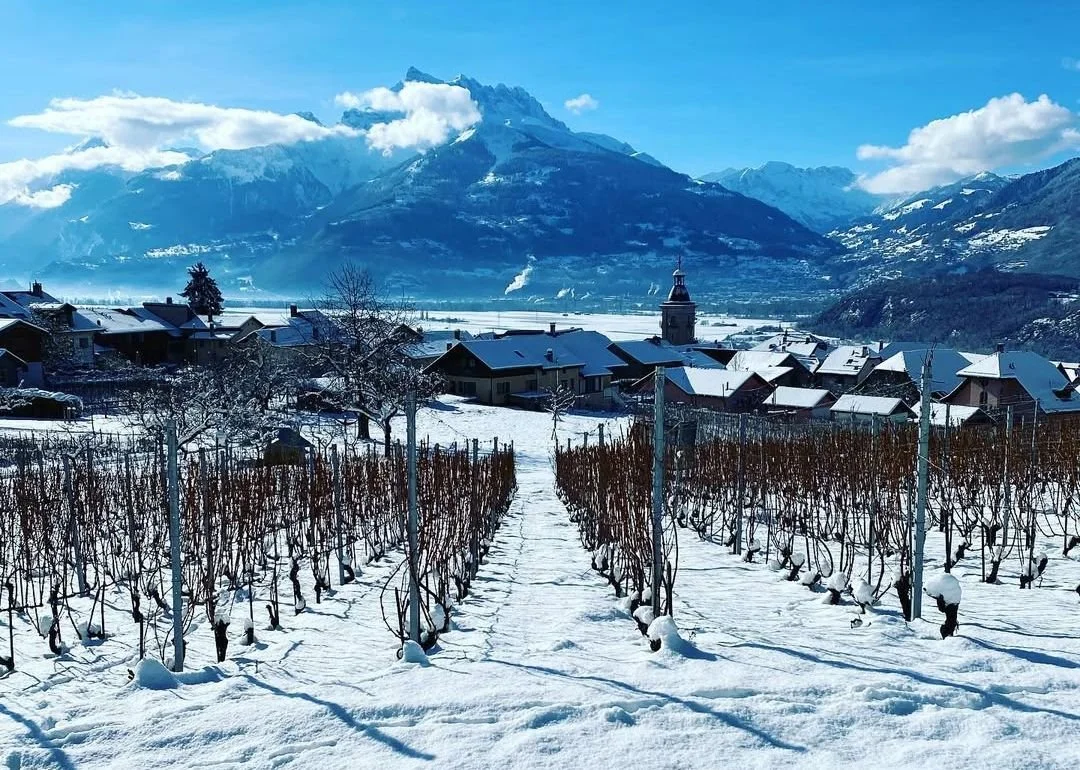
Vaud vineyards

“We wanted to enable wine producers and tourism operators to diversify their activities, and to offer visitors the opportunity to discover the wine tourism gems of the beautiful Pays de Vaud,” he said. “Wine tourism is growing worldwide and creating value-added business models. This theme fits perfectly with the exponential trend towards sustainable and experiential tourism.”

Walking through Lavaux Vineyard Terraces, a UNESCO world heritage site

More on a couple of winery visits made later, but the first absolute ‘must’ for any wine tourist is the stunning five-kilometre walk from the village of Chexbres west to the pretty town of Cully. This is part of the Lavaux Vineyard Terraces, a UNESCO world heritage site, with 800 hectares of vines that benefit from both direct and lake-reflected sunlight as well as stored heat in the terraced stone walls. Cyclists can take the 32-km path from Lausanne-Ouchy to Château Chillon.

The walk is along elevated, well-maintained pedestrian paths through terraced vineyards that afford dramatic views of Lake Geneva below. It is by no means a hard walk, and easily initiated by catching the train from Montreux to Chexbres via Vevey. On arrival in Cully, you can then catch the historic paddle steamer, La Suisse, that takes you on a three-hour circumnavigation of the lake, with stops on its south side, including the pretty village of St Gingolph that borders Switzerland and France.

The boat drops you off in Vevey in the heart of the Swiss Riviera. While best known for being the HQ of Nestlé and the former home of Charlie Chaplin, it also contains a wine museum known as the Musée de la Confrérie des Vignerons. Largely dedicated to the local winemaking fraternity’s celebrated ‘Fête des Vignerons’ festival, it represents a charming step-back in time into Swiss wine culture. The festival, last held in 2019 when 20,000 people attended it, has been staged every 20 to 25 years since it was first started in 1819.

Another wine museum well worth a visit can be found in the 12th century Château d’Aigle in the ‘région viticole' of Chablais (one of six appellations in Vaud, the others being Lavaux, La Côte, Côtes-de-l’Orbe, Bonvillars and Vully). The Musée de la Vigne, du Vin & de l’Etiquette, which has stunning views over surrounding hillside vineyards, has a collection of historic winemaking implements, as well as interactive displays and over 1,000 Swiss wine labels going back to the 1920s.

Two wine estates - two approaches

A stone’s throw from Château d’Aigle can be found the Proprieté Veillon Au Cloitre estate, which produces 30,000 bottles per annum. Around 70% of those are Chasselas, with Gamaret (a cross of Gamay and Reichensteiner), Cabernet Franc and Merlot making up the balance. Marc Tavernier, the winemaker, revealed that all are sold within Switzerland but that he would like to export to the UK.

“We are in the Alpes Vaudoises here, so have an Alpine climate which is very similar to a continental one,” he said. “I make three different Chasselas from three different soils - argilo-calcaire, pebbles and alluvial from the river; and glacial deposits.” The latter is where the fruit from 50-year old vines for his top 'Clos du Paradis' 2024 label comes from. Retailing at cellar door for 20 Swiss Francs (about £20), this represented good value for a lower-premium white with pleasing complexity and minerality.

Not far south of Aigle is the village of Ollon, where 125 hectares of vines are grown. Three of these belong to Harald Cropt, who produces as many as 14 different varietals for his Domaine de Trécord labels. “It’s a little bit boring if you only grow Chasselas, Gamaret and Pinot Noir,” he mused, “so I have lots of red crosses like Galotta and Garanoir. Vines have been grown here for 400 years.”

Cropt, a fifth generation winemaker, is an interesting character, having been a champion wrestler at ‘Lutte Suisse’ events until 2017. He produces 11 labels, exporting none, although he would be open to. His Chasselas Grand Cru du Chablais 2024 won a gold medal at the Grand Prix du Vin Suisse, while his Gamay Vieilles Vignes d’Ollon 2023 (from 35-year old vines) showed particularly well. So too did his Pinot Noir Grand Cru d'Ollon 2022 and Vin Doux Naturel Chasselas, fortified to 18% abv with residual sugar of 130g/l.

Both Cropt and Tavernier’s wines underlined how good Vaud wines can be. An extensive selection of them, along with other labels from the canton, were available at the nearby Miroir d’Argentine, an enchanting retreat in the Alpine hamlet of Solalex. Not far from there, the Villars golf club, a mountainous 18-hole course with dramatic views, had an impressive wine list with many Vaud labels in its restaurant.

Vaud, therefore, is a wine tourist’s delight. With six AOCs to explore, as well as multiple outdoor pursuits, you can do so from a variety of idyllic bases, be it Montreux, Vevey, Cully, Villars or Solalex. If you can guarantee one thing, it is that visitors will not be disappointed.

Geoffrey Dean flew on Swiss (swiss.com) from London Heathrow to Geneva, and travelled domestically with Swiss Travel Pass (sbb.ch).

For more information, visit: myvaud.ch/enaigle-tourisme.chmontreuxriviera.comalpesvaudoises.chswitzerland.com


Festive drinks for Christmas

The perfect wines for the festive season

Christmas is coming and we have a wonderful selection of Laithwaites wines to help ease you into the holiday period. Elevate your entire festive season with these spectacular French wines

Geoffrey Dean

Published 28 November 2025 12:40pm GMT

With Christmas parties and the festive period soon upon us, we have selected a quintet of Laithwaites wines for the festive season. They happen to be all French, from producers with whom Laithwaites has had a long association, and who make consistently good wines year after year. 

These include a Sauvignon Blanc from the Loire Valley, a Champagne, a Châteauneuf-du-Pape from the Rhône Valley, a Cru Bourgeois from the Médoc and, for that special occasion, a double magnum of Castillon Côtes de Bordeaux.

Champagne Decelle Frères Brut NV, 12 per cent ABV, £19.99

Currently on offer at half-price, this excellent-value bubbly is made by the Gyéjacquot brothers, Cyril and Frédéric, whose father Michel and uncle Daniel founded the winery back in 1970. Their holdings have expanded to cover seven municipalities in the Aube department of Champagne.

The brothers are passionate about sustainability, with their vineyards being awarded in 2019 the Haute Valeur Environnementale (HVE) Level 3 certificate (the highest possible, being measured by environment performance indicators). This cuvée is 90 per cent Pinot Noir with the balance being Chardonnay. It spent a year on the lees, giving it some biscuity characteristics to go with its apple, pear and citrus notes. 

Domaine Michel Thomas Sancerre AOC 2024, 12.5 per cent ABV, £19.99

This fine Loire Sauvignon Blanc is made by Michel Thomas’s son, Laurent, in the commune of Sury-en-Vaux, 6km north-west of the town of Sancerre. It has been a best-seller for Laithwaites ever since the company started importing the Thomas family wines two decades ago. Their sloping chalky vineyards, which are meticulously farmed, benefit from a perfect aspect and produce crisp, fresh white wines with flinty minerality.

Despite the challenge of rainfall in June and July in 2024, that was 2.5 times the norm, Laurent Thomas has crafted a beautifully balanced wine with concentration and length. Drink with seafood, goat’s cheese or fish salads.

Cuvée du Vatican Châteauneuf-du-Pape AOC 2022, 15 per cent ABV, £27

This classic Châteauneuf blend of Grenache, Syrah and Mourvèdre was launched in 1958 by Félicien Diffonty with the blessing of the then Pope, John XXIII. The family still sends a case of it every year to the Vatican. Félicien’s son Jean-Marc now makes this powerful, full-bodied yet harmonious wine from old gnarly vines with very low yields.

Herbal, spice and candied orange aromas give way to ripe cherry notes on the palate. Ripe with huge concentration, its notable freshness and fine well-integrated tannins balance its 15 per cent alcohol. Drink with rich meats or game dishes

Château Ramage La Batisse, Haut Médoc AOC 2014 Cru Bourgeois, 12.5 per cent ABV, £27

Laithwaites’ Bordeaux buyer, Jean-Marc Sauboua, has such a strong relationship with the château’s owners that he has first call on vintages when they hold them back. This blend of Merlot and Cabernet Sauvignon needed time to mature but is now ‘à point’ and a delight.

Medium in weight with soft tannins, it shows some discreet new oak and attractive floral aromas with a hint of tobacco. On the palate, there are notes of plums, blackberries, cherries and walnuts. An elegant wine, it has a long finish. An ideal accompaniment for roast beef, lamb, charcuterie or, on Christmas Day, roast turkey. 

Château La Clarière, Castillon Côtes de Bordeaux AOC 2022, 14.5 per cent ABV, £120 (3-litre double magnum)

A favourite of Tony Laithwaite’s, whose love affair with wine started when he was taken in and mentored by the château’s owners when he was a student in the 1960s. In 1980, he was offered the chance to buy the estate and share its exceptional Bordeauxs with the world – a mission he has accomplished, given the many awards that have followed. Castillon Côtes de Bordeaux is a competitively priced red wine appellation that sits immediately to the east of neighbouring St-Émilion, sharing its soils, hills and exposure. 

Predominantly Merlot, it is generously perfumed with black fruits, notably plum, and fine spices. Older vintages have won numerous awards, including the Paris Lauréat Prix d’Excellence (twice). Low yields, rigorous sorting and skilful use of some of the best new French oak for ageing have all combined to contribute to the high quality of this label. Drink with roasted and grilled meats, such as duck, pork or chicken, as well as certain Asian dishes. 


Beaumes-de-Venise visit

UK buyers discover the diversity of Rhône’s Beaumes-de-Venise

If there is a more enchanting region to make wine than Beaumes-de-Venise in the heart of the southern Rhône Valley, I would like to see it. Overlooked by the striking Dentelles de Montmirail peaks, limestone outcrops from the Jurassic era, the sloping vineyards of this tiny southern Rhône cru and its five picture postcard villages possess a classical beauty. Throw in a mosaic of complex soils, altitudes as high as 600m, highly competitive pricing and a band of talented young winemakers, and you have all the ingredients for a compelling story to underpin a push to export more of their AOC Beaumes-de-Venise red wines. That was also what greeted a group of leading UK wine buyers who visited the region recently to see what potential Beaumes-de-Venise wines have for the UK market as part of a buying trip hosted by The Buyer in partnership with Inter Rhône and AOC Beaumes-de-Venise. Geoffrey Dean travelled with them to shine a much deserved spotlight on this fascinating up and coming region of the Rhône Valley.

10th November 2025 by Geoffrey Dean

Beaumes-de-Venise’s world-class Vins Doux Naturels (VDNs), sweet wines fortified to 15%, aka AOC Muscat de Beaumes-de-Venise, might be what the region is best known for, but as we discovered during an intense three days of tasting there is so much more to discover and explore about this beguiling part of the southern Rhône Valley.

It was certainly an eye opener for a group of UK wine buyers who were invited to see Beaumes-de-Venise and what it can offer for themselves, most of whom had not been to the area before.

The Buyer was able to invite a group of leading UK wine buyers out to Beaumes-de-Venise to discover the wines and producers of this beautiful region

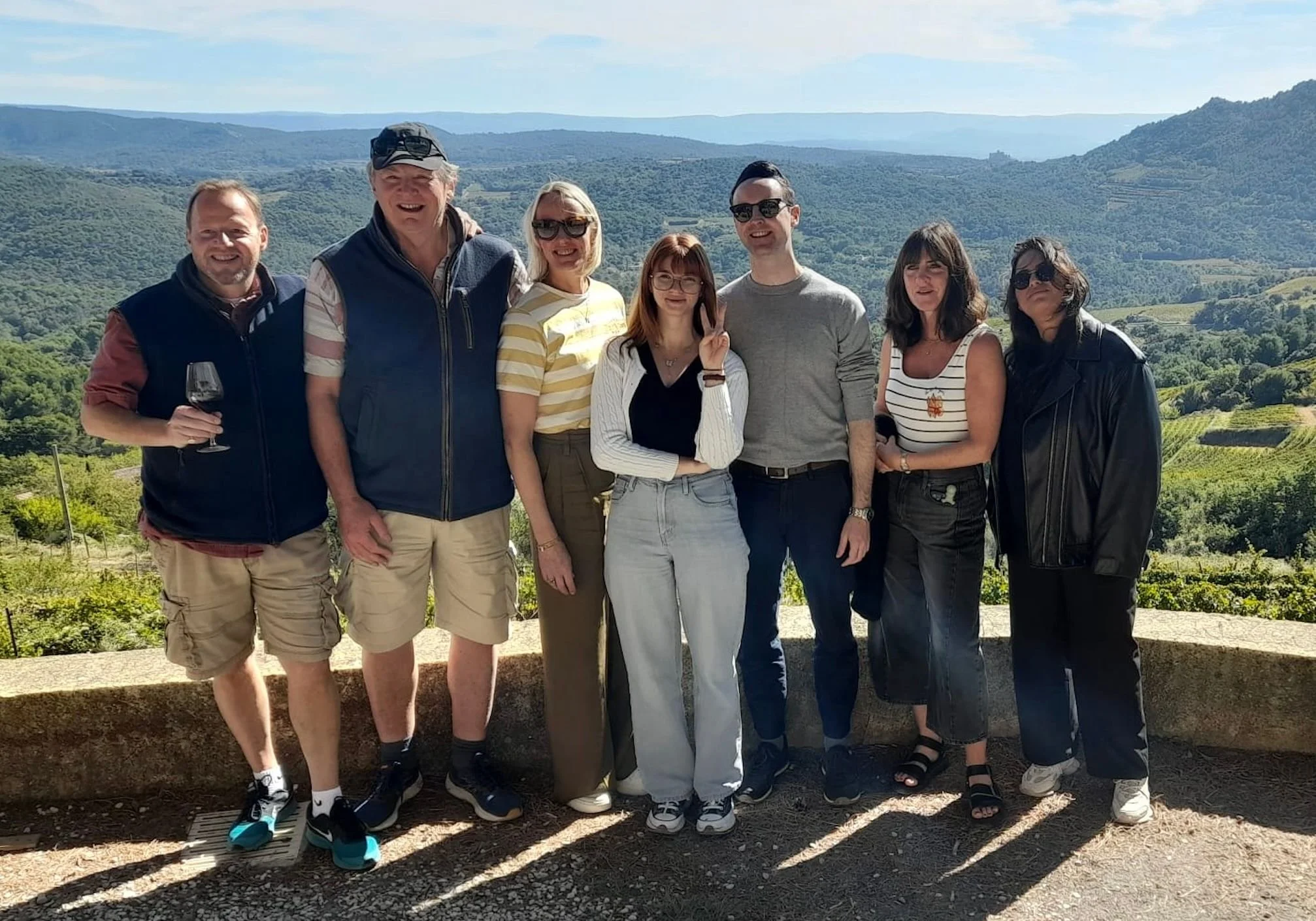
Joining me on this mini tour of discovery was: Sarah Birch, Vagabond Wines; Rory Sutherland, Good Brothers Wine Group; William Stephens, Nectar and Asahi Wines; Greg Sherwood MW, Museum Wines; Berfin Cicek, Novel Wines; Kate Goodman, Reserve Wines.

To really understand what Beaumes-de-Venise can offer now, you need to understand and appreciate its illustrious history. Which brings us back to its VDNs, which received Cru status as long ago as 1945, and was served at the coronation of Queen Elizabeth II in 1953. That same year, Baron Le Roy, founder of INAO, hailed it “nectar of gods”, and in the late 1990s, the wine became one of the first French products to be awarded the title of ‘Site Remarquable du Gout’ (‘remarkable site of taste’).

A few years later, in 2005, Cru status was at last conferred on Beaumes-de-Venise red wine. This must be an assemblage of at least 50% Grenache and 25% Syrah, with other Rhône varieties permitted such as Mourvèdre, Cinsault and Counoise. White varietals like Viognier, Marsanne and Grenache Blanc can also be added but must make up no more than 10% of the blend.

In practice, the majority of producers stick with Grenache, Syrah and Mourvèdre. Currently, the INAO is still considering the AOC’s application in 2022 to include dry white wines under the same Cru designation.

More on the Vins Doux Naturels later, but the AOC’s red wines, of which we tasted more than 30, would appear to tick all the boxes for the UK on and off-trade.

These include zippy freshness, alluring fruit, medium body, silky tannins, finesse and, above all, high quality at very appealing price points. The producers’ ‘conservatoire’, or association, proclaims its desire “to strengthen its brand image, attract new customers and increase the loyalty of existing customers, while highlighting the quality and uniqueness of its wines”.

Geological diversity

The uniqueness of Beaumes-de-Venise’s terroir lies in its complex geological diversity, with four soil types: Triassic red earth, grey Jurassic earth, Cretaceous white earth and blond Miocene earth.

The emergence of the Dentelles de Montmirail brought the Triassic deposits to the surface around the village of Suzette, whose soils are ideal for Syrah, providing richness, suppleness and longevity. Grey Jurassic earth is found north of the village of Lafare, being made up of silt, clay and sand which is perfect for Grenache.

Cretaceous white earth around the village of La Roque-Alric, with its marly clay-limestone soil, is good for both Syrah and Grenache, which are grown on terraces, or ‘banquettes’, that boost groundwater retention. Blond Miocene earth’s clay-sand soils are best for Muscat, providing finesse, freshness and floral aromas. This blend of soil types gives Beaumes-de-Venise wines distinctive complexity and balance.

Thomas and Sophie Julien at La Ferme Saint-Martin

Muscat à petits grains blancs, the most distinguished variation of the Muscat family, loves the heat (a feature of the appellation), and is grown at the lower end of it, notably around the villages of Beaumes-de-Venise and Aubignan. Black grapes, though, are planted higher up around Lafare, La Roque-Alric and Suzette.

With stunning views of Suzette as well as the Alpilles massif and the Montagne de Luberon are two impressive estates, Domaine La Ferme Saint-Martin and Domaine Saint-Amant. The former’s ‘Les Terres Jaunes’ AOC Beaumes de Venise ’22, which contains some Terret and Counoise in the blend, has fresh red fruit and supple tannins, and is imported by Les Caves de Pyrene.

Camille and Eloise Nosworthy at Domaine Saint-Amant

Saint-Amant, certified organic since last year, is unusual in having a mother and daughter winemaking team of Camille and Eloise Nosworthy. Their Grangeneuve AOC Beaumes-de-Venise ’22 showed especially well, with a cépage of 50% Grenache, 30% Syrah, 15% Carignan and 5% Viognier from vines with an average age of 50 years. Fermented and aged in old foudres, it is imported by both the Wine Society and Richard Harvey Wines.

Henri and Gaetan Leydier at Domaine Durban

At Domaine Durban, meanwhile, can be found the father and son winemaking team of Henri and Gaetan Leydier, who produce fine examples of both Vin Doux Naturel and red Cru labels. These are imported into the UK by Yapp Brothers, Thorman Hunt and Anthony Byrne Fine Wines. Its AOC Beaumes-de-Venise ’22 Vieilles Vignes is made from 65-year old vines yielding 25 hl/ha and aged in concrete. A 2005 AOC Muscat de Beaumes-de-Venise that the Leydiers opened showed how well VDNs can age, retaining freshness but exhibiting notes of nuts, dried fruits, caramel, toffee and spices.

Talking of aged VDNs, Rhonéa, the prominent local co-operative producing nine million bottles per annum from 300 growers in the southern Rhône, has an enticing aged Muscat de Beaumes-de-Venise VDN named ‘Bois Doré 6 Ans d’Age’. This is aged for six years before release, and has exotic nutty and honeyed notes.

“People really enjoy it,” says Sophie Steinloff, Rhonéa's export manager. “I am very keen to increase our exports to the UK where I want to grow the Rhonéa brands to the on-trade. Waitrose has another label of ours, a Rasteau, but not a Beaumes-de-Venise. We are totally ready for increased exports and have the logistics although I want the right partner.”

Exciting future

Which is what the UK buyers were there to do. Look, taste, explore and discover what wines could work in the UK.

Thierry Vaute, owner of Domaine de la Pigeade whose VDN used to be in British Airways first-class, admitted that Rhonéa had been an unwelcome competitor to smaller wineries like his, but not any more.

“There was competition with the co-op but now we are all together,” he says. “I would like to increase exports to UK which has not been a big market for me, although Castelnau Wine Agencies have my VDN and my red. The difficulty is to be interesting for the importers, and they say the largest range is best, with several Rhône appellations the way to

find a new market. But my heart beats for Beaumes-de-Venise as I am native here. Now we have so many young wine growers, which is very encouraging for the future. They are very invested in the region - much more than my generation.”

Romain Hall at Domaine des Bernardins

Domaine des Bernardins, arguably the best-known producer in the appellation, has an outstanding range that is imported by both Thorman Hunt and the Wine Society. Romain Hall, whose family have owned the estate since 1820, is a seventh generation winemaker, with his great-grandfather Louis Castaud having been instrumental in securing Cru status in 1945.

At the winery’s tasting room, bottles of Muscat de Beaumes-de-Venise dating back to 1898 grace the back wall, and the family even have an 1842 tucked away safely. His contemporary version is unusual in that it is made up of 75% Muscat à petits grains blancs and 25% Muscat à petits grains noirs.

One of the keys to making top quality AOC Muscat de Beaumes-de-Venise is the timing of ‘mutage’ which is the addition of neutral alcoholic spirit (96% abv) to stop the fermentation. Often this is best carried out in the middle of the night.

“You have only one hour to get it right, so it is critical,” stresses Hall. “It all depends on the level of residual sugar, which will be between 100-120g/l. We will add a minimum of 5% and a maximum of 10% neutral alcoholic spirit.”

Some wineries produce both a red and a rosé VDN AOC Muscat de Beaumes-de-Venise from Muscat à petits grains noirs. Made in tiny quantities - the red totalling just 1% of production and the rose 6% - these are rarely exported and are something of a local secret. Hall also makes a dry Muscat that showed very well.

Seeking distribution

A number of other producers seeking UK distribution likewise unfurled some superb examples of white VDNs and red Cru wines. Justine Soard, who along with her cousin Valentin and uncle Vincent is a co-owner of Domaine de Fenouillet, revealed she is keen to get both labels into the UK market, having formerly sold the sweet Muscat through Bibendum until three years ago. Her excellent organically-farmed AOC Beaumes-de-Venise ‘Terres Blanches’ label is a best-seller locally.

“We are a new generation of wine producers,” she says. “We can make a group and promote the appellation.”

Xavier Théo, vigneron of Domaine Raboly

One name that few will be familiar with, but who is a potential star in the making is Xavier Théo, vigneron of Domaine Raboly. He has never exported any of his wine, and makes only Cru reds and declassified Vermentino from 21 hectares of vines inherited from his father and grandparents that include 86-year old Grenache vines as well as Syrah, Mourvèdre and Cinsault.

“We are in Beaumes-de-Venise itself with soils of sand but no clay,” he says. “That leads to a lot of freshness. I do a very soft vinification with no punchdown, only pumpovers.”

Whatever he does, he does it brilliantly, revealing that he spends 80% of his time in his vineyards.

Florence Cartier winemaker at Domaine Les Goubert

Another winemaker with star quality is Florence Cartier, whose Domaine Les Goubert AOC Côtes-du-Rhône and Gigondas labels have been imported by Jascots Wine Merchants. She, too, would like to find a UK distributor for her AOC Beaumes-de-Venise, which is generous yet well-balanced with velvety tannins.

Jerome Petitjean at Domaine Cassan

We encountered several other wineries with a foot in several southern Rhône appellations that are keen to get AOC Beaumes-de-Venise wines into the UK. These included Domaine de Piéblanc, Domaine Saint-Roch, Domaine La Ligière and Domaine Cassan.

The latter’s owner-winemaker, Jérôme Petitjean crafts three very good AOC Beaumes-de-Venise labels, with his ‘Tradition’ 2023 a 90:10 Grenache/Syrah split and his flagship ‘Félibrige’ 2020 a 50:50 blend that had both power and elegance. Domaine de Cassan, a beautiful spot where it was a pleasure to stay, has half a dozen bedrooms.

Domaine La Ligière’s owners, the Bernard family, have worked the soils around Gigondas and Vacqueyras since 1800, but only in 2010 when they built a state-of-the-art winery did they make their own wine rather than send their fruit to the co-op. Robersons take their wines from those two appellations but Elizabeth Bernard, and husband Philippe, would like to get both their VDN and red Cru labels into the UK market.

“Could cocktails with sweet Muscat wine be something for the young customer in the UK?” Elizabeth asks. “I think in the minds of young consumers you must change what they think of Muscat Vin Doux Naturel as they say it’s the wine of their grandmother. Cans of it in cocktails are selling well here in pubs and bars. But we need bar staff to suggest the idea to drinkers.”

With all dessert wines battling against the headwinds of lower consumption globally, Beaumes-de-Venise VDN producers know they face a challenge. While their Muscats remain among the world’s great sweet wines, their Cru reds are still something of a hidden gem. Awareness of them is at last growing, however, with the British market showing increasing appreciation of both their quality and value for money.

Our group of UK buyers came home enchanted and entranced with the wines and producers they were able to meet. Some of whom may well soon be joining them in the UK.


Buyers’ views

Greg Sherwood, Museum Wines

What was your knowledge of the region before going?

Interestingly, Beaumes de Venise was one of the first French wine regions I visited on my return to Europe from South Africa in 2000. Coming five years before the appellation changes in 2005, the region was firmly dominated by sweet Muscat wines with red wines very much an afterthought - the red wines living in the shadow of more notable up and coming villages like Gigondas, Vacqueyras, Rasteau, Sablet, etc. I knew it was beautiful as a region and incredibly complex geologically, having hiked the Dentelle de Montmirail trails… which normally means it should be perfect red wine terroir as well.

What would be your overall summary of the wines and producers you met and tasted in terms of quality and styles of wine?

I honestly felt we tasted a truly representative cross section of producers, not just ‘cherry-picked’ premium boutique wines. My impressions were overwhelmingly positive, with some incredible red blends, some deliciously iconic sweet Muscats, and also some lively and highly aspirational white wines. I knew the top producers would have their sweet wine styles nailed down tightly after years of focus, but I was not prepared or expecting the exceptional quality encountered with almost all the red wines. A real eye opener. Producers were passionate and quality focused with a real attention to detail, knowing that the global market is now firmly looking at quality and not quantity – even when it comes to more affordable Southern Rhône wines.

Which styles and price points do you think are best suited to your business/ or another part of the UK wine market?

For the UK market, there is definitely a significant opportunity for the red blends focusing on Grenache, Shiraz and Mourvedre. Most interestingly for me, despite the 14 to 15 % alcohol levels on the wines, they all retained incredible purity, freshness and focus more in keeping with wines that are 13 or 13.5% abv. But the limestone soils and altitude definitely bring something special to the wines.

In the wider wine market, there is undoubtedly plenty of interest in the UK for the £16.99 to £22.99 price point wines that should see consumers getting a very accomplished wine showing fruit purity, concentration, and structure.

In the more premium end of the trade where I operate, there is also a big opportunity for more ‘niche’ single vineyard, single site, lieu dit – style wines from old vines and unique historic sites. Fine wine consumers want stories and history loaded with interesting vineyard and winemaking details… not just simply good quality.

Any thoughts on what you would like to see the producers doing with their wines to make them more competitive/ relevant for the UK?

On the most part, producers’ ex-cellar pricing seemed to be reasonable for the quality on offer. I don’t think the UK market will have too many gripes about pricing or quality.

The larger co-operative operations might need to fine tune some of the larger production wines slightly to hit key price points for wider wholesale distributors, but this would all be part and parcel of finding a sweet spot where better volumes could be moved. The UK market is highly competitive and congested, yet it is always looking for something new with a point of difference.

Beaumes-de-Venise has it all… the Côtes du Rhône label, the Southern Rhône regional pull, recognisable cultivars in their blends and appealing, high-quality styles of wine.

Spearheading promotions in the UK in small groups, “strength in numbers” is definitely the way to go to raise the profile of this region. Oh, and definitely offer the Muscat sweet wines in half bottle… it’s a no brainer!


Wines for winter

Classic wines for wintry evenings

As evenings lengthen and winter approaches, our selection is ideal for bonfire night and beyond this November. From celebratory champagne to hearty winter reds, find your new favourites.

Geoffrey Dean

Published 04 November 2025 12:55pm GMT

With the nights closing in after the clocks go back, and winter fast approaching, we have chosen some classic Laithwaites labels to drink around bonfire night and on November evenings. 

To celebrate Bonfire Night, there’s a terrific Champagne, which is currently on a half-price offer, or a top Prosecco for those wanting a slightly lower alcohol level. 

Lovers of a high-quality Chardonnay at a very competitive price will enjoy our recommendation from Limoux in southern France, while we suggest two full-bodied winter-warmer reds as well as a medium-bodied New World Pinot Noir. 

And new customers can enjoy an extra 30 per cent off when they spend £95 or more – simply enter code 30OFF at the checkout.

Louis Dumont Champagne NV 12% ABV (£19.99)

The fourth-generation Rapeneau family, owners of the GH Martel Champagne house, also makes the excellent Louis Dumont brand gold medal-winning Champagne.

Containing the holy trinity of Pinot Noir, Pinot Meunier and Chardonnay, this non-vintage bubbly spent three years on the lees (yeast deposits at the bottom of the vat that improve the wine’s maturation, complexity and flavour) and has complex notes of toasted brioche, bread and biscuit on the palate.

Aromas of morello cherries and almond are also detectable. A bright acidity and refreshing citrus flavours counter its creamy textures. It is half price for the Christmas period, too, which is definitely worth celebrating. 

Alessandro Gallici Prosecco Anniversario 2024, Prosecco DOC Millesimato 11% ABV (£15.99)

Originally intended as a limited edition to celebrate the 50th anniversary of Laithwaites’ founding, this prosecco has proved so popular that it now has a permanent place in its portfolio.

Made from organically farmed Glera grapes in the northern Italian village of Roncade by Alessandro Gallici, with whom Laithwaites has been working for more than two decades, this is a classy Prosecco in a uniquely shaped bottle. A creamy mousse gives way to delicious lemon and peach notes ahead of a long, toasty finish.

La Voûte Sélection Terroir 2024, Vin de France, 13.5% ABV (£17.99)

A superb Chardonnay that could easily be mistaken for something much more expensive from Meursault. The fruit comes from vineyards at 300m in Limoux, an enclave within the Languedoc in southern France, close to the Pyrénées.

The appellation is renowned for its sparkling wines and has some of the most interesting Chardonnay vineyards outside Burgundy. Clay, limestone and sandstone soils, as well as an Atlantic-dominated climate with cooling winds, are perfect for the varietal.

As vinification by winemaker Mark Hoddy took place outside the designated AOC Limoux appellation, it is classified as a mere Vin de France, but this surprisingly complex wine has elegant apple, peach and citrus notes with mineral freshness, a creamy richness and a lengthy finish. Delightful as an aperitif or with food.

Purple Owl Pinot Noir 2023, California 14% ABV (£13.99)

A good-value Pinot from the coastal region of California, where the purple owl clover is a native wildflower. Known for its shaggy spikes of pink, purple or lavender-coloured flowers (which adorn the attractive label), it is a vital nectar source for bees and butterflies.

This medium-bodied wine is very drinkable with its ripe cherry and raspberry fruit, freshness and elegance. A perfect accompaniment with chicken dishes.

Aluado Alicante Bouschet 2023, Vinho Regional de Lisboa, 12% ABV (£12.99)

Whereas nearly every other black grape has colourless juice, Alicante Bouschet’s is dark, which is why this wine is inky black. It does not need long skin maceration, allowing it to have velvety tannins and be very approachable at a young age.

Produced by renowned Portuguese winemaker José Neiva Correia at his Quinta de Porto Franco estate 60km north of Lisbon, this is rich and full-bodied with notes of damson, blackberry, mocha and spice. It pairs well with grilled meats and stews.

Saracosa Governo Rosso 2024, Toscana IGT 13.5% ABV, (£19.99)

A smooth, suave and seductive blend of Sangiovese and Merlot, with black cherry notes, that is made by Sofia Barbanera from vines planted near Saracosa Hill in Tuscany. The ancient ‘Governo’ technique (or to give it its full name, as per the label, of ‘Governo all’uso Toscano’) was used for this wine’s production.

It involves drying from between five to 10 per cent of the harvest until the grapes reach a semi-raisined state in late November, then pressing them and adding the unfermented juice to the rest of the harvest that has completed alcoholic fermentation. This accelerates the secondary (or malolactic) fermentation and enhances mouthfeel, colour and concentration. It’s a perfect serve with beef or pasta. 

Shop this winter selection at laithwaites.co.uk


Berkmann Aussie icons

Berkmann Wine Cellars’ initiative in showing four iconic Australian brands as part of its 60th anniversary celebrations brought reward for those trade and media who made the London tasting. Titled A Celebration of Premium Australian Wine it featured two top Aussie winemakers from Victoria, Sarah Crowe and Ray Nadeson, of Yarra Yering and Lethbridge respectively, were there to talk through their wines, as were two sales directors, Andrew Watson of Woodlands in Margaret River, and Leigh Woodrow of Langmeil in the Barossa Valley.

25th October 2025 by Geoffrey Dean,

"Why put on this ‘celebration of premium Australian wine’?” asked Berkmann’s Alex Hunt MW rhetorically. No justification was really needed, but he still gave a scholarly one. “If wine exists at the intersection of agriculture and art, then Australia is one of the most richly resourced countries in all of wine. I hope that this tasting is going to demonstrate that. Because after all, we all know that Australia’s reputation was a bit tarnished by the excellent way they managed to scale up the more industrial end of agriculture for winemaking a number of decades ago: irrigating, mechanising, producing vast amounts of cheerily banal quaffers.

“But every country has its quaffers, and no country should be punished for that. Here we’re going to look at the other end of the scale – the haute couture if you like. Australia has remarkable soil – some incredibly old, though not all, and those soils are populated by some of the world’s oldest vines. In many cases, they are on their own roots. Then there’s the human element. Tending those vineyards are some of the most forward-looking, visionary, pragmatic and exploratory winemakers in the world. They’re versed in the classics but you’ll never see them copy the classics. Instead, the goal is to make detailed, delicious, multi-dimensional expressions of their own respective vineyards.”

Hunt was, of course, referring to the very wines in front of us. Yarra Yering, which was founded back in 1969, is lord of the Yarra Valley manor while Lethbridge Wines, in the Geelong region, has attracted a cult following since its establishment in 1996. Langmeil, meanwhile, is home to what is thought to be the oldest surviving Shiraz vineyard in the world, The Freedom 1843 (still on own roots). It was planted by Christian Auricht, a blacksmith who fled to South Australia due to religious persecution in his native Prussia. As for Woodlands, it is one of Western Australia’s best boutique producers, being situated in the prime sub-region of Wilyabrup where its oldest vines were planted in 1973 by the Watson family, still its owners.

Chardonnay was the first varietal tasted, with the straight-talking Nadeson, who founded Lethbridge with wife Maree and fellow scientist Adrian Thomas, getting straight to the point. Wanting to know how much of his 2016 Allegra had seen malolactic fermentation and also how much new oak, he got a variety of answers.

“Well, it’s 100% malo,” he barked. “The wine would be undrinkable without it… it’d taste like battery acid. And it’s also 100% new oak, although I’m hopeful you don’t see it.” Nor did we, a creamy honeycomb texture being balanced by telling acidity and generous white stone fruit.

The Yarra Yering Chardonnay 2020 was vinified quite differently, seeing no malolactic fermentation and 35% new oak, with much less than that detectable. An exceptional wine of purity and finesse, this had lovely crystalline acidity. Equally impressive was the Woodlands Brook Vineyard Chardonnay 2020, which went through partial malolactic, saw 35% new oak and had a fine acid backbone with attractive lime juice and tangerine notes.

Nadeson and Crowe also produced their Pinots from the 2019 vintage. The Lethbridge Mietta Pinot Noir 2019 is a stunning wine, from a biodynamically-farmed vineyard that yielded just nine hl/ha. “The site is black clay soil full of ironstone, which gives a visceral bloody and salty character,” Nadeson declared.

“It was 100% whole bunch but with very gentle extraction and no pumpovers. Then aged in 100% new oak which is very, very lightly toasted as it’s all about giving tannins and oxygen to the wine not sweetness. In Australia we get fruit for free but need more tannins, hence the oak. In Burgundy, you’re going to have lots of tannin but can lack flesh and fruit, which is why they tend to use higher toast to fill in the gaps.”

By contrast, Crowe employed only 20% whole bunch. “I want that beautiful fragrance, silky palate and fruit profile in my Pinot,” she said. “I also want that finish with some tannin and structure – hence some bunch inclusion.”

The Shirazes perhaps stole the show. Langmeil’s The Freedom 1843 Shiraz 2019 was the product of a challenging vintage when “everything that could hit us did – frost and hail included,” Woodrow said. The yield from the dry-grown plot of just over a hectare was tiny, just 2000 bottles. Winemaker Paul Lindner take a bow, for this is a sleek, fresh wine with super soft tannins and real finesse. The Langmeil Pure Eden Shiraz 2018 (from a single site in the much higher Eden Valley planted in the 1890s) was matured very differently – in 10% new American oak and older French/American hogsheads – while the Freedom saw 45% new French oak with no American. The complex Pure Eden showed superbly, being intense and fragrant yet elegant and fresh.

The Yarra Yering Dry Red No 2, 2017 (95% Shiraz, 2% Mataro, 2% Viognier, 1% Marsanne) is a great advert for how good Yarra Valley examples of Shiraz can be. Crowe sheepishly admitted it is her favourite varietal. Made from six different blocks and four clones, it has a wonderfully layered fruit profile with silkiness on the palate, and a dash of spice from the Mataro (aka Mourvedre). The Lethbridge Indra Shiraz 2018 (2% Viognier) was its equal, coming from cracked black basalt soils on a bed of limestone. Minerality and cinnamon/clove spice, along with charcuterie and olive tapenade notes, are features of this concentrated yet graceful Shiraz.

To conclude a memorable tasting were a pair of Cabernet-led blends. The Woodlands ‘Clementine Eloise’ Cabernet Sauvignon 2016 (94% Cabernet, 4% Malbec, 2% Cab Franc) is as good as it gets from the Margaret River – pretty and elegant with mouthwatering acidity, fine soft tannins and glorious fruit from what were then 43-year old vines. The grapes from Yarra Yering Dry Red No 1 2018 came from even older vines (planted 1969), although Crowe revealed that the 55% Cabernet Sauvignon quotient is normally much higher.

“One of the most important things I do is put together this blend,” she said. “There was much higher Merlot than normal – 28% as it adds softness as well as wonderful blue and black fruits and subtle herbal expression. Extra Malbec (12%) gives red fruit and energy and 5% Petit Verdot some spice.”


Three new Scottish distilleries

Inside 3 new Scot distilleries: Port of Leith, Ardnamurchan and Holyrood

There have been 20 new distilleries opened across Scotland in the past 15 years - two in Edinburgh, Port of Leith and Holyrood, being the first to operate in the capital since 1925. Geoffrey Dean headed up to meet them and find out what makes them unique then heads out to the West Highlands to visit Ardnamurchan, a distillery which is fast gaining national and international notoriety.

15th October 2025 by Geoffrey Dean

Since 2010, more than 20 new whisky distilleries have been launched across Scotland, from the Highlands and Islands, including Islay and Raasay, to Speyside, the Lowlands and Edinburgh. The latter’s new pair, Port of Leith and Holyrood, were the first to operate in the Scottish capital since 1925.

Award-winning Ardnamurchan

More on them later, but first a distillery whose graph has enjoyed nothing but an upward curve since it opened in 2014: Ardnamurchan, on the ruggedly beautiful peninsula of the same name to the west of Fort William. Awards have not stopped coming Ardnamurchan’s way since it released its first single malt in 2020. For three successive years - 2021, 2022 and 2023 - it was voted ‘Best New Distillery’ in the Online Scottish Whisky Awards. This hat-trick of gongs was followed by another in 2024 when it was adjudged ‘Global Sustainable Distillery of the World’ in the Icons of Whiskies' World Whiskies awards.

Unusually, all the power and heat requirements for the distillery come from local renewables. The river that provides the distillery’s cooling water has a hydro-electricity generator, solar panels provide energy and the biomass boiler is fuelled by wood chip from local forestry. In addition, the by-products of the whisky-making process are recycled on the peninsula, notably the energy-rich draff (the leftovers in the mash tun), which is mixed with the pot ale to produce animal feed.

Indeed, the overall footprint of the distillery is suitably environmentally benign for such a remote and isolated part of Scotland, where the nearby lighthouse that dates back to 1849 is situated on the westernmost extension of the British mainland. In a nod to the distillery’s location, the lighthouse’s coordinates are subtly engraved on the lighthouse logo that is on every label of its various whiskies.

And what a characterful range of whiskies Ardnamurchan has produced since Princess Anne was invited to open the distillery and draw the first bottle of spirit eleven years ago. She is pictured in the visitor centre, as are the likes of Alex Ferguson and Ian Botham, who have made the pilgrimage to the peninsula to buy Ardnamurchan’s whiskies. These are single malts with pronounced earthiness, as well as fruity notes, honey and salinity.

Maturation is in as many as 15 different types of casks, including bourbon, sherry, sauternes, Tokaj, port, champagne, rum and tequila. Of the typical annual production of of 360,000 litres of alcohol, half are peated and half non-peated. The former see 30ppm of phenols, although a few select casks are heavily peated to 80ppm (and held back for later release). The milder maritime temperatures of Ardnamurchan (which translates as the “Headland of the Great Seas” in Scottish Gaelic) encourages quicker maturation, blessed by the rugged west coast air, in the view of distillery manager, Gordon Mackenzie.

Gordon Mackenzie

“It gives our whisky a certain element that cannot be replicated elsewhere,” Mackenzie told me on a visit to the distillery in August. “Our wet weather and maritime climate suits maturation.” Mackenzie, a former boat builder and bus driver from Mallaig, came to the whisky industry late but has cultivated an excellent reputation as the head of production (Ardnamurchan never having appointed a master distiller).

“Our barley comes from two different areas in Scotland - Fife, where the family of our MD Alex Bruce has a farm, and Inverness,” he continued. “We have a malting floor but we’ve never used it as it’s not finished yet. We benefit from very pure water, which is peaty as it comes through the hills. We have seven warehouses at present with two more planned. We have just over 18,000 casks holding 2.2 million litres of alcohol. So we’re small compared to the big guys. Whereas everyone else is amping up production, we’re just keeping steady. We don’t make an a big noise because we don't have an awful lot of stock. We have a good sales team that look after customers.”

The word, though, about Ardnamurchan’s quality has spread around the world, notably Japan where it has established a strong following. Other overseas markets include Germany, France, Netherlands, USA, Australia, New Zealand and Uruguay. Direct-to-consumer sales are booming with annual visitors to the distillery typically numbering just over 8,000, although in 2024, that reached a record 9,500.

“I didn’t believe there was a distillery being built here till I saw the diggers going in,” Mackenzie mused. “It’s been great for the community. It brings in lots of visitors and is a good employer - there are 14 of us here. We got a £1.7m grant towards construction from the EU in 2014, which was lucky timing as we wouldn't get that now.”

One key construction decision was regarding the washbacks. The debate over whether wooden or stainless steel washbacks are best has long raged, so a decision was taken to build both – four from wood (a brace apiece of oak and Oregon pine) and three from stainless steel.

“Hopefully they will last for ever,” Mackenzie said. “It was £44,000 for the second Oregon pine one just done. They built it here, with the size determined by the width of the bridge at Acharacle, ten miles or so the east. It was pre-cut as they knew the measurements.”

Edinburgh’s Port of Leith

A little younger than Ardnamurchan are the two new Edinburgh distilleries: Port of Leith and Holyrood. The former is not just the UK’s first vertical distillery but also the tallest in the world at 40m, with its nine storeys soaring over Leith’s historic port and the decommissioned Royal Yacht Britannia. You get a great view of it from the top floor bar, which has an extensive list of whiskies from around the world and some fine cuisine. The £14 million brainchild of two boyhood friends –Ian Stirling and Paddy Fletcher, who are joint CEOs – construction started during Covid with the distillery opening in October 2023.

Perhaps not coincidentally, the distillery has its own water source, an aquifer beneath it. Its washbacks are stainless steel, which were lowered into place with the rest of the building built over them. As such, they are the only suspended washbacks in the world. As for Port of Leith’s barley, all of it comes from a farm a few miles east of Edinburgh, which is taken to maltings in Alloa, just west of the capital. From there, it is delivered to the distillery, making the 90-mile round trip from farm to its stills one of the shortest of any distillery in the UK. The crop for the distillery’s first single malt came from 2022, which enjoyed ideal growing conditions.

Holyrood Distillery in Edinburgh

Holyrood Distillery opened a little earlier than Port of Leith (in 2019) in the centre of Edinburgh’s historic old town. Calum Rae, the distillery manager, stresses Holyrood’s innovative approach to distilling, inspired by the rich brewing history of the city that, at one point, had as many as 40 breweries.

“We put just as much emphasis on the malt and the yeast as we do on the cask selection,” he said, “as we believe all three of these aspects contribute to creating unique and exciting flavour. Casks will always play a large part, but we believe that heritage barley, specialty malts, brewer’s and specialty yeasts are our building blocks of flavour.”

Like Achnamurchan, Holyrood has not taken long to win plaudits. Earlier this year, it was voted the Icons of Whisky’s ‘Distiller of the Year’ at the World Whiskies Awards. Throw in Port of Leith, and you have a triumvirate of youthful distilleries that are producing outstanding spirit