Ten top wines from 2022

With two months of the year spent in both Australia and South Africa, it is no surprise that Geoffrey Dean has picked almost all of his top wines of 2022 from these two countries, with only the Tommasi, Deburis Amarone della Valpolicella Classico Riserva DOCG 2010 being the ‘odd one out’. With so much time spent in the field Dean has a knack of discovering wines that are not the usual suspects and which other wine experts seem to have missed.

By Geoffrey DeanDecember 28, 2022

Benguela Cove Lagoon Wine Estate, Catalina Semillon 2019, Walker Bay, South Africa 14% abv

Vineyards planted on clay and shale soils where sheep grazed on the banks of the Bot River estuary near Hermanus are now producing outstanding wines like this predominantly barrel-fermented Semillon. There is history in the label, for the lagoon bordering the estate was used as a base for the RAF’s Catalina flying boats in World War II. One such flying boat is on the label. Johann Fourie, one of South Africa’s most capable winemakers, says the wine “was made to be remembered.” It certainly has been by this correspondent, who was enchanted by its complexity, texture and length, underpinned by vibrant acidity and oystershell minerality. Hay and lanolin notes add to its allure. Ethereally gorgeous now but with long cellaring potential.

Andrew Bretherton & John Fogarty of Deep Woods

Deep Woods, Single Vineyard Cabernet Malbec 2020, Margaret River, Western Australia 14% abv

Cabernet-Malbec blends work brilliantly in the Margaret River, with an 80/20 percentage split here. Some of the older vines found in the region – these were planted in 1985 at the northern end of it in the Yallingup Hills – have been coaxed by viticulturist John Fogarty to produce some glorious intense fruit for senior winemaker Andrew Bretherton. He has judged the oak regime deftly, with maturation for 18 months in 30% new French barriques with medium toast. Supple, fine-grained tannins, fresh angular acidity and concentrated blackcurrant notes with the Malbec providing some frisky red fruit lift. A wonderful wine from a producer that keeps reaching ever higher levels of quality.

Dewaldt Heyns, Weathered Hands Chenin Blanc 2019, Swartland, South Africa 14% abv

Dewaldt Heyns, the highly regarded Saronsberg winemaker, also produces his own eponymous label from fruit on his family’s old farm, Uitvlug, in the Paardeberg. “My father’s weathered hands testify to a lifetime of faithful toil among the vineyards of his Swartland farm,” reflected Heyns on his choice of name for the range (which includes a superb Shiraz). This outstanding Chenin Blanc, from low-yielding dry-grown bush vines planted on weathered granite in the 1970s, was barrel-fermented in 40% new French barriques, spending 11 months in them. Sumptuous, textural yet refined, the wine is truly evocative of the Paardeberg ward.

John Griffiths of Faber Vineyard

Faber Vineyard, Liqueur Muscat NV, Swan Valley, Western Australia 16.8% abv

John Griffiths, former Houghton winemaker, now farms 11 hectares of his own vines in the Swan Valley sub-region just outside Perth. His still wines are excellent but this luscious sticky is simply sensational, a reminder that not just Rutherglen produces great fortified Muscats. Faber Vineyard is dry-grown in a Mediterranean climate that has mild, wet winters and hot, dry summers. A cornucopia of oriental sweet spices and complex flavours including silken toffee, dried raisins, caramel, dates, figs and honeycomb. Wondrous concentration and length, together with  300 g/l of residual sugar make it the perfect accompaniment for Christmas or ultra-rich puddings.

Graham Beck, Cuvee Clive 2017, Robertson, South Africa 12.5% abv

One of the New World’s best sparkling wines, this is named after the late son of Graham Beck who died in his thirties. It spent four and a half years on the lees, being disgorged in September 2021. Made up of 60% Chardonnay, which came from both Robertson and Napier and was barrel-fermented, and 40% Pinot Noir, all from Durbanville and tank-fermented, its dosage was 3.8g/l and pH 3.15. Very persistent mousse and voluptuous yet fresh, with seductive brioche and biscuit notes. Creamy texture with exceptional length.

Daniel & Bill Pannell of Picardy

Picardy, Chardonnay 2021, Pemberton, Western Australia 12.5% abv

Bill Pannell, widely regarded as the doyen of Western Australia winemakers, made this top-class Chardonnay in partnership with son Daniel in the cool climate region of Pemberton, 200 miles south of Perth. Pannell senior founded iconic Margaret River winery Moss Wood before moving to Pemberton as he craved Burgundian-style Chardonnay and Pinot Noir. The dynamic duo make world-class examples of both from vines planted as far back as 1993. The 2021 Chardonnay is perhaps their best yet, with florality, freshness and finesse its hallmarks. The oak (25% new) is already perfectly integrated, while partial malolactic fermentation (40%) leaves sufficient residual malic acid for some minerality. The quality of the fruit establishes itself in a millisecond, swooping in and gliding across the palate with citrus, white peach and cumquat notes. A very classy Chardonnay with great length.


Pikes, EWP Shiraz 2020, Clare Valley, South Australia 14% abv

Named after Edgar Walter Pike, father of owner and renowned viticulturist Andrew, this is a superb example of medium-bodied Clare Valley Shiraz. A multitude of enticing flavours with blackberry and black cherry fruit complemented by meaty, clove-like and undergrowth notes as well as peppercorn spiciness. New oak restricted to 15%, with supple tannins giving plenty of structure, while a low pH of 3.52 affords juicy freshness. Everything is in perfect balance in this savoury, complex and long wine that will cellar for another decade or more. Alternatively have a bottle at Pikes’ award-winning restaurant, Slate, built four years ago next to the tasting-room.

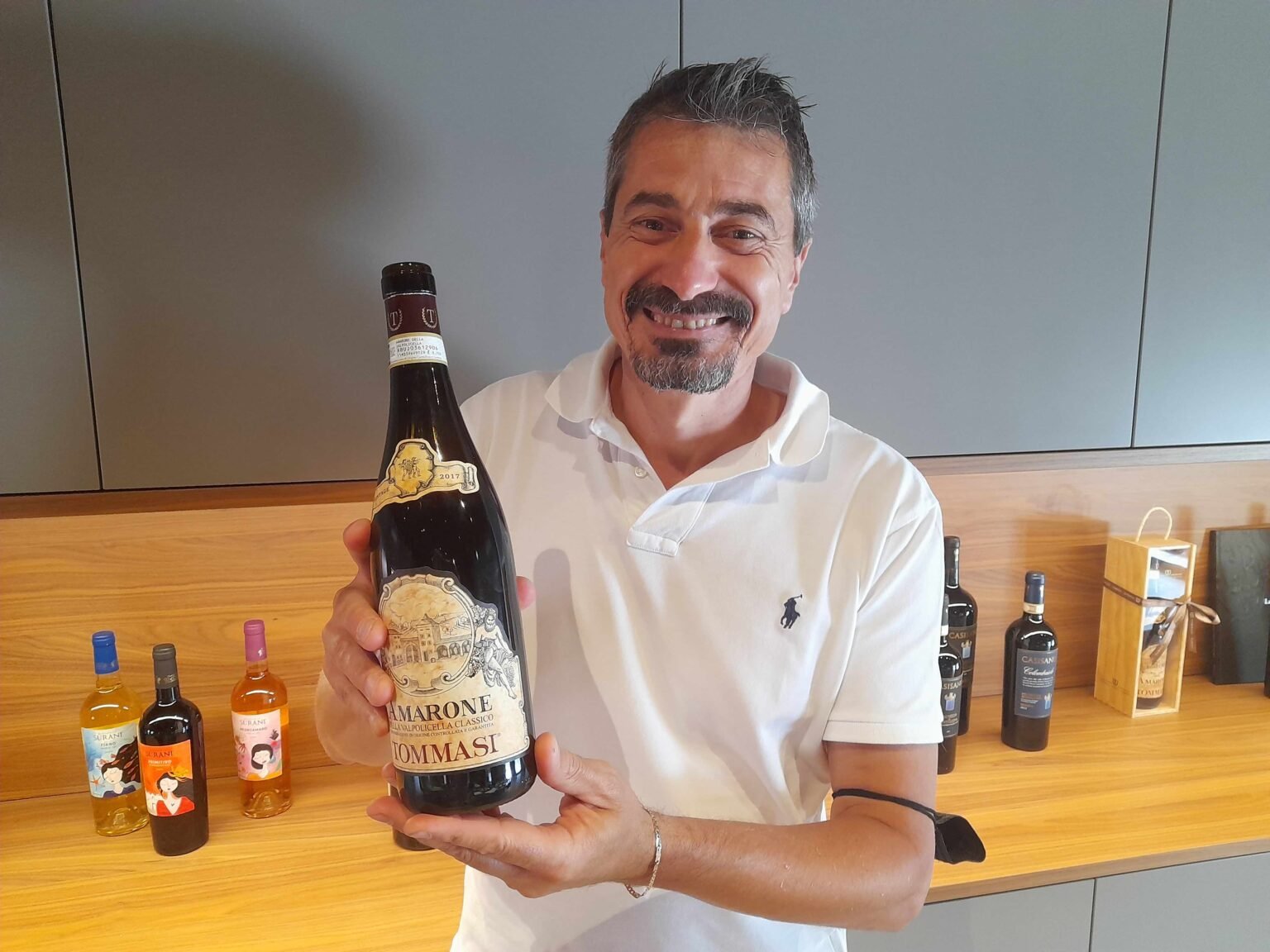
Tommasi, Deburis Amarone della Valpolicella Classico Riserva DOCG 2010, Veneto 15.9% abv

One of Italy’s greatest wines, the fruit for this spectacular four-grape blend comes mainly from Tommasi’s best-known vineyard, La Groletta, a 1.9 hectare plot at 250 metres overlooking the town of Negrar in Veneto. Corvina makes up 60% along with Corvinone Veronese (25%), Oseleta (10%), Rondinella (5%). Oseleta is added to give colour and structure. Tommasi do not release this wine until ten years after vintage – the first five years being spent in 20-hectolitre Slavonian oak vessels and the next five in bottle. The tannins, already soft from La Groletta’s chalky soils, are beautifully integrated. Notwithstanding an abv of 15.9%, the balance of this powerful yet elegant Amarone is pitch-perfect, with a pH of 3.65, residual sugar of 4.5 g/l and TA of 6.29 g/l. Incredibly long, complex and concentrated, layer after layer unfurls with notes of blueberry, dark cherries, coffee, dates and leather.

Voyager Estate, MJW Cabernet Sauvignon 2018, Margaret River, Western Australia, 14% abv

Who doesn’t love a Margaret River Cabernet Sauvignon, and a brilliant one like this? Taking the initials of the late Michael Wright, who bought Voyager in 1991, expanded it and handed the reins over to his daughter Alexandra Burt, this is a special label from an exceptional vintage. Produced from organically-farmed 41-year old vines that yielded less than three tons per hectare, the wine sings then soars. Deftly balanced and neatly structured, with ageing for 18 months in fine-grained French barriques, 46% new, this is a medium-bodied wine of real elegance yet power, with fine powdery tannins. Sumptuously flavoured with a core of red fruit, and blessed with great persistence and freshness, this superbly structured and deeply perfumed Cabernet has a long life ahead of it. Hard to resist even now though.

Whistler Wines, Estate Shiraz 2021, Barossa Valley, South Australia, 14.3% abv

Penfold’s former head vineyard manager, Martin Pfeiffer, established this gem of a boutique winery in 1999. He planted the Shiraz clone that goes into Grange – Kalimna 3C – as well as two other top clones of the varietal, 1654 and BVRC30. These vines are producing some superlative fruit with super-low yields of less than a ton per acre. Martin’s son, Sam and his Canadian wife Kelsey, have taken over the vineyard with Michael Corbett the new winemaker. The Wine Society were so impressed with this wine that they bought a substantial allocation that will be offered to members in the New Year. Snap up this wonderfully expressive Shiraz. It has aromas of dark plum, coffee and black pepper while blue/black fruits and smooth silky tannins, allied with freshness and vitality, render it a delight on the palate. The oak regime has been well judged, with one in every three barrels being new (both French and American).  A wine that will reward cellaring, but a delight now.

Hundred Hills, UK sparkling wine producer

How English fizz newcomer Hundred Hills has got wine critics purring

Hundred Hills is a relative newcomer to the English sparkling wine revolution and yet its six wines are already making serious waves. The winery itself, nestled as it is in the Chilterns, has been rated by Jancis Robinson MW as one of the top English wineries, with its Blanc de Noirs 2019 rated as best English fizz and the new vintage of its Blanc de Blancs, as best English BdB. Geoffrey Dean went to see what all the fuss is about and to discover from owner/ winemaker Stephen Duckett, what he’s done differently to stand out from the crowd.

By Geoffrey DeanDecember 16, 2022

Share this...


“More and more people are discovering Hundred Hill wines for themselves and relishing what they find,” writes Dean.

Hundred Hills: there are real advantages in being inland if you can solve the frost problem

When Hundred Hills owner Stephen Duckett and his wife Fiona started looking in 2009 for a property that was suitable for the production of English sparkling wine, they searched the length and breadth of southern England. Their exhaustive quest finally ended in the beautiful Stonor Valley, a few miles north of Henley, in the most quintessential of English rural settings: at Bank Farm, nestled down country lanes, flanked by woodland and situated close to the historic Grade 1 listed Stonor Park, itself lived in by the same family for 850 years and with its own cricket ground.

Attention to detail is the mantra of Duckett, who gained a first in engineering from Oxford University in 1990 when firsts were not doled out as freely as nowadays. That won him a scholarship to Harvard Business School, after which he spent the next two decades helping to establish a number of young software companies. Some such as Iris, Doubleclick and Kronos have become major technology businesses.

Stephen Duckett, October 2022

The appliance of science

As a farmer’s son from Somerset, though, Duckett missed the land, and thanks to an obsession with finding the best place to make wine, he instigated “an enormous amount of frost and airflow modelling as well as soil analysis.” This was performed on 50 sites over three years in Kent, Sussex and Dorset before his focus centred on the Chilterns.

 “We looked everywhere,” he mused when I visited him at Bank Farm, aka the Hundred Hills winery, just before harvest, “but we concluded there are real advantages in being inland if you can solve the frost problem. You’re also drier at this time of the year, and there is much less pressure from botrytis and mildews. Last year, a difficult one for both in England, we had a perfectly clean vineyard. We had lots of people coming to see us that couldn’t quite believe it. But here is a textbook valley as it gets a lot of airflow and has no issues with frost.

“Over there is Aylesbury Plain: the bottom of that is minus 3 or minus 4 degrees on the really cold spring nights you worry about – lethal for a vineyard – but at the head of the valley it’s 2 or 3 degrees. That air drifting down the valley is enough to protect you. Steep slopes like we have here help a lot and woodlands a little, and we have frost fans from New Zealand that do a little bit of air movement, but really it’s our position close to the head of the chalk valley that’s so important.”

Hundred Hills just prior to harvest

Apart from airflow and topography, what Duckett also badly wanted was the right soil. “This here was fallow grazing land for over 400 years – no one had used it for anything else,” he continued. “It was very, very poor calcareous soil on chalk. And 250 metres of soft chalk down to an aquifer, so it drains beautifully. Chalk holds those micro-droplets of water in its sub-structure, so in drought the vines get enough water out of the chalk sub-soils to stay healthy.”

Champagne expertise

Having acquired Bank Farm in 2012, Duckett then called on the advice of some Champagne heavyweights ahead of the planting of 17 hectares of vines (all protected two miles of deer-proof fencing). The well-respected Epernay viticulturist, Frank Mazy, who consults for Taittinger’s Domaine Evremond estate in Kent, recommended two low-yielding high quality clones – 95 for Chardonnay and 115 for Pinot Noir. No Pinot Meunier was deemed necessary due to the site’s cool nights and consequent ability to retain acidity. Also part of the advisory team were Dr Michael Salgues, a former winemaker for Roederer in California,  and Pierre-Marie Guillaume, a prominent Champagne winemaker and professor of oenology at Montpellier.

While Duckett makes the wines – all of them sparkling with no intention to produce any still ones – he acknowledges that their quality is all down to the vineyard and his Italian viticulturist, Enrico.

“He arrived in 2013 with a rucksack on back and has never left,” Duckett smiled. “Sometimes you just get lucky. I couldn’t be here without him I don’t think. We interviewed about 30 people… mainly French or Italian. When you’re starting up, you need people who lead by example, and Enrico was clearly a doer.”

Stephen Duckett, Geoffrey Dean, Liss Garnett, Bullet (l-r)

Being an engineer, it is no surprise Duckett installed 300 sensors in the vineyards.

“These tell you all sorts of things – humidity, leaf wetness, soil wetness etc – but also a lot about nutrient availability. We don’t get eutypa here as we’re so young, and we’re very up on bio-security. We’re just not surrounded by other vineyards. We do employ organic practices although we’re not certified. Effectively we are organic. Downy mildew hit England last year, and this year powdery did. We didn’t get any at all. We have stunning old trees of over 100 years of age, and we’re surrounded by woodland on all sides.”

Sales strategy

Duckett looks to produce about 50,000 bottles per year.

“We make vintage-only wines that are very terroir-driven,” he said. “Usually in a given year, there are about five or six different wines. Apart from our Zero Dosage label, which gets some partial, we don’t put the wines through malolactic fermentation as that would see the detail of our very clean grapes lost. Regular batonnage adds richness.”

As for sales, which are going extremely well, over 95% of Hundred Hills’ labels are sold in the UK.

“We sell a quarter of our wines to the Oxford University colleges, such as Christchurch, Magdalene and Johns,” Duckett revealed. “The remainder is sold direct to consumers and high-end restaurants. It’s by the case only but you get free delivery in the UK. We also have several hundred people in our wine club. The USA is our main export market, but we even sell a little bit in Champagne – as a novelty.”

Indeed, the word is spreading fast just how good the Hundred Hills wines are. But Stephen Duckett, while one of the brightest of winemakers, is still something of a traditionalist.

“No garish marketing for us – we just want people to discover our wine for themselves.”

More and more people are doing just that, and relishing what they find.

Hundred Hills wines tasted

Hundred Hills BdB 2018: Top rated English BdB according to Jancis Robinson MW

‘Preamble’ 2018 RRP £37.50. 72% Pinot Noir, 28% Chardonnay. 30 months on lees. 5g/l dosage. Extremely lively acidity and tension (pH2.9); appealing apricot, peach and lime fruit; excellent length.

‘Blanc de Blancs’ 2018 RRP £63. 36 months on lees, 5g/l dosage. Crystalline purity to the citrus fruit with racy acidity. Creamy patisserie notes, yet delicacy and precision. A very lengthy finish.

‘Zero Dosage’ 2018  RRP £62.50. 72% Pinot Noir, 28% Chardonnay. 40 months on lees. Raspberry and red apple fruit with hints of yellow plum and salinity. Not yet released.

‘Illustration No 1’ 2018 RRP £62.50. Vinification and fruit as above, but 4g/l dosage. This softens the structured edges of its twin.

‘Signature Rose’ 2018 RRP £40. 80% Pinot Noir blended with 20% Chardonnay. 18 months on lees, 8g/l dosage. Intense rose-scented floral perfume with hint of hibiscus. Delicate wild strawberry notes on the palate with a core of freshness and some minerality to lift it.

‘Pinot Noir Rose de Saignee’ 2018 RRP £75. Only 600 bottles made from a single plot of this special wine. Fetching bright ruby colour from seven hours of bleeding off. 5g/l dosage. Red summer fruits with wonderful length and complexity.


How Geelong Shiraz is causing a stir

Why the Geelong’s cool climate Shiraz is worth discovering

Fresh, bright, cool climate Shiraz is currently in vogue and the examples coming out of the Australian wine region of Geelong are worth discovering, argues Geoffrey Dean. On a recent trip to the region he discovers why Geelong should be known for its Shiraz as well as its Pinot and Chardonnay, talks to a number of winemakers about why the Shiraz here is world class, and picks six that have Northern Rhône traits without the price tags to match.

By Geoffrey DeanDecember 11, 202

Ray Nadeson

Geelong’s Shiraz reputation is growing: Dr Ray Nadeson

While the Geelong wine region has long been renowned for producing some of Victoria’s best Pinot Noir and Chardonnay, it is now forging a reputation for outstanding cool climate Shiraz. The increased global demand for medium-bodied examples of the variety with freshness and brightness of fruit shows no sign of abating, and Geelong can help satisfy it. This was very apparent to your correspondent on an autumn trip to the region.

So what makes Geelong such a suitable location for Shiraz?

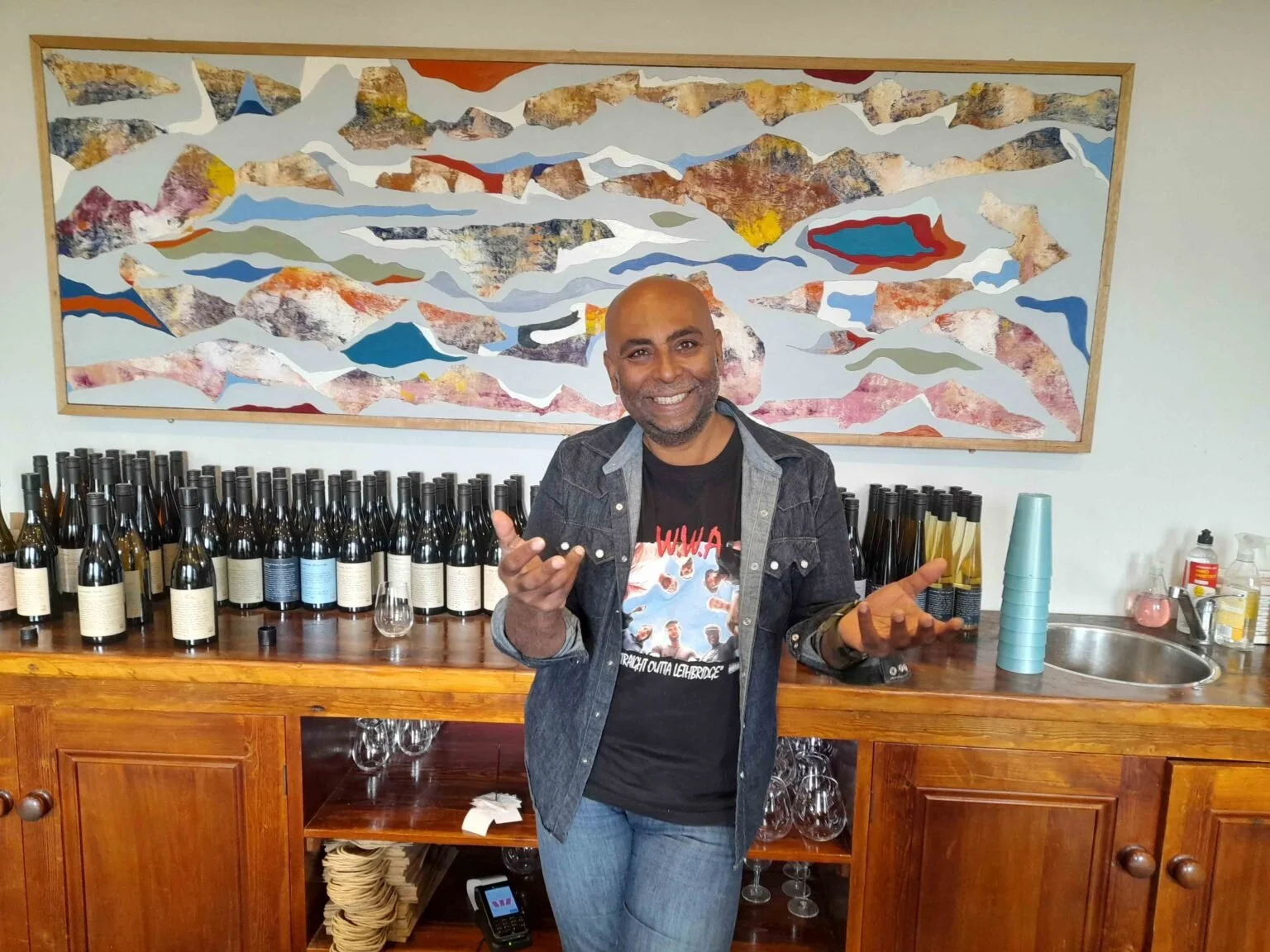
Ray Nadeson, joint owner/winemaker of Lethbridge Wines with partner Maree Collis, pinpoints two factors. “The soils of Geelong are varied and interesting in that there are areas that are granite – not dissimilar to what you find in the Rhône – and areas which are basalt on limestone as at Lethbridge. The latter is like nowhere in the world except perhaps Etna, where they don’t have Syrah but do make very fine medium-bodied wines from grapes like Nero Mascalese.”

“We also have red-clay soils which are much more like parts of Burgundy,” Nadeson continues, “Much of Australia has old soils because we have a very old continental shield. So most of the soils are old and kind of leached. However the strip around the east coast has a lot of volcanic activity, and Geelong’s has only been in the last 30-50,000 years. So it makes them very young soils, much more like you imagine in Europe.”

Scott Ireland of Provenance Wines

The second reason why Geelong is so suitable for top-end Shiraz is its very marginality, with ripeness not being found until autumn. “I think the best wines from a grape variety have to be in marginal sites,” Nadeson says.

“For example, if you are in the Rhône valley, you grow Syrah in the northern part of it which is more marginal. You could quite easily grow Syrah in the southern part, but you don’t tend to. The southern part is less marginal. Why do they grow Grenache there and not Syrah? Because Syrah shows its finer qualities in a marginal site. And Geelong IS marginal. If you look at the region as a whole, the Bellarine Peninsula is less marginal, whereas where we are at Lethbridge, is the most marginal as it’s up high and is cold, away from the moderating factor of the sea. We’re never going to be picking Shiraz fruit in February. We pick Shiraz often in May – well into autumn. But that is a cool site. In the Bellarine, they’ll be picking in April, which is still autumn.

Geelong’s reputation for Shiraz?

So much for Geelong’s feasibility for producing premium Shiraz. The question is can it become a renowned region for the varietal? and, once again, Nadeson is in no doubt. “Absolutely and, notwithstanding climate change, we are going to find we stay marginal even if slightly less so. In Australia where Shiraz is grown everywhere, we are not of the size, nor of the style that the average punter is going to want to drink. We are looking at refined cool-climate, with more spice and slightly under-ripe flavours – earthy, textural, high acid wines that need ageing. Does that sound like a supermarket plan? No way.”

“If you look at the big regions, they’ve got the big companies behind them, promoting the style and the wines, not only in the supermarkets but generally everywhere. And once they get on board, that region becomes famous, and other producers get pulled along behind them on their coat-tails. The thing about Geelong is that it is a relatively small region, not in area but in production, with fundamentally smaller producers. So I think there is a really good chance that we could get that niche which is high quality, cool climate Shiraz. ”

2016 is an excellent vintage: Robin Brockett, winemaker for Scotchmans Hill

Despite Geelong’s growing reputation for its Shiraz, the grape’s area under vine is not likely to increase.

“I don’t think people are planting more Shiraz, mainly because the political situation in China has meant there is an oversupply of it in Australia at present,” Nadeson declared. The figure is not exactly well-publicised, but Phil Reedman, the Adelaide-based British MW, estimates that Australia has a whopping 2.5 billion litres of wine sitting in tanks waiting to be bought after the Chinese market collapse – a substantial amount of which is Shiraz.

“So there is not much incentive to produce Shiraz when there is a quantity of it that can be sold for $16 a bottle, which is below cost price,” Nadeson adds. “The average punter doesn’t care and we can’t compete. So I think the Shiraz plantings will not be increasing any time soon.” With demand going up, and supply not increasing,  Geelong’s Shiraz and Syrah could become ever more sought after.

6 of the best Geelong wine region’s Shiraz

Bellarine Estate Two Wives Shiraz, 2021

Very expressive red fruit from vines planted in 1996 on basalt and black clay with some limestone and high iron content. Supple tannins and really vibrant acidity while 20% new French oak gives structure. Selected by Qantas for first-class and business. An all-family affair with Peter Kenny having just handed over the winemaking reins to son Phil. 13.8% abv

Clyde Park Single Block G Shiraz, 2019 

From a small block running east-west on black clay planted in 1999 to clone PT23. Wild yeast fermentation and single daily hand plunging before 10 months maturation in 40% new French oak. Blackcurrant and raspberry notes with peppery spice and mocha, all wrapped up in firm but fine-grained tannins. A ripper of a cool climate Shiraz. 13.5% abv

‘Indra’ Shiraz, Lethbridge, 2017 

A one-hectare block of 25-year old vines, named after Nadeson and Collis’ daughter, yields just 15hl/ha for this gem. It sees 100% new French barriques for 18 months but the quality of the fruit sucks all that oak up effortlessly. Medium-bodied cool climate Shiraz at its best with white pepper, supple tannins and elegant complexity. 13.5% abv

Jack Rabbit Shiraz, 2020 

Distinct cool climate varietal characteristics of rich berries and savoury white pepper. Medium-bodied with notable freshness, soft tannins and notes of violets, liquorice and blueberries. Such an appealing Shiraz at a very competitive price. 14% abv

Provenance Wines Shiraz, 2021 

A cracker from Provenance’s biodynamically-farmed Spence vineyard. Owner-winemaker Scott Ireland admits he is obsessed with showcasing sense of place, so employs no new oak. Spicy and fresh with black-purple fruit flavours, this medium-bodied Shiraz is a delight. 30% of it is sold at the atmospheric cellar door and its outstanding restaurant, sited on an 1870s paper mill by the Barwon River. 14% abv

Scotchmans Hill ‘Cornelius’ Strathallan Vineyard Syrah, 2016 

Complex blueberry and black cherry fruit with spice and white pepper from this premium cool maritime climate producer; impressive structure from 50% new oak and 50% second fill for 18 months. Palpable concentration (low yield of 37 hl/ha) and a long finish. Fermented at 28C with wild yeasts. A superb Rhone-like Syrah from what chief winemaker Robin Brockett describes as an “excellent’ vintage. 14% abv

How T20 World Cup catered for Barmies & Muslims

The Herculean efforts of Ben Stokes and his team on the field on Sunday, when England won the T20 World Cup, were matched just as well by the ICC catering team at Melbourne Cricket Ground. Getting the mix right to cater for a thirsty Barmy Army while respecting the Muslim fans that made up almost 75% of the crowd was no mean feat as The Buyer’s man on the ground, Geoffrey Dean, discovered when he talked to John Hutchinson, the ICC’s national catering manager.

Jos Buttler lifts the T20 World Cup

By Geoffrey Dean November 14, 2022

It was not just England’s cricketers who distinguished themselves at the Melbourne Cricket Ground on Sunday when they won the T20 World Cup on a memorable night. Their supporters, who numbered around a quarter of the 80,000 crowd, got through as many as 60,000 schooners of beer (each measuring 425ml, which is not that far off a British pint).

That was the figure released to The Buyer on the morning after the match by John Hutchinson, the national catering manager for the International Cricket Council [ICC], whose tournament it was. “The English Barmy Army fans’ consumption was definitely noteworthy,” confessed the Sydney-based Australian.“I’ve worked in stadiums at major sporting events for 12 years, and the British fans always drink the most. More than the Australians do. The British & Irish Lions’ rugby matches see the biggest amount drunk, although our rugby league consumption is also immense.”

England’s Barmy Army - “notable consumption”

Given that the only beer on sale at the MCG was not one most England fans would have been familiar with – a trendy, hip Indian brand called Bira 91 that was the ICC’s official tournament beer – their quaffing was all the more impressive. With the majority of the 60,000 or so Pakistan supporters (Atkinson’s estimate) not imbibing alcohol, it was left to the England fans and a few neutrals to try to drink the bars dry.

Other alcoholic beverages were of course available. An impressive 12,000 cans of pre-mixed drinks, such as gin and tonic and vodka cocktails, were consumed along with 3,000 glasses of wine. There was not much choice of wine for spectators – again just the ICC’s sponsored brand, namely Jacob’s Creek, with Sauvignon Blanc and Shiraz in the public seats, and barrel-aged Cabernet Sauvignon and Chardonnay in the boxes and hospitality areas. Jacob’s Creek sparkling wine was also available.

John Hutchinson, ICC’s national catering manager

“The wine consumption was a bit low, although perhaps not a surprise given it was mainly a Muslim audience,” Hutchinson mused. “Instead, they got through 22,000 bottles of soft drinks and 15,000 bottles of water. We sold a record number of vegetarian samosas though – around 14,000 – while the non-Pakistan fans ate most of the 5,000 beef burgers and 3,000 hot dogs sold. We went into the tournament trying to ensure we were catering to cultural needs, and halal product was promoted through the venue. Both the Muslim population and the Brits were buyers of 6,000 portions of fish and chips.”

Hutchinson paid tribute to Visit Victoria, the state government’s tourist arm who helped make the tournament such a success. Three crowds in excess of 80,000 at the MCG (including 90,000 for the India v Pakistan game) ensured there were excellent takings for drink and food despite some washed-out games in Melbourne. The city’s commitment to sport has never been stronger, with Visit Victoria the new £9 million sponsors for the Australian women’s netball team and the Commonwealth Games taking place in 2026 around the state. These are centred on the notable wine-producing towns of Geelong, Ballarat and Bendigo as well as Gippsland, a premier region for Pinot Noir.

Maison Chanzy's fine Bouzeron Aligotés

As Bourgogne Chardonnay becomes ever-more eye-wateringly expensive so the canny wine buyer needs to look for alternatives. In Burgundy that means seeking out lesser-known appellations and sites which, through climate change, have started competing with some of the top slopes. And it could also mean rethinking Aligoté – the region’s other white grape – that, in the hands of top winemakers such as Maison Chanzy, can seriously compete with Chardonnay – not just on the palate but for vignerons in the vineyard too.

By Geoffrey Dean October 28, 2022

2020 vision: Domaine Chanzy’s Loic Cornuau and Xavier Badinand

Quite how good the best Aligoté can be was well illustrated by a tasting at 67 Pall Mall of three labels of the variety produced by Maison Chanzy from the 2020 vintage. The varying styles of Aligoté were very much apparent, with one matured predominantly in stainless steel and the other two embracing much more of an oak regime. Retailing between £18.99 and £38.99, these alternative Burgundian whites are fair value for their quality, and distributed by Alliance Wine, which began working with Chanzy just over a year ago and has a broad selection of its range.

Xavier Badinand, Chanzy’s general manager, and Loic Cornuau, their export manager, flew in for the tasting, which also featured a Chanzy Chardonnay from Rully and two of its premier cru Pinots Noirs from Mercurey and Maranges. The UK is Chanzy’s number one export market, taking about 10% of all exports, which make up 45-50% of production from 66 hectares under vine in the Côte Chalonnaise, Côte de Beaune and Côte de Nuits.

The winery is situated in Bouzeron, one of the smallest appellations in Burgundy and the primary one for the production of Aligoté. Where the grape is grown in Burgundy outside Bouzeron – mostly on flat ground in the Côte Chalonnaise and Chablis – it is just ‘Bourgogne Aligoté’. Any Bouzeron AOC wine must be 100% Aligoté. In the nineteenth century, it used to be planted in Meursault, and in 1930, a legal pronouncement permitted Corton-Charlemagne to be made with the variety.

Maison Chanzy is situated in Bouzeron: the promary appellation for Aligoté

“Only 168 people live in Bouzeron, but it has four wineries and 45 growers,” Badinand said. “We own 14 hectares there, which is a quarter of the area under vine, and use only our fruit – we don’t buy in any. The soil of limestone and blue marl is ideal for Aligoté as is the altitude,  up to 390m, which is high for Burgundy. The maximum yield allowed in Bouzeron is 65hl/ha but our average is closer to 50, which is about the same as a Rully or Mercurey white.”

Some of Chanzy’s older Aligoté vines, which range between 40 and 59 years in age, are exceptionally low-yielding, and can really bring down the average yield. In 2021, that average was “a bit less than 20hl/ha – the lowest I can remember,” according to Cornuau.  The resulting concentration was a notable feature. Indeed, the Vieilles Vignes, Clos de la Fortune 2020 from a 0.59h plot planted in 1963 could easily be mistaken for a top-end Chardonnay.

Citrus-like fruit, high levels of acidity, an affinity with oak and 100% malolactic fermentation for all three labels also support the notion they could be Chardonnay. Indeed, Aligoté’s great strength is its low pH – between 3.10-3.12 for all three of these Chanzy labels.

“Our goal is just to reflect our terroir,” Badinand declared. “The idea is to show that Aligoté in Bouzeron can be something of a high end wine. And as a late ripening variety with such good acidity, it can counter global warming. It is also more disease-resistant than Chardonnay and doesn’t require much green harvest if our work on the soil is well done.”

The domaine is HVE3-certified, the highest nod to environmental practices short of organic certification. “It’s not just viticulture where we are HVE3 but the whole environment – trees, borders and water, ” Badinand revealed. “We are trying to turn organic but are not certified, although we use many organic elements. We do a lot of very soft ploughing. It’s not easy to go to organic just like that as we have 66 hectares, and need more time.”

Tasting the Maison Chanzy wines

Bouzeron Les Trois, 2020 Maison Chanzy 12.5% abv; £18.99 The Vineking, Barrel and Still, The Wandering Palate.

One of the few Aligotés that Chanzy blends from three different sites – all facing in different directions (south-west, south-east and north). Notable freshness with some weight to the palate from a touch of new oak (10% from one new 228-litre pièce). Mostly aged in stainless steel. Clean and crisp with very appealing lemon fruit. Average age of vines is 30-40 years, giving some complexity. Yield of 55hl/ha. Ready now, but will keep for the next 4-5 years.

Bouzeron Clos de la Fortune Monopole, 2020 Maison Chanzy 12.5% abv; £26.99, Cellar Door Wines, Reserve Wines.

Chanzy is the only producer of this vineyard, a south-east facing parcel of 2.76h with more blue marl and limestone, and less clay.  Similar age vines (30-35 years old) but a lower yield of 40hl/ha. Quite different élevage, with 80% matured in oak, mostly older although 15% new. More depth and richness than the lighter style of Les Trois. Complex with minerality, and good bitterness on a long finish.

Bouzeron Clos de la Fortune, Vielles Vignes, 2020 Maison Chanzy 12.5% abv; £38.99, Dunell’s, Amps

Barely half a hectare of old vines planted in 1963 produced 854 bottles of this outstanding Aligoté in the 2020 vintage. Fruit harvested as early as September 3 in what was a very warm year, with élevage for 16 months in three barrels, one of which was new with very light toast. The other two were used for the 2015 and 2016 vintages. Real weight and complexity, along with glorious freshness and concentrated pear and citrus notes.

Rully Les Cailloux, 2020 Maison Chanzy 13% abv; £27.99, Mango Wines, Hitchin Wine Co, Vineking

A small 1.7h plot of Chardonnay at 340m east of Rully, just to the south of Bouzeron, with lots of small stones. These reflect into the grapes, giving minerality. Elevage for 15 months in 50% stainless steel and 50% oak (one new 228-litre pièce out of seven in total). Very classy white Burgundy with vibrant acidity (pH 3.20) and excellent length, as well as concentration from 40-year old vines.

Mercurey 1er Cru Clos Voyens, 2020 Maison Chanzy 14% abv; £37.99, The Bottle Shop, Wine World

From a one-hectare parcel facing south that Chanzy took over in 2017. The Pinot Noir was planted in 1979 and 1980, and some had to be grubbed up with new plantings made. An exceptional vintage, where Badinand feels the terroir really expresses itself. “It has such finesse and elegance with very fine tannins,” he purred. Elevage was 16 months in two new barrels and ten older ones, followed by three months in vat and late bottling at the end of May 2022.

Maranges 1er Cru La Fussière, 2020 Maison Chanzy 14% abv; £39.99, Dunell’s, Carruthers & Kent, Vineking

Chanzy owns one hectare of Pinot on this 37-hectare site, which is south-facing on sandy soil with clay on limestone. The formerly rustic style of this lesser-known appellation has given way to a softer one that is approachable sooner. Glorious raspberry and damson fruit with spicy notes and texture from 20% new oak that is very well-integrated. No filtration, and plenty of concentration from low yields of 40hl/ha. Complex and long with lovely balance, as well as freshness from a low pH of 3.35.

Swiss Wines tasting at 67 Pall Mall

Exclusive, hard to find and using little-known indigenous grapes – Swiss wine is fast becoming a sommelier’s treat. Already there are 11 restaurants in London with Swiss wines on their list, with two of them having over 20 wines apiece. Private members club, 67 Pall Mall, has over 100 listings and was the setting for the first Swiss Wine tasting since Covid where Geoffrey Dean met up with the category’s ambassadors, Francois Genoud and Simon Hardy to taste through what’s new and find out how to navigate through the country’s 62 Swiss AOCs and 252 different grape varieties.

By Geoffrey Dean October 18, 2022

Exports of Switzerland’s wines have seldom got above 2% of total production, but Britain continues to receive some of the best and the most interesting. That was apparent at Swiss Wine in the UK’s first live trade tasting since Covid, in early October at 67 Pall Mall in London. Three-quarters of attendees were buyers, which reflected the fact that as many as 68 retail shops in the UK sell some Swiss labels.

“Before Covid, only half of those who came to our trade tastings were buyers, with the other half being wine writers,” said Jean-Francois Genoud, who project-leads Swiss Wine in the UK. “So I think that is a sign of the growing interest here in our wines. The image we have abroad is important. Having an image in London, New York, and Tokyo helps internally – that the wine we have is recognised abroad. London has always been important as an international place – it’s incredible what’s going on here.”

While Genoud is Lausanne-based, his fellow ambassador for Swiss Wine, Simon Hardy, lives in London, where he revealed as many as 11 restaurants now have Swiss labels on their wine list. The St Moritz Restaurant in Soho is top of the league table with 24 different Swiss wines, closely pursued by the Authentique Epicerie in Tufnell Park with 22.

“Take a private member’s club like 67 Pall Mall,” Hardy said. “They have over 100 different Swiss wines on their list. That’s come from four or five years of steady effort where they can see the demand is there because people are discovering. There’s a big local grape story as well as quality versions of Pinot Noir, Chardonnay and Merlot.

“Here we have what I’d call the more progressive and open-minded producers, who are making great wines but also understand the value of building credibility, reputation and awareness outside their home market. This is a platform for them to get that message out. Obviously that has to be balanced with the availability of the wines. That’s why we’ve produced the distribution directory.” Highly detailed, it lists every restaurant and retail shop where Swiss wines are available, along with the three online retailers – Alpine Wines, Vida Wines and Sip Wines.

With no more than 100 million litres of wine made each year in Switzerland, where 250 million litres are drunk annually, exports are always going to be limited. For the record, though, there are 62 Swiss AOCs and 252 different grape varieties planted across 14,696 hectares. Pinot Noir is the most planted black grape, and Chasselas the most planted white.

So how were the Swiss wines tasting?

The tasting featured Roman Hermann’s outstanding Pinot Noir Grand Maitre 2020 from the Bundner Herrschaft, a renowned sub-appellation for the varietal, although he is nicknamed ‘The king of whites’ for his superb Chardonnays. He and fellow top Graubunden producer, Martin Donatsch, also make Completer, a rare indigenous white varietal of which there are only eight hectares planted in Switzerland.  Aromas of quince, plum and honey were clear on tasting along with racy acidity.

A trio of indigenous whites from leading Valais winemaker, Robert Taramarcaz, owner of Domaine des Muses, also showed particularly well – Humagne Blanche (fresh with lime notes), Petite Arvine (grapefruit notes) and Chasselas (aka Fendant). Meanwhile, Mathias Bechtel’s Rauschling 2018, made near Zurich from a German varietal that is only really found in German-speaking Switzerland, yielded light citrus notes with vibrant acidity.

Other Chasselas to impress included Les Frères Dutruy’s refined Dézaley Grands Cru Les Terrasses 2020; Henri Cruchon’s Champanel Grand Cru 2019; and Louis Bovard’s Aigle Cuveé Noé 2018. Bovard, 80, was the first Lavaux producer to keep his barrel-fermented Chasselas on the lees much longer than usual. In 2010, he founded the Conservatoire Mondial du Chasselas where 19 different types of the varietal are cultivated and vinified separately.

Luc Massy is another longtime leading producer of Chasselas. His Clos du Boux Grand Cru Epesses 2020 and Chemin de Fer 2020 were amongst personal favourites at the tasting, along with Domaine de la Pierre Latine’s Reserve du Clos du Crosex Grillé, a legendary Vaud grand cru vineyard with an illustrious history.

Two sweet whites that caught the palate were produced by Les Celliers de Vétroz in Valais. Symphonie 2014 (100% Marsanne), had massive concentration while Rhapsodie 2012 was made from another indigenous Swiss grape, Amigne. First mentioned in 1686 as growing near the town Vétroz, where nearly all current plantings are concentrated, it has complex orange zest notes, with fresh acidity to counter residual sugar of almost 200 g/l. Five Fontannaz brothers and their sister run the estate, which was founded by their parents Jean and Yvette.

Another Valais producer, Jean-René Germanier, exhibited an impressive range of reds, including two different labels of Humagne Rouge and two of Cornalin. Red fruit and soft tannins were evident. Germanier’s Cayas Syrah du Valais Reserve 2017 was excellent, with lovely notes of spice and white pepper as well as real concentration and length.

Two Merlots from the Ticino appellation, where the grape has flourished, were among several to impress – Gialdi Vini’s Sassi Grossi 2015 and Brivio Vini’s Riflessi d’Epoca 2016. Another was Louis Bovard’s Dézaley Grand Cru 2017, while his Dézaley Rouge 2017 was a 50/50 blend of Merlot and Syrah. Similarly powerful and spicy was Henri Cruchon’s Gamaret 2018, a cross of Gamay Noir and Reichensteiner that was made in 1970 at Lausanne.

The little-known Swiss varietals like Gamaret will doubtless be the preserve of connoisseurs searching them out in specialist wine stores. “We’re not expecting Swiss wines to appear in Waitrose, M&S or Sainsburys,” Hardy professed. “It’s part of the conundrum of Swiss wines – relatively little exported, hard to find, and local indigenous grapes that nobody has heard of. But with the right selection of wines and with the right event targeting the right potential customer, such as this trade event today, it’s a step in the right direction.” A hugely enjoyable tasting certainly felt like that.

Ch Lagrange vertical tasting 1982-2019

Mathieu Bordes, winemaker and general manager of the 3rd growth, Saint-Julien estate Lagrange, was in town to show a remarkable 11-wine vertical of the grand vin dating as far back as 1982 and including such legendary wines as the 1990 and 2000. Bordes explains in detail how they made the 2016 which he considers one of the best-ever produced, why they were never bothered about Robert Parker’s disdain for the estate, and why two thirds of production at the estate is dedicated to making Les Fiefs, one of Bordeaux’s truly great second wines. Geoffrey Dean reports

By Geoffrey Dean September 22, 2022

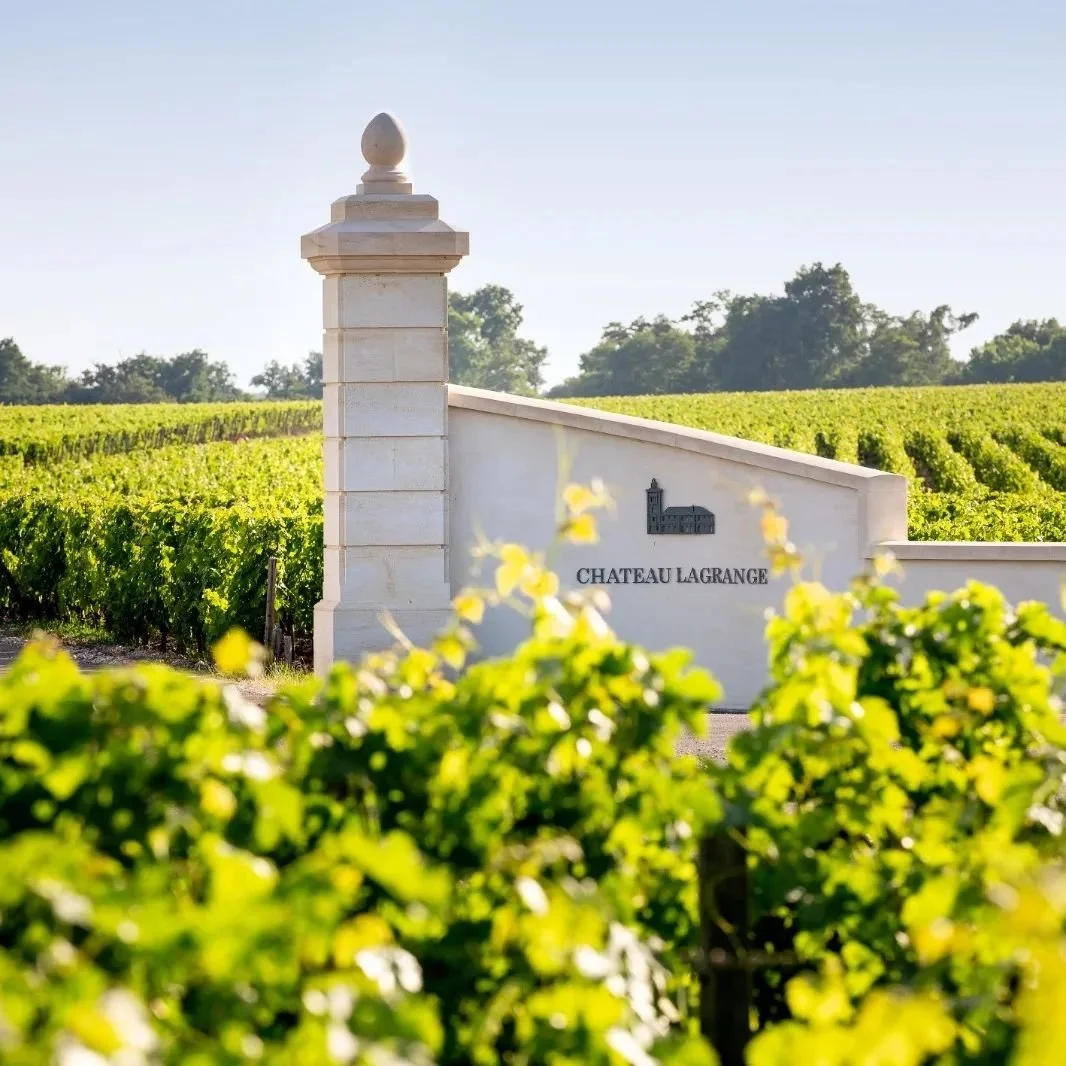
When Matthieu Bordes sighs that “Robert Parker hated the Lagrange brand for a long time,” he does so without the slightest regret. “We never sought his marks,” the winemaker and GM for the Saint-Julien third growth continued. “We just try to grow the best grapes on each plant, and we never pick over-ripe.”

Bordes, who celebrates 16 years at Château Lagrange this October, is a native Bordelais and one of the most charismatic vignerons in the Medoc. A supremely capable one too on the evidence of a memorable vertical tasting of the estate’s grand vins going back as far as 1982. That was the last vintage before Lagrange was bought by Suntory, who recruited Marcel Ducasse as general manager to undertake a total restructuring of the property. It was he who lifted Lagrange out of years of mediocrity, and he stayed there until Bordes took over.

How the bar was raised with Lagrange 2016

Ducasse, then, must take credit for vintages up to and including 2006, several of which were majestic, but Bordes has raised the bar even higher in his time. The 2010, 2016 and 2019 are all magnificent wines, with the 2016, in Bordes’ view, being amongst the “two or three best ever produced” at Lagrange. Although it was a hot year, it came in at 13.7% abv and, most significantly, has a pH as low as 3.41. Consequent uber-freshness gives it wonderful harmony and balance, to go with its massive concentration, great length and silky yet powerful tannins.

The 2016 harvest was, apart from 2008, the latest ever known at Lagrange, lasting three weeks and finishing on October 24. A mild, very wet spring – beneficial for budburst – luckily featured a dry break in the same week that flowering occurred (only a few days later than the 20-year average). The mid-July heat, which peaked at 33°C to 38°C for four days, caused Bordes to suspend leaf-plucking and the vines to shut down for a period. After a hot August, hydric stress was alleviated by timely rain on September 12. An Indian summer led all of the Cabernet Sauvignon plots to reach optimum ripeness.

Cool nights were the key, aiding acid retention and pushing the pH down from its habitual level of 3.5. By contrast, in 2010, it reached 3.6, a record high. Only now, in Bordes’ view, has the 2010 reached the beginning of its tasting window. “If we’d tasted the 2010 four years ago, it would not have been approachable,” he mused, “but the 2016 is already approachable, although it will certainly continue to improve over the next few years.”

Matthieu Bordes, winemaker for Ch Lagrange

Changes introduced by Matthieu Bordes at Lagrange

One of Bordes’ key decisions in the vinification process has been to reduce the amount of new oak for the grand vin from 80% to between 40% and 50%. The remainder is second fill, although in the last year, he has been experimenting with 5% stainless steel.

Bordes has also steadily increased the amount of Cabernet Sauvignon in the blend to between 70 and 80% from what used to be a 50:50 split with Merlot.  Why? “Global warming,” he responded. “Merlot doesn’t age as well, so we are replacing Merlot vines with more and more Cabernet Sauvignon.” Whereas the 2005 was made up of 46% Cabernet, 45% Merlot and 9% Petit Verdot, the 2019 was 80% Cabernet, 18% Merlot and 2% Petit Verdot.

Lagrange has more hectares under vine (118, with 110 currently in production) than any other Medoc classed growth. It boasts more than one hundred individual plots, of which two-thirds are Cabernet Sauvignon. Merlot makes up 28% and Petit Verdot 5%, while 11 hectares are given over to white varieties (80% Sauvignon Blanc, 10% Semillon and 10% Sauvignon Gris). Bordes revealed he has a single row of Cabernet Franc, as well as a row of Carmenere which he struggles to ripen fully.

Significantly, Bordes can vinify all his red plots separately thanks to 102 small tanks and vats. There were only 56 before he came. “That and our terroir is the key,” he professed. “We have 17 different types of soil, with a lot of gravel which leads to efficient drainage. One of our slopes marks the highest point in the appellation – 24 metres – and the grand vin plots are the higher ones.”

Lagrange: facts and figures

Lagrange does not seek organic certification, but it does follow organic practices in a third of its vineyards. Sustainability and biodiversity are the estate’s watchwords. Sheep graze the cover crop, which is largely grass with wild flowers sown in it. Bee hives and bird boxes have been re-introduced, and no chemical herbicides are used on the domaine. Level 3 of HVE (Haute Valeur Environmentale), the highest form of adherence to environmental practices, is rigorously followed at the insistence of the owners.

Suntory’s commitment to the quality of their grand vin is underlined by the very high percentage of estate fruit that goes into their celebrated second wine, Les Fiefs de Lagrange. Nowadays, two thirds of Lagrange’s annual crush is generally earmarked for Les Fiefs. Contrast that figure to 1982 when the entire harvest went into the grand vin.  This has an effect on margins of course, but Suntory commendably are not looking to maximize profits. The 2009 Les Fiefs, with its velvety soft tannins, saw 20% new oak and is made from vines with an average age of 30 years.

“Some of the vines for Les Fiefs are as old as 50 years, while the oldest for the grand vin date back to 1952 on what is a Merlot plot,” Bordes revealed. “Les Fiefs is one of the most famous second wines in Bordeaux. We could make less of it and more grand vin, but the owners don’t want that.”

Depending on the yield, Lagrange’s annual production is 200-250,000 bottles of grand vin and more than 350,000 bottles of Les Fiefs.” Yields have varied over the last few years: 35hl/ha in 2021, 26 in 2020, 49 in 2019 and 36 in 2018. Bordes expects 38-40 from the 2022 harvest.

As for markets, France remains the biggest, with a 23% share, followed by the United States and Japan. Both the UK and China import 5%, and it is clear Lagrange would be happy to see the former’s share increase. Equally evident is the quality and value that both their grand vin and second wine offer drinkers.

The wines tasted on the day

Les Fiefs de Lagrange 2009 (57% Cabernet Sauvignon, 35% Merlot, 8% Malbec): Bordes considers the second wine ready after 3-4 years but says it will last 20.

Lagrange 2019 (80% Cabernet Sauvignon, 18% Merlot, 2% Petit Verdot): record-breaking levels of sunshine, and ‘the longest harvest and the richest grapes in the domaine’s modern history’ in Bordes’ words. ‘It reminds me of 2009 as there is no dryness or harshness. It will take its place among our iconic vintages.’ Blackcurrant, black cherry and liquorice notes with silky tannins.

Lagrange 2016 (70% Cabernet Sauvignon, 24% Merlot, 6% Petit Verdot): a great vintage memorable for the low berry weights (30% below the average of the previous years). Only 22 mm of rain between 23 June and 12 Sept. Complex and dense with beautiful harmony and balance (13.7% abv)

Lagrange 2015 (75% Cabernet Sauvignon, 17% Merlot, 8% Petit Verdot): another fine vintage if not in the same class as 2016. An excess of rain in September obliged Bordes to employ reverse osmosis to extract some water. Full-bodied, yet elegant with ripe, velvety tannins.

Lagrange 2010 (75% Cabernet Sauvignon, 25% Merlot): ‘unprecedented concentration of tannins of extreme fineness’ according to Bordes. Non-stop sunshine from May ’til the end of October, but cool nights as a rule. Late picking due to the drought. Deep colour with powerful structure, notable concentration and many layers of complexity.

Lagrange 2005 (46% Cabernet Sauvignon, 45% Merlot, 9% Petit Verdot): a ‘superlative’ year in Bordes’ view. Less powerful than the 2010 with extremely soft, well-integrated tannins. As he puts it, ‘the mid-palate is suave with a pleasant freshness, the whole presents harmony and rare elegance worthy of the greatest wines of Saint-Julien.’

Lagrange 2003 (57% Cabernet Sauvignon, 33% Merlot, 10% Petit Verdot): heatwave conditions in June, July and August, before beneficial early September rain. Thanks to the estate’s second earliest harvest, which started on 11 Sept, the abv was only 13%. No acidification necessary. Beautiful complexity and opulence.

Lagrange 2000 (59% Cabernet Sauvignon, 34% Merlot, 7% Petit Verdot): jasmine/minty aromas and more tertiary notes with cigar box, cedar and leather. Super silky tannins. Stunning.

Lagrange 1996 (57% Cabernet Sauvignon, 36% Merlot, 7% Petit Verdot): ‘beautifully noble with great tannic strength’ as Bordes put it. A superb vintage. Cigar box and tobacco, with smoky notes and jasmine. Chaptalisation required to get it to 13% abv, which underlines how the climate has changed.

Lagrange 1990 (44% Cabernet Sauvignon, 44% Merlot, 12% Petit Verdot): legendary vintage, the first to include some Petit Verdot.

Lagrange 1982 (52% Cabernet Sauvignon, 48% Merlot): still a special wine if slightly past its best. Interestingly, all the fruit went into the grand vin with no Les Fiefs made. There was a huge yield as no green harvest was carried out (unlike 1990, which is showing better).

Plaimont's fight against global warming

How Plaimont is leading the fight against climate change in SW France

The Saint Mont wine region in SW France was ‘lost’ 40 years ago – turning out cheap Tannat-based wine and spirits with many winemakers giving up and moving on to other businesses. André Dubosc changed all that by setting up the Plaimont cooperative that now accounts for 98% of Saint Mont AOC, half of Madiran and Pacherenc du Vic Bilh with well over 600 growers. It is now one of the most transformative and genuinely exciting wine regions in France, reviving forgotten pre-phylloxera grape varieties that can help counter global warming and a renewed focus on old vines, premium sites and ancient varieties. Geoffrey Dean travelled to the region, attended the third Saint Mont Amelographic Days Conference and heard first-hand from Plaimont’s chief winemaker and managing director Olivier Bourdet-Pees about the exciting changes taking place.

By Geoffrey Dean August 18, 2022

“To borrow a footballing analogy, the Saint Mont region has risen from non-league status to the Premier League, and moreover are top-half-of-the-table challengers,” writes Dean.

André Dubosc, credited for having set Plaimont on its revolutionary course, June 21, 2022

Global warming’s inexorable advance, which saw England record 40°C for the first time in its history in mid-July, is now so acute that Plaimont’s actions in countering it are coming into ever sharper focus. The leading French co-operative, situated in Gascony in the south-west where it has 5,300 hectares under vine and 600 growers, has for years been promulgating the use, or re-use, of new or old varietals that can cope better with ‘le rechauffement climatique’. By chance, The Buyer, which has long championed Plaimont’s cause, was invited back to the region just before the summer heatwave began in Europe. Happily, there is ever encouraging news about Plaimont’s excellent range of premium wines and its research.

Olivier Bourdet-Pees: “We find ourselves in an emergency situation.”

The battle against global warming

Plaimont’s research crystallised in the form of a third Saint Mont AOC Ampelographic Days conference to follow the ones held in 2011 and 2016.  Plaimont’s charismatic head winemaker and managing director, Olivier Bourdet-Pees, got straight to the point.

“We find ourselves today reeling from two difficult years which have probably changed the course of world history,” he declared. “Climate disasters are on the rise all over the world, as if to have us better appreciate the scale of the emergencies we are going to have to face in the future. Turning our attention to viticulture, the two years of extreme weather (heatwave in 2020, then frost and excess water in 2021) that we have just experienced make it all the more urgent for us to build our arsenal of solutions to meet the challenges ahead. So, since we find ourselves in an emergency situation, we had better move swiftly ahead.”

Plaimont, though, presciently began its battle against global warming two decades or so ago. Ancient varieties, rediscovered by them, such as Tardif, Manseng Noir and Morenoa (a cousin of the two Cabernets, Sauvignon and Franc) are producing some very palatable wines, while new varietals with no name are showing real potential. Several of them were blended in a deliberately anonymous label entitled Né Sous X (“Born as X”), whose first vintage was 2021. Coming in at 11.8% abv, it cannot be sold commercially before 2024 or 2025. The newly named varietals in it are Pédebernade 5 and Dubosc 1&2, along with the obscure Chacolis and Négret de Banhars.

Tardif, as befits its name, has been confirmed to be a late-ripening varietal by tests carried out since 2008.  A key characteristic is its aromatic nature, caused primarily by a concentration of Rotundone, the compound discovered by the AWRI [Australian Wine Research Institute] to give Syrah/Shiraz its peppery notes. It is intensely coloured with smooth tannins and is low in alcohol.

There are no records of a varietal named Tardif in ampelography literature, either on a national or local level, but the INRA (Institut National de la Recherche Agronomique) Vassal collection of 1949 in south-west France features it.  In 2002, two ungrafted vines in the Pédebernade family’s ancient ‘historical vineyards’ plot of a hectare in the Sarragachies commune in Gers were positively identified as ‘Tardif N’ from Vassal. Propagations of these were used to plant the seven hectares of Tardif that Plaimont currently has under vine.

“We know Tardif is potentially a fantastic grape but we are now fighting the INAO [Institut National de l’Origine et de la Qualité] to have it incorporated within the AOP,” says Marc Vachet, Plaimont’s sales manager.

The INAO has finally agreed to back it as a varietal of interest but they are only allowing it to constitute a maximum of 5% of all vineyard plantings and no more than 10% in a Saint Mont AOC red blend. Moreover, they have insisted on another 10 years of experimentation to be carried out, an excessively long period in the view of growers as global warming intensifies. A new research project named ‘Pepper your Wine’ is being carried out under the guidance of Olivier Geoffroy from the IFV [Institut Français de la Vigne et du Vin] in the hope that Saint Mont AOC growers can plant and cultivate Tardif alongside Tannat to achieve the freshness, smoothness and richness they aim for.

Nadine Raymond, Plaimont winemaker, by her 1975-planted Tannat vines

As for Manseng Noir, its key characteristic is arguably its naturally low levels of alcohol. Its genetic ties are not to other Mansengs (such as Gros and Petit) but to Tannat, Dubosc 1 and Négret de Banhars. It was reintroduced in Plaimont’s 2015 plantings, and is currently grown on 46 hectares, mainly around Condom.

“It gives another expression of the terroir here,” said Bourdet-Pees. “You get damson notes and a bit of spice but it’s not really peppery. All the people are fond of it. It’s very aromatic with nice acidity and thick skins yet soft tannins. You can blend it or use it as a single varietal. Typically, it is 12% abv.”

André Dubosc, the grand old vigneron of the area who has done so much to establish it as a brand, recalled how Emile Peynaud, revered as the forefather of modern oenology, gave him the belief and encouragement he needed.

“We were surrounded by Madiran, so a little forgotten,” he sighed. “Gers was only about Armagnac. But I had the desire to recreate Saint Mont, and did my studies on all the vineyards in France and knew great wines potentially could be everywhere – especially down here. But I had to persuade my fellow farmers that they must make either wine or Armagnac from the same grapes, but not both. History was my point of reference, and Peynaud gave me the inspiration as the master who respected everyone. The grandees in Bordeaux all laughed but he knew what was going on here.”

The ancient vineyard at Sarragachies where 21 confirmed pre-phylloxera varieties were discovered

The ‘history’ that Dubosc talks of is something nowhere else in France has: its magnificent old pre-phylloxera vineyard in Sarragachies that has been accorded the status of ‘national monument.’ French denomination is “Monument Historique”. What makes it unique is that it is the only plant-based national entity to be so recognised. Planted in 1871, its sandy soils were its protection against the phylloxera aphid. The vines, still ungrafted on their own roots, have been lovingly cared for by the owners, the Péderbernade family. All have been genetically tested, with 21 varieties confirmed, including Tannat, Tardif and Pinenc. Those with no prior identity have been named after the family, being given numbers of 1 to 7. The plot, surrounded by century-old fig trees, is deeply symbolic of the Saint Mont AOC’s remarkable genetic heritage.

Some varieties have still not been identified and bear the name of the family that owned the vineyard

From “producing the worst wine in France forty years ago” – Bourdet-Pees’ words – the region, following Plaimont’s foundation in 1979, is now making some of the best premium wines by a co-operative in France. To borrow a footballing analogy, they have risen from non-league status to the Premier League, and moreover are top-half-of-the-table challengers.

“The people were willing to change from nothing to build this co-op,” Bourdet-Pees continued. “There was nothing here – we were the worst. André was the very first to say to people we have to work together to rebuild this appellation. They believed in him and look at the results. Research is fundamental to the project – we must do it for ourselves. It used to be that the best students went to Bordeaux and stayed there, while the worst came back. Now we have something to offer the best.”

Barrel room at Ch de Sabazan

And it certainly shows in the wines, whose élevage is carefully monitored by Bourdet-Pees. His selection and use of barrels is meticulous, with no more than 30% new oak employed. “The choice of oak is very important,” he said. “We use first-fill barriques from Bordeaux where we know the origin. And I do like barrels from Burgundy and Beaujolais. I don’t know why they are the best – maybe it’s the freshness of the fruit.”

Freshness is perhaps the overriding characteristic of Plaimont’s wines. If the region is the worst in France for downy and powdery mildew owing to annual rainfall of 1100 mm, Bourdet-Pees thinks the same rain helps provide freshness.  That, and the varietals being grown, should combine to help maintain Plaimont’s continued success.

6 of the best premium Plaimont wines tasted 

Cirque Nord Grande Cuvée 2016

70% Gros Manseng, 20 Petit Manseng, 10 Petit Courbu 

Fabulous freshness, fruit and texture from this north-facing two-hectare plot on argilo-calcaire soils with big pebbles. Bourdet-Pees considers it his best spot for white production, although INAO initially refused to give it appellation status when Saint Mont became an AOC in 2011 on the basis it was too cold. They reversed their decision in 2014 when shown the wines. Old oak only used for élevage. Twelve months on the lees helps give complex nuances of almond and honey blossom with a hint of toastiness. Pear and peach notes with some nuttiness on a long spice finish. A complex wine with potential to develop further. The 2017 (50% Gros Manseng, 25 Petit Manseng & 25 Petit Courbu) also has wonderful intensity of flavour, with spice, honey and pineapple notes. 13.5% abv

Château de Sabazan 2018

Tannat-dominant blend, also including Cabernet Franc, Cabernet Sauvignon and Pinenc

Nadine Raymond, director of the Cave des Vignerons de Saint Mont, has played an integral role in reviving the winemaking heritage of the appellation. She oversees this old vineyard, whose Tannat vines were planted in 1975, on Riparia rootstocks to reduce the varietal’s natural vigour. Exceptionally low yields here of 10hl/ha from sandy soils, with no herbicides employed. A low pH of 3.5 or 3.6 helps enhance freshness, while a very gentle maceration and a fermentation temperature of 25C ensures no over-extraction. Open top fermenters help reduce alcohol levels. Elegant tannins and appetising red and black fruit. 14% abv

La Madeleine de Saint Mont 2018

90% Tannat, 8 Cabernet Franc, 2 Pinenc

Very attractive red fruit with plum and cherry notes predominating. Lots of freshness with vibrant acidity, with overt but well-integrated tannins that provide structure for long ageing. The balance between fruit, acidity, tannins and alcohol (14%) is exemplary. A complex wine. 14% abv

Le Faîte Rouge, Saint Mont 2017

Another predominantly Tannat blend with some Cabernet Sauvignon and Pinenc. Very appealing red cherry fruit with blackberry and earthy notes. Complex and long, yet so fresh with beautifully integrated tannins. Elegant and refined with the structure to go with it. 14% abv

Le Faîte Blanc, Saint Mont 2018

Gros Manseng (65%, vinified in old barrels), Petit Courbu and Petit Manseng (both tank). 

The latter is another rediscovered grape that really adds to the blend in Bourdet-Pees’ view. “Arrufiac was almost abandoned, but now they are replanting it,” he said. “By itself, it isn’t good as it’s tannic and bitter, but if you have it, the expression of Gros Manseng is better. Arrufiac gives salinity on the finish too.” The wine, thanks to a pH as low as 3.0, is supremely refreshing, with a herbal, spicy nose and intense grapefruit and pineapple notes with a touch of honey and wax. 13.5% abv

L’Empreinte de Saint Mont, 2017

Very similar assemblage to the Le Faîte Blanc. Another classy blend with fresh citrus, apple and quince notes with saline minerality. Once again, the alcohol is balanced by vibrant acidity. Such drinkability with notable length. 13.5% abv


THE 3RD SAINT MONT AMPELOGRAPHIC DAYS CONFERENCE (20/21 JUNE, 2022)

Held on June 20 and 21, 2022, the 3rd Saint Mont Ampelographic Days Conference had an impressive line-up of speakers and subject material:

  • The wild Lambrusque vine & the domestication of the vine (by Thierry Lacombe, INRA Vassal, Supagro Montpellier)

  • Plant material: an overview of the latest knowledge (Laurent Audeguin, Innovation Research, IFV)

  • From one Piedmont to another – vine diversity in the shadow of the Italian Alps (Anna Schneider, Italian National Research Council)

  • Exploring the great indigenous varieties of Armenia (Jean-Baptiste Soula, winemaker in Armenia)

  • A winemaker & grape variety from Gascony to the great terroirs of Sonoma Valley (Pierre Seillan, creator of Vérité wines in Sonoma)

  • Native grape varieties and creation of varietals to adapt to new challenges, with Audeguin, Raymond, Pierre Citerne (anthropologist), Eric Serrano (IFV) & Pierre Matayron (farmer).

The wines of Lake Garda

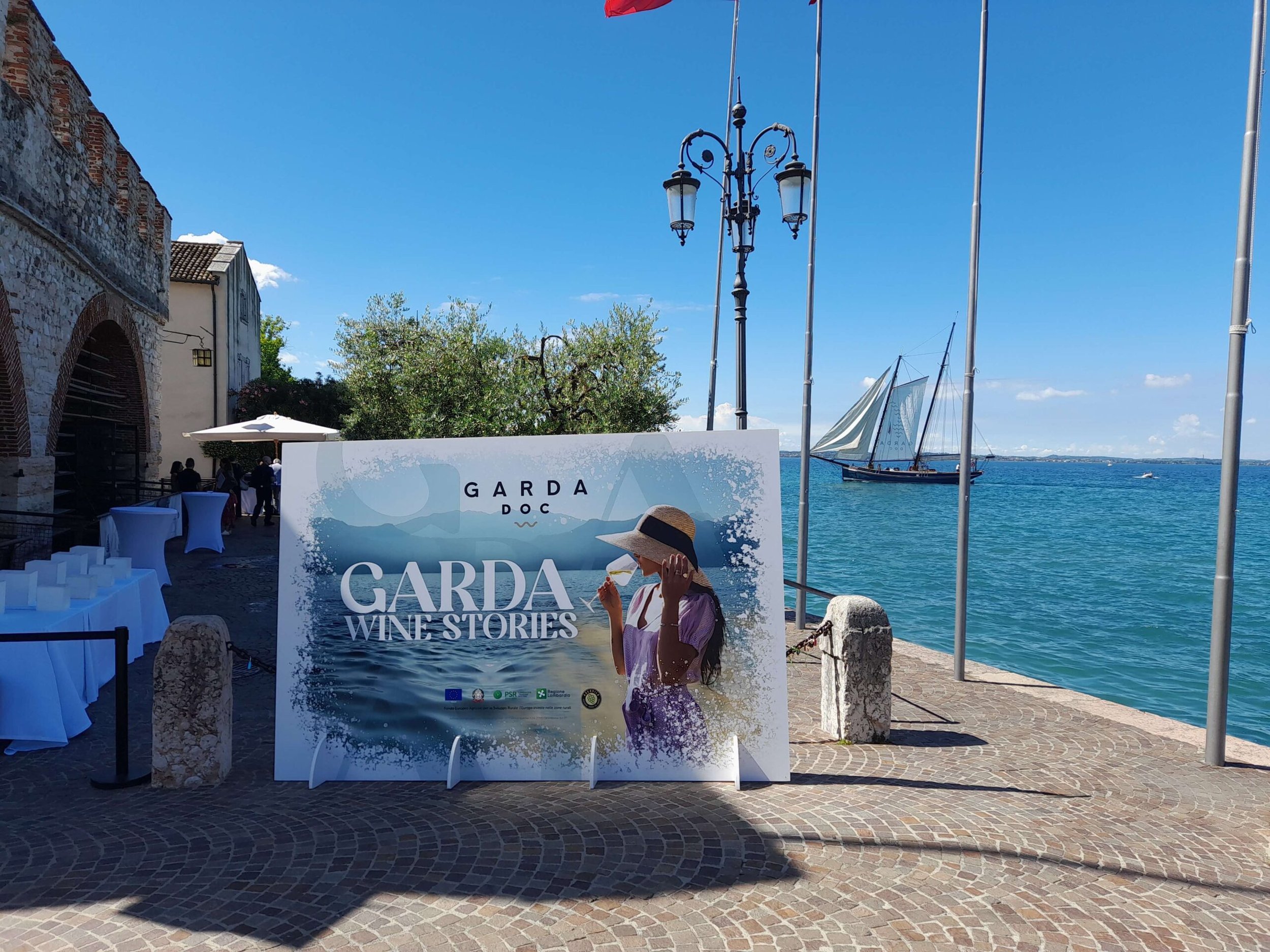
Production of both Lake Garda wine and the amount of growers has quadrupled over the past five years. The area is led by a bullish Garda DOC that wants to up production to 40 million bottles per annum, and promote its 10 appellations and range of wines to the outside world. Geoffrey Dean visited the region and samples the impressive wines of Vigneti Villabella, Pratello, Santa Sofia, Ricchi, Perla del Garda and Tommasi and tries to get under the skin of what makes this region so unique.

By Geoffrey DeanJuly 14, 2022

“Freshness is assisted by a near-permanent breeze off the lake, with lowish pHs a common denominator in Lake Garda wine,” writes Dean.

For most wine drinkers around the world, Lake Garda is somewhere very nice you go to on holiday. The biggest lake in Italy at 370 square kms, it dwarfs nearby Lake Como, being 52 km long and 16 km across at its widest point. Its perimeter is 158km – almost exactly the same distance as that of the M25 encircling London.

However, the Lake Garda DOC was founded in 1996 with the aim of promoting the varietal wines of the 10 designations of the Garda area between Lombardy and Veneto. These include two very well-known appellations in Soave and Valpolicella as well as familiar ones in Lugana and Bardolino. The other six don’t exactly trip off the tongue: Colli Mantovani, Custoza, Monti Lessini, Riviera Valtenesi, San Martino della Battaglia and Valdadige Terradeiforti. Varietals that are especially representative are Trebbiano, Garganega, Chardonnay, Pinot Grigio, Corvina, Merlot and Cabernet Sauvignon.

Production of Lake Garda wine has shot up in the last five years from 4.5 million bottles per annum in 2016 to around 20 million by 2021. Quality has also improved, and not without some justification does Paolo Fiorini, the president of Garda DOC, proclaim “we believe this appellation is ready to make a big leap from not just a place for holidays but also great wine.”

Certainly, the area appears to have the capacity to increase production further and provide the volume that multiples and indies alike may want. A total of 969 growers in the DOC in 2016 has swelled to 3,962 by last year, and in the Cantina di Soave, the region possesses one one of the biggest and best cooperatives in Italy.

The director of the consorzio, Carlo Alberto Panont, declared that the objective is to double production to 40 million bottles per annum. “We currently export 80%, but I want to increase that percentage,” he said. “Our main markets are Germany, UK, Scandinavia and the USA.”

For those not fully aware of the Garda DOC’s production area, it is a predominantly hilly landscape around the lake, stretching from Valtenesi in the west to Valpolicella in the east, from the Mincio river to the city of Verona.  Of the area under vine (31,100 hectares), as much as 27,889 ha are in the province of Verona, with the remainder in the provinces of Brescia and Mantua.

So much for its geography and beautiful location. What about the Lake Garda wines?

The locals love to tell you that the majority of Lake Garda wines are characterised by softness, fruitiness and freshness. “Garda is land of light,” Panont declared. “And light, or rare luminosity is the natural factor that makes the production area around the lake a Mediterranean enclave at the foot of the Alps. The effect of the light refraction, amplified by the large area of water, produces the sensation of a friendly climate.” Freshness is assisted by a near-permanent breeze off the lake, with lowish pHs a common denominator.

Drinkability, therefore, is the watchword of Garda DOC wines. Vigneti Villabella, a winery near Bardolino, produces elegant, fresh and expressive Pinot Grigios, with the 2021 vintage available through Tordoff Wines near Southampton. A really good Trebbiano is made by Santa Sofia, whose UK importer is Mondial Wine in Surrey.


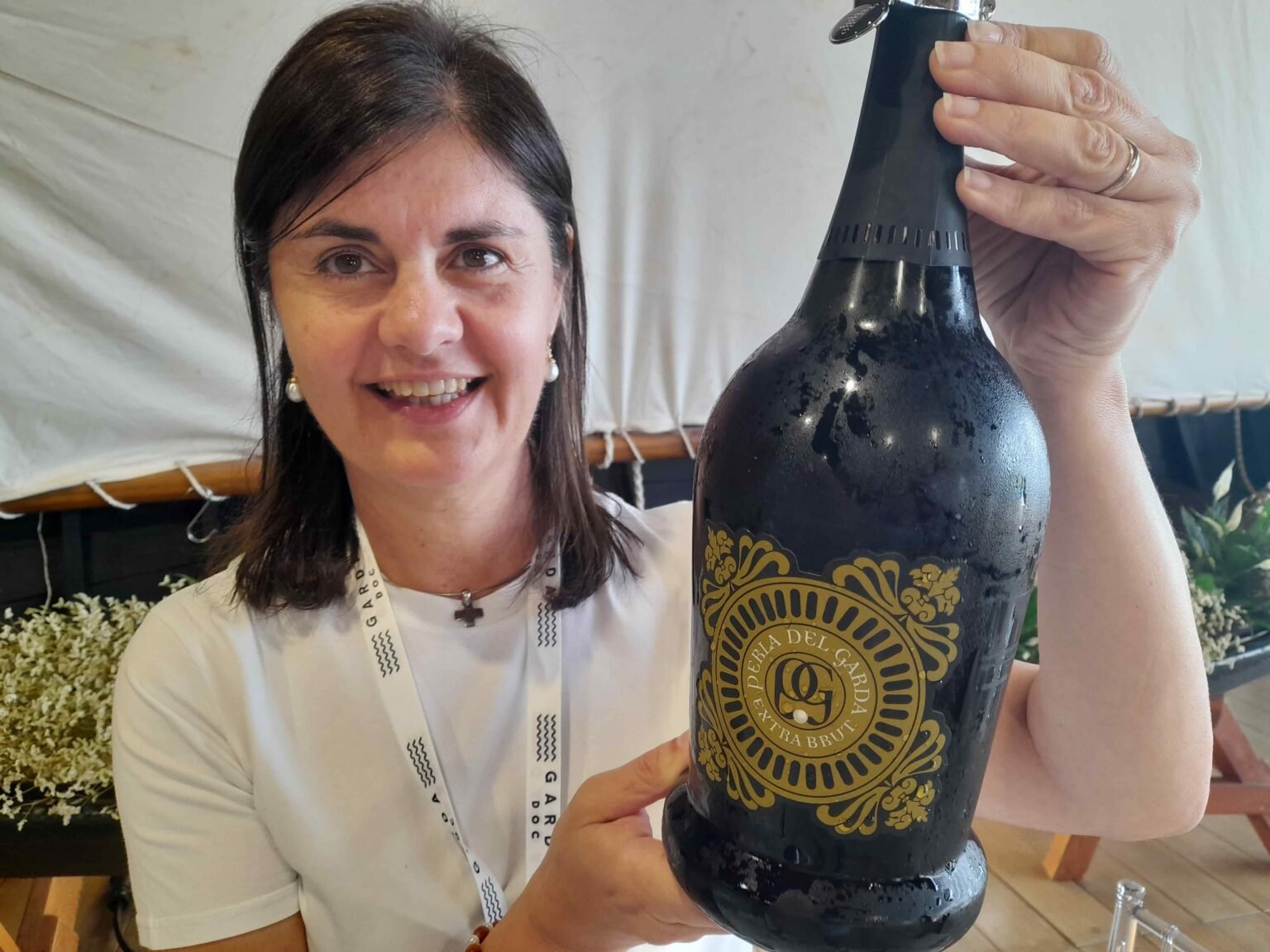
Giovanna Prandini with her sparkling wine

Meanwhile, Giovanna Prandini, owner of the Perla del Garda winery in Lugana, is seeking UK distribution. Her two sparklings, both made by the traditional method, showed superbly, with the non-vintage Blanc de Blancs spending 20 months on the lees and the 2009 vintage, also 100% Chardonnay, 72 months with zero dosage.

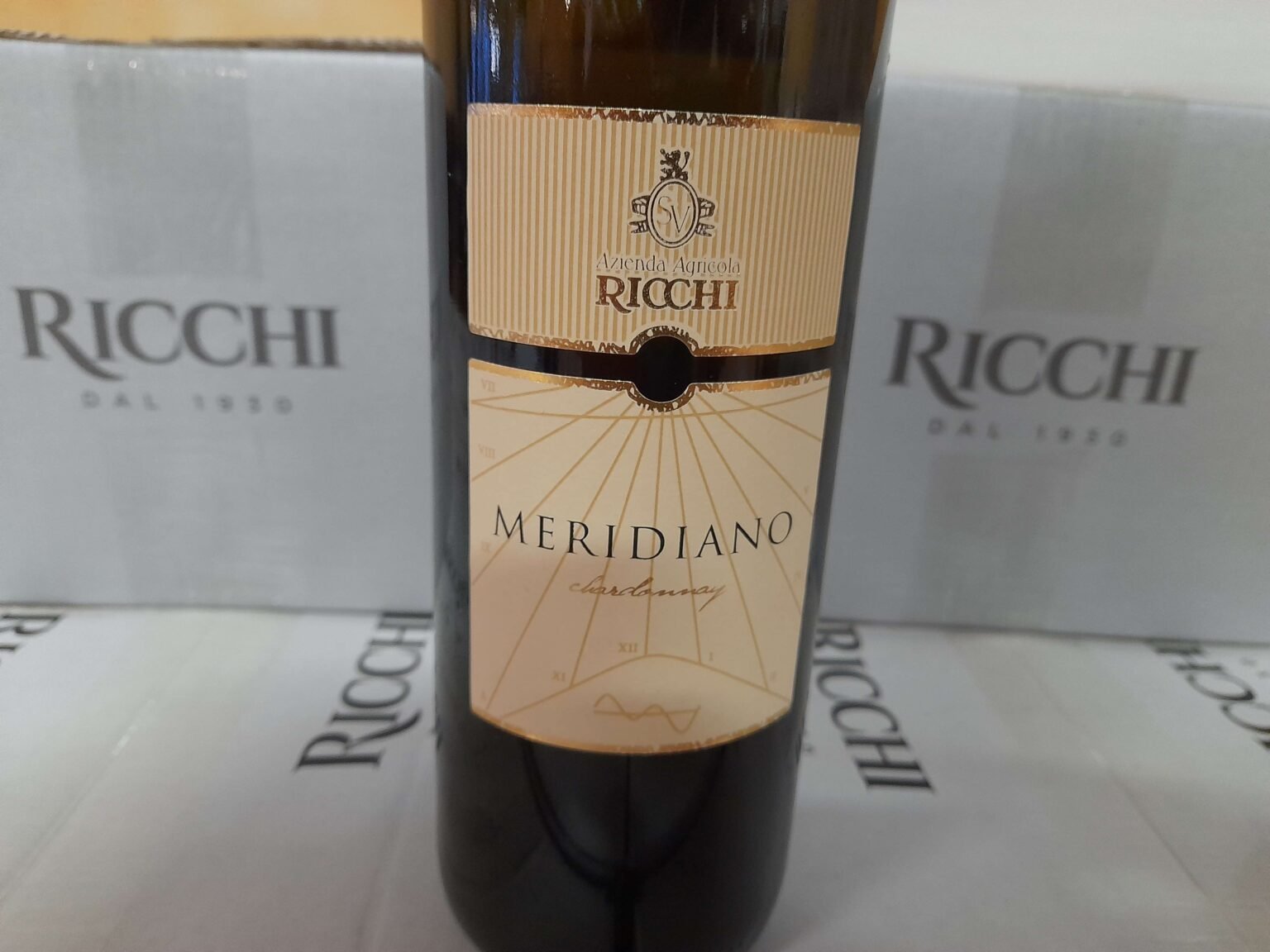
Likewise, Azienda Ricchi, situated to the south of Lake Garda, makes an excellent still Chardonnay named Meridiano and is also looking for a British importer.

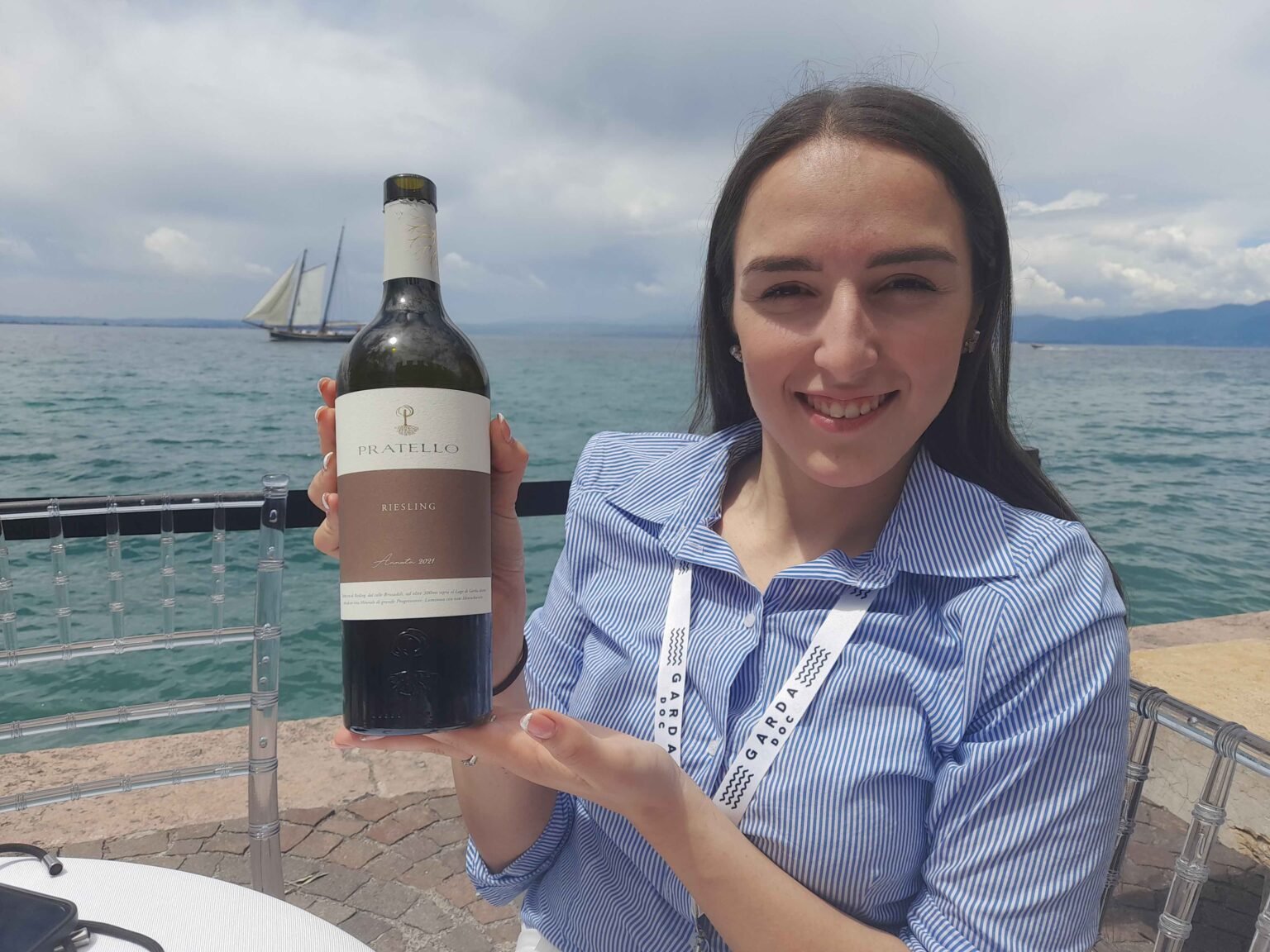
One of the most dynamic wineries in Garda DOC is Pratello, which is located to the west of the lake in Valtenesi. Owner Vincenzo Bertola, and his daughter Naike, make a most impressive range of wines, some of which are available through Berkmann. “Our aim is to obtain a salty finish, which is a key character for our whites and reds,” Naike says. “We are certified organic, and have a lot of cows in the vineyards. For us, the synergy between animals and the vineyards is super important. They give us a fantastic biodiversity to the soil. With our Rosés, we hope to give a specific ID to Lake Garda DOC.”

Naike Bertola with her Pratello Riesling

Pratello, whose total production is around 700,000 bottles per annum, makes an excellent Riesling from vines planted on poor morainic soils in the 1970s by Naike’s grandfather. The 2016 has developed petrol and honeyed notes to add to the citrus of more recent years. The winery’s range of sparkling wines includes a Rosé, made by the single fermentation ‘methode ancestrale,’ as well as a fine traditional method Blanc de Blancs from 95% Chardonnay and 5% Erbamat, a rarely-found local variety that is very high in acidity. Labelled Donna Caterina, it spends 36 months on the lees and has a dosage of 2 g/l.

Completing Pratello’s range are a pair of Garda Rosso DOC reds from the Rebo grape, a cross of Merlot and Teroldego. The Nero per Sempre 2018 label (or ‘black forever’) was named this because Vincenzo “wanted something deep, pure and intense.” Soft tannins, typical of Rebo, make this very approachable, even if 40 days of raisining of the grapes in the cellar give it notable richness. A ‘no sulphites added’ Rebo from 2020 is made quite differently, being lighter and fresher.

A special word for Tommasi

Rich Amarone wines are a hallmark of Tommasi, one of the leading wineries in Valpolicella. The company has vineyards all over Italy, and export manager, Giorgio Scarsella, is keen to increase exports of their Montalcino labels through its UK importers, MMD in London. Tommasi already sends to Britain some 15,000 bottles per annum of their good everyday drinker, Casisano Rosso di Montalcino, but would like to get more uptake of their lower premium label, Casisano Brunello di Montalcino.  From vines grown at 520 metres, which yield 6.2 tons per hectare, the 2015 vintage was aged in large second and third-fill Slavonian oak vessels for two and a half years, and is drinking beautifully now.

Pierangelo Tommasi

Everything about Tommasi oozes excellence, from its own spa hotel near Verona named Villa Quaranta to its wines at all levels and executive director Pierangelo Tommasi. He oversees a total annual production of around two million bottles from its various Italian DOCs which, from next year, will also include Umbria and Sicily. Nearly 90% of Tommasi’s wines are exported to 70 markets, but he believes there is capacity for an increase of 15% if distribution is improved.

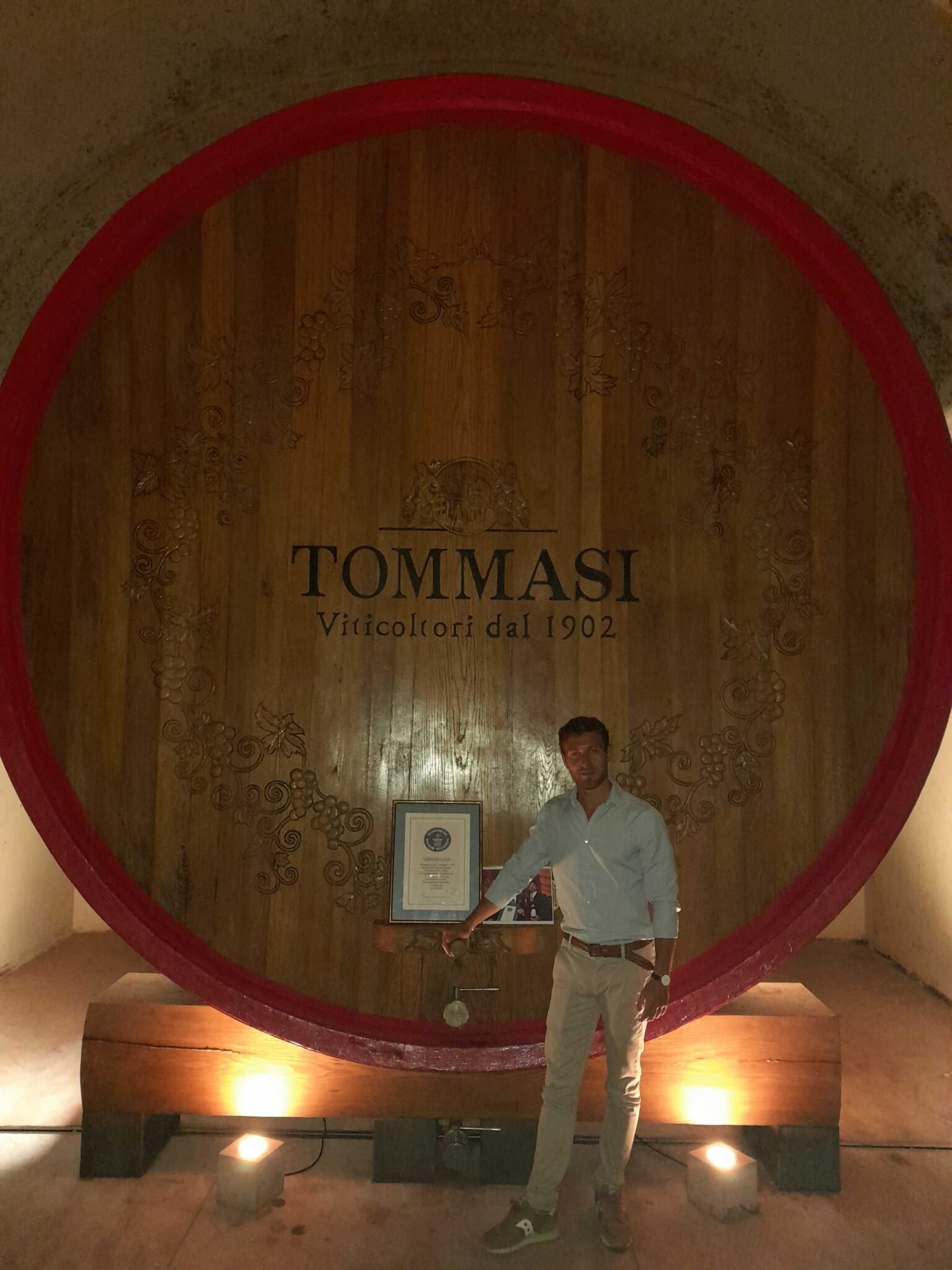
Giorgio Scarsella in front of the Magnifica

The three Amarone labels we tasted over lunch positively sang: the Amarone Classico 2018, the super premium CaFlorian Riserva 2013 and the iconic Deburis 2010. And no report on Tommasi would be complete without mention of their 33,300-litre Slavonian oak foudre, certified by the Guinness Book of Records as the largest in the world still in practical use. Made by Garbellotto in 2010, it took six months to be produced, and is known as the ‘Magnifica.’ A suitable epithet for all things Tommasi.

Loire Valley visit May 2022

Tasting special: the impressive current state of Loire Valley wines

Geoffrey Dean spent four days travelling throughout the Loire – visiting estates and tasting Loire wines from Vouvray, Saumur-Champigny, Muscadet, Touraine, Anjou and many more regions. Here he picks out the domaines and wines that impressed him the most as well as discover how the Loire is making great strides both in organic viticulture and sustainability. Despite a 31% drop in volume for the 2021 harvest, the quality is excellent, and exports have risen from France’s third largest French AOP wine region.

By Geoffrey Dean June 22, 2022

“2021 is true to the great Loire vintages – fresh and crisp, with good acidity for the sparkling wines as well as good density and excellent aromas and flavours for the still wines.”

Impressive statistics bombard you when you visit the Loire Valley. It is, you are reminded, the largest AOP vineyard area for white wines in France; the largest AOP vineyard area for Rosé wines in the country; and the largest AOP area for sparkling wine there (excluding Champagne). Vines were first planted in the Loire as far back as the fifth century, and it is now the third biggest French AOP wine region by volume, with 280 million AOP/IGP bottles sold every year in 160 different countries.

Ambitious target: Sylvain Naulin

Ambitious target: Sylvain Naulin

What is especially compelling is the newest statistic released by generic trade body InterLoire, namely that over 20% of the region’s vineyards are now certified organic. In 2021, almost 65% of vineyards were sustainably or organically farmed. The InterLoire CEO, Sylvain Naulin, has set wineries an ambitious target of attaining 100% certified ‘green’ labels by 2030. That may be as unrealistic as the UK government’s stated plan of having 100% electric car sales by the same year, but you have to applaud InterLoire for its intent. The message is clear: the association and the majority of its 3,600 growers, 430 negociants and 21 co-operatives are wedded to the concept of sustainability.

The Haute Valeur Environnementale (HVE) certification forms the basis behind the sustainability drive. Promoting good, environmentally friendly practices across three levels, the highest – level 3 – is based on indicators such as respect for biodiversity, a strategy to counter insect pests and sound management of fertiliser and irrigation. The most basic, level 1, certifies that a grower has a basic knowledge of “sustainable” cultivation. Levels 2 and 3 are certified by a body approved by the Ministry of Agriculture.

While exports have risen by 18% in value in the last five years, they are slightly down in that time to the UK which still remains the second biggest export market after the USA. The recent typical annual turnover of Loire wines – €1.3 billion – is set to fall, however, after yields for the 2021 harvest were down 31% on the 5-year average. Frosts were chiefly to blame for the drop, which was marked for Sauvignon Blanc and Melon de Bourgogne.

According to Pierre-Jean Sauvion, chair of the InterLoire communication panel, “the end of the growing season in August and September gave us very good levels of ripeness. 2021 is true to the great Loire vintages – fresh and crisp, with good acidity for the sparkling wines as well as good density and excellent aromas and flavours for the still wines. The sweet wines are velvety with a deliciously lifted structure and are bursting with tropical fruit flavours.”

So which are the estates to keep an eye on?

The Buyer experienced an expansive tasting of Loire wines and recent vintages during a four-day spring visit to the region. A plethora of producers from Vouvray, Saumur-Champigny, Muscadet, Touraine, Anjou and elsewhere showed a multitude of excellent wines, offering some of the best value in France.

Liv Vincendeau

One Cremant de Loire that really stood out was the biodynamically-certified Domane Vincendeau Loiregold 2020 from Anjou. Made from 100% Chenin Blanc grapes by Liv Vincendeau, an engaging Franco-German, this has wonderful volcanic nervous energy with 4g/l dosage, and is imported into the UK by Vagabond. Meanwhile, another Cremant to impress, the Dumnacus Blanc Brut 2017, is stocked by Liberty. Comprised of 68% Chenin Blanc, 17% Chardonnay, 13% Grolleau and 2% Cabernet Franc, this spent four years on the lees.

Carolien Meuree

Liberty also takes a large allocation of two good mid-market labels from Saumur-Champigny producer, Les Sables Verts. “Les Poyeux” 2020 (100% Cabernet Franc) and “Les Roueres” 2020 (100% Chenin Blanc) are skilfully fashioned by a young pair of winemakers, Caroline Meuree and Herve Malinge, who met while studying in Bordeaux. The former, which comes from 70-year old vines yielding just 38 hl/ha, sees only stainless steel and retains lovely, elegant fruit expression with pure, dusty tannins. The white, matured in 50% new 12hl foudres, has fabulous intensity and length as well as minimal sulphur dioxide levels for those with a low tolerance (23mg/l free and 32mg/l total SO2).

Vanessa Cherruau

Another cracking Chenin Blanc, from Anjou producer Chateau de Plaisance’s Ronceray label, is imported by Lea & Sandeman. Vanessa Cherrueau, a larger-than-life character with a permanent smile on her face, farms biodynamically in Rochefort sur Loire, and has crafted a wine with lovely intensity and length. She ferments in older oak with wild yeasts.

Emanuel Ogereau

Emanuel Ogereau, winemaker for renowned Anjou estate, Domaine Ogereau, likewise crafted a superb example of Chenin Blanc with his ‘La Martiniere’ 2020. “We are rediscovering dry Chenin Blanc in a sweet region,” Ogereau said. “Anjou is rising and our geology is very interesting with a lot of different soils. For example, on the left bank of the Layon river, we have vineyards on ancient decomposed schist; on the right bank, we have volcanic rock.”

Isabella Meuli

Two English female assistant winemakers have been helping to produce some notable white wines from the region: Camilla Murray, at biodynamically-certified Chateau de Chaintres in Saumur, and Isabella Meuli, at Ampelidae, an organically-certified IGP Val de Loire producer in Neuville-de-Poitou. The former’s ‘Clos des Oratories’ 2020 label showed superbly, coming from ultra low-yielding 90-year old Chenin Blanc vines on an estate owned by the same family for the last 95 years. “It’s a beautiful half-hectare parcel,” Murray said. “We used wild yeasts, added very little SO2 as the pH was 3.18 and matured the wine in big old wooden casks and 160-litre terracotta vessels. St. John Wines in London has it.”

Meuli, an ex-insurance broker from London who studied Chinese at university there, “learnt winemaking on the job during several harvests” as she put it, and is working under technical director, Gilles de Bollardier. Ampelidae’s “Le S” Sauvignon Blanc label, grown on tuffeau, limestone, clay and silex soils is a premium example of the varietal, and the estate are hoping to find a UK distributor.

Cabernet Franc, Gamay and… yet more Chenin

While white wines make up 45% of production in the Loire, reds form 19%. A pair of Cabernet Francs from Saumur producer, Domaine du Vieux Pressoir, stood out. The estate, which will be certified organic next year, exports 35% of its 60,000-bottle annual production, with the Graft Wine Company in London being its UK importer. It takes both its ‘Elegance’ 2020 label, which is aged in old oak, and the ‘Origine’ 2019 label (elevage in concrete).

Amelie Neau

Theatre of Wine in London imports another enchanting Cabernet Franc: Domaine de Nerleux’s “Les Loups Noirs” 2018 label. Established as far back as the 16th century, this Saumur-Champigny estate has stayed in the same family, with winemaker Amelie Neau being the ninth generation. 25-year old organically-farmed vines produce seductive red fruit with kirsch notes, while some structure is provided by 10% new oak.

Marie-Francoise Ratron-Galet

The Wine Society stocks another very enticing Cabernet Franc from Saumur Champigny: the Clos des Cordeliers estate’s ‘Prestige’ label, which is made only in the best years from low-yielding vines, now 55-years old, on limestone soils. The 2018, which saw stainless steel and no oak, is only the second vintage made by Marie-Francoise Ratron-Galet after the death of her husband, and yielded just 30hl/ha.

Camilla Murray

Even older Cab Franc vines – planted in 1960 in a walled vineyard – prompting a ‘Vieilles Vignes’ label, provided the fruit for Camilla Murray’s first vintage at Chateau de Chaintres, the excellent 2020.

Benedicte Petit

One of the Loire Valley’s 24 varietals grown is Gamay. A lovely example of it came from an Anjou estate south of Angers – Terra Vita Vinum, a domaine of 30 hectares. Benedicte Petit, the winemaker, uses 30% new oak and 70% stainless steel to craft a label called ‘Chant de la Pierre.’ The 2020 vintage is imbued with freshness and flavoursome red fruit. Both that and the winery’s excellent flagship white label, Grandes Rogeries 2020, made from Chenin Blanc vines on volcanic rock, are available through Robert Rolls in London.

Eddie Oosterlinck

Still in Anjou, Eddie and Mileine Oosterlinck-Bracke, who are originally from Holland, make a complex Chenin from very old vines that are between 60 and 110 years-old, with a very low yield of 15 hl/ha. Their ‘Le Paradis de Juchepie’ label from their estate, Domaine de Juchepie, is fermented in an old basket-press and matured in 50% new and 50% old barriques after going through 100% malolactic fermentation. It is available through Friarwood Fine Wines in Fulham.

Loic Mahe

Friarwood also stocks another top Chenin from Savennieres, made by Loic Mahe, named ‘Les Fougeraies’ 2016. Biodynamically farmed vines on a small plot with a sandy topsoil yield 25hl/ha and wonderfully expressive fruit. Thanks to a pH of 3.05, Mahe is able to add minimal SO2 – just 20mg/l free and 40mg/l total.

Not far away, Evelyne de Pontbriand, owner-winemaker of Domaine du Closel, which is also certified biodynamic, fashions another superb Chenin from low-yielding vines that are 25-70 years of age. Her ‘Clos du Papillon’ 2019 label, named after a fabled site, is available though Lay & Wheeler and the Wine Society.

And finally the stickies…

No discourse on the Loire would be complete without reference to their outstanding stickies. Brompton Wines in London takes a sumptuous sweet Chenin Blanc from Chateau Soucherie in Coteaux de Layon. Vianney de Tastes, the splendidly-named winemaker, revealed that he made three passes through the vines for his 100% botrytised 2015 harvest. Located on schist soils at 120m, they yielded only 12hl/ha, with the wine containing 120g/l of residual sugar.

The yield was even lower for Vouvray producer, Domaine d’Orfeuilles, when it got just 5hl/ha from its then 45-year old vines  for their wonderful Reserve D’Automne Moelleux Blanc 2009 (86g/l RS). For those preferring off-dry, Domaine Huet’s Haut Lieu 2020 (19g/l RS) provided a regal ending to a tasting, as InterLoire likes to proclaim… of “the world’s most diverse range of wines.”